
Yushui Village Dongba Culture: Unveiling China's Living Heritage
2026-07-18
Nestled in the heart of Yunnan, Jade Water Village is where the ancient Dongba culture breathes. As one of China’s last living pictographic scripts, Dongba manuscripts hold secrets spanning centuries—yet they face the threat of silence. What does it take to keep a heritage alive when its last true practitioners dwindle? Step into Yushui Village, and you’ll find answers written not just on paper, but in the rhythm of daily life.
The Living Language of Symbols: How Dongba Script Endures in Yushui
Among the terraced pools and sacred springs of Yushui Village, the Dongba script refuses to become a museum piece. This ancient pictographic writing system, used by the Naxi people for over a thousand years, continues to breathe through the hands of a dwindling circle of priests and a growing community of cultural devotees. Unlike dead languages preserved only in archives, Dongba characters are still painted onto ritual scrolls, carved into wooden tablets, and taught to children who learn that every glyph holds a story, a prayer, or a fragment of the natural world. The village itself acts as a living library, where the symbols for wind, mountain, and deity are not relics but active participants in ceremonies that mark seasons, heal the sick, and honor ancestors.
What keeps Dongba vital in Yushui is not mere preservation effort but a conscious fusion of tradition with daily relevance. Local practitioners integrate the script into festivals that draw both villagers and visitors, demonstrating that sacred symbolism can coexist with contemporary life. In workshops, young Naxi carve symbols onto leather and paper, creating objects that carry meaning beyond linguistic expression—a deer glyph becomes a blessing for safe travels, sun and moon together signify harmony. This hands-on transmission honors the script’s original purpose: a visual language of metaphors, not just a phonetic tool. By resisting the pressure to standardize or digitize solely for efficiency, Yushui’s custodians maintain the script’s soul, allowing evolution without erasure.
Perhaps the truest measure of Dongba’s endurance is its quiet refusal to perform for outsiders. While tourists watch priests sway and chant, the symbols are not staged; they are invoked. Each character’s lines—the curve of a jaw bone, the dot of an eye—still carry the weight of belief for those who write them. In the lazy afternoons, an elder might point to a pictograph on a house beam and explain its dual meaning, a lesson in cosmology disguised as a conversation. Here, the language survives not because it is exotic, but because it is essential, a root system connecting the Naxi to the land they cultivate and the skies they fear and revere. Yushui does not simply showcase Dongba; it lets it whisper, and those who listen find a language that has never stopped speaking.
Chants at Dawn: Unveiling the Sacred Ceremonies of the Naxi
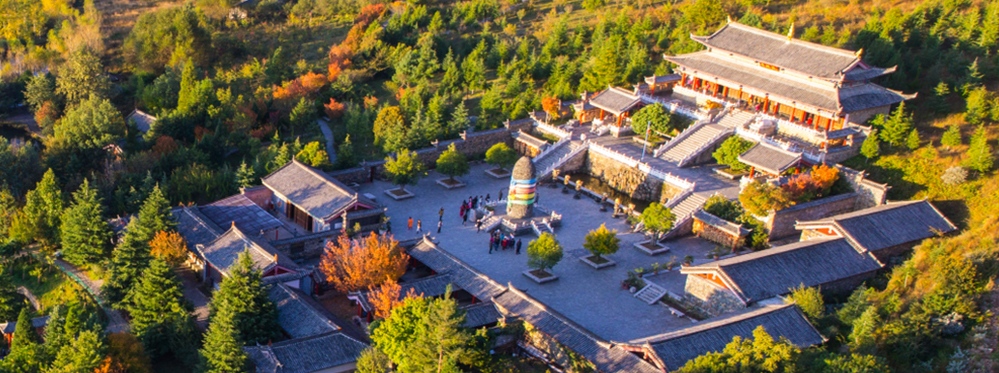
Long before the first ray of sunlight brushes the Jade Dragon Snow Mountain, the valley stirs with the low, resonant hum of the dongba chants. There is no stage, no audience in the Western sense—only a circle of elders gathered in a quiet courtyard, their breath misting in the predawn chill. The words they intone are not everyday speech but a ritual language preserved for millennia, a living fossil of pictographs and tonal inflections. Each syllable feels weighted, as if carrying the memory of ancestors and mountain spirits. To the uninitiated ear, it might seem like a monotonous drone, but listen closer: there is a rhythm that mirrors the flow of the river, a cadence that rises and falls like the wind through the pines. This is not merely music or prayer—it is a bridge between the visible and the unseen, a way of maintaining harmony in a world where nature and humanity are inseparably entwined.
At the heart of these dawn ceremonies lies a profound respect for reciprocity. The Naxi do not simply worship nature; they negotiate with it. A chant for a good harvest is not a plea but a conversation—an acknowledgment of what the earth gives and what the people must return. You can see this in the careful preparation of offerings: pine needles arranged just so, a cup of barley wine poured at the base of a sacred tree. The dongba priest, often a weathered man with eyes that seem to hold centuries, does not stand above the community but sits among them, his chants weaving individual concerns into a collective fabric. Even the timing is deliberate. Dawn, that liminal space between night and day, is when the veil is thinnest, when the spirits of mountains and waters are most attentive. The Naxi believe that waking the world with these chants sets the right tone for everything that follows.
What makes these ceremonies so captivating is not their exoticism but their quiet, stubborn continuity. In an age of noise and speed, the Naxi dawn chants remain unhurried, unamplified, and utterly sincere. Young people still learn the ancient script, though not as many as before; families still gather before the hearth to pass down the melodies. There are no grand temples here—the sacred is stitched into the everyday: a courtyard, a hearth, a grove. To witness this is to understand that sacredness does not require spectacle. Sometimes, it is simply the sound of a human voice greeting the light, and the light, in some ineffable way, greeting it back.
Keeper of the Ancient Ways: A Day with Yushui’s Dongba Elder
Dawn breaks over the Jade Dragon Snow Mountain, its first light slipping through wooden shutters to nudge the elder awake. Before the village stirs, he walks barefoot to the courtyard altar, where juniper branches and aged manuscripts await. His voice, low and steady, rises in a rhythm older than the pines around him — a chant to honor the spirits of water and stone, to coax harmony from a world that has grown too loud. This is not performance; it is breathing. Every syllable a thread, stitching the day to a lineage unbroken for centuries.
By midmorning, he becomes a living library. Young apprentices gather not in classrooms, but beneath a gnarled walnut tree, charcoal in hand, copying the pictographs that dance like bird tracks across rough paper. He doesn’t lecture — he points to the river, to a hawk overhead, weaving stories where each symbol is a creature’s footprint. "The script is not just to be read," he murmurs, tracing a heron in the dirt, "it is to be walked." A boy’s puzzled frown melts into awe as the elder describes how a single character holds the sound of wind over a high meadow.
When dusk settles, he retreats to a stone hut perfumed with dried herbs. By firelight, he mends a ceremonial drum, hands steady despite the deepening chill. The skin tightens, and with each careful tap, the low boom echoes off walls lined with masks — guardians and tricksters he once danced with during rites that called the rain. He smiles faintly, not at the task but at the quiet understanding that the old ways do not die if one soul still listens to the mountain’s heartbeat and answers, night after night, with a drumbeat of its own.
Between Snow Peaks and Stone Walls: The Architecture of a Living Heritage
High in the mountains, where snowdrifts linger well into summer and the air is thin and sharp, stone houses rise from the rocky slopes as if they have always been there. Their walls, built from locally quarried stone, are thick and heavy, designed to hold in warmth against the bitter night cold. No two structures are quite the same; each follows the natural contours of the land, turning necessity into a quiet aesthetic. The roofs are flat, often layered with earth and grass, providing insulation and a place to dry crops when weather permits. These homes are not just shelter—they are a direct response to an extreme environment, shaped by centuries of lived experience.
The architecture here is inseparable from the rhythms of daily life. In winter, families retreat to rooms centered around a metal stove, where tea simmers constantly and stories are passed down through smoke-tinged air. Stone walls, often whitewashed on the inside to catch every sliver of light, bear the marks of hands that built and rebuilt them over generations. Staircases carved from whole logs connect levels unevenly, and tiny windows, originally designed to keep out cold and danger, now offer framed glimpses of towering peaks. This is a living architecture, constantly adapted with whatever materials are at hand—sometimes a modern sheet of corrugated metal finds its place atop an ancient stone base, showing that tradition is not frozen, but breathing.
Yet these stone walls hold more than just warmth; they contain a worldview. The placement of a window, the direction of a doorway, the width of a shared wall—all speak to a deep understanding of community, climate, and the spiritual weight of the landscape. The mountains are not merely a backdrop but a living presence, and the architecture serves as a mediator between people and the immense forces that surround them. To walk through these villages is to read a record of resilience, not carved in monuments but in the everyday structures that continue to shelter lives intimately bound to snow and stone.
Pulp and Prayer: The Art of Dongba Papermaking Unveiled
In the mountain villages of southwest China, paper isn’t just a surface—it’s a living dialogue between craft and spirit. Dongba papermaking, practiced by the Naxi people, transforms the fibrous bark of the Wikstroemia delavayi plant into sheets that carry centuries of ritual knowledge. Each step, from stripping the bark to pounding the pulp, is accompanied by murmured chants, binding the maker to the sacred purpose of the final sheet.
Unlike modern paper mills, this process relies on patience rather than machinery. The bark is soaked in mountain streams, boiled with ash, and beaten by hand until it becomes a silky pulp. The sheet formation is a slow, meditative act: the pulp is distributed on a bamboo screen, then left to dry under the high plateau sun. The resulting paper, thick and toothy, resists insects and humidity, making it ideal for preserving the pictographic Dongba scriptures—texts that record the origin myths, deities, and healing rituals of the Naxi people.
Beyond preservation, the paper itself is considered a vessel of prayer. Donating a sheet to a monastery or inscribing a wish upon it is an act of merit. Today, as global interest in handmade traditions grows, local families are reviving this art, teaching apprentices not just the technique but the reverence embedded in every fiber. Holding a sheet of Dongba paper is like holding a story—one where human hands and the natural world conspire to create something transcendent.
Echoes in the Courtyard: How Yushui Village Keeps Culture Alive
Stepping into Yushui Village feels like walking into a living museum, where the past isn't locked behind glass but hums softly in the courtyard conversations. Elders gather on worn stone benches, their voices weaving tales of harvest festivals and ancestral legends, while younger generations listen, sometimes with restless curiosity, other times with quiet reverence. It's here, in this unassuming space, that the village's heart beats strongest—a rhythm passed down not through formal lessons, but through the simple act of being together.
The courtyard isn't just a meeting point; it's a classroom without walls. On any given afternoon, you might find a grandmother teaching her granddaughter the intricate steps of a local dance, their laughter mingling with the clatter of Mahjong tiles from a nearby table. Old men repair traditional bamboo baskets, their hands moving from memory, while a teenager films the process on her phone, not out of mere documentation, but to share with friends in the city. This blend of preservation and adaptation feels natural, almost accidental, yet it's what keeps the culture from becoming a relic.
What's remarkable about Yushui is how it embraces change without losing itself. New ideas enter the courtyard as easily as the mountain breeze—a returned migrant introduces a modern crop rotation technique, a visiting artist teaches children to paint landscapes that blend traditional motifs with abstract forms. But these additions don't dilute the core; they enrich it. The culture lives not because it's frozen in time, but because it breathes, shifting with each generation while remaining rooted in the communal space that has always held it together.
FAQ
Nestled in the foothills of southwest China, Yushui Village is a quiet enclave where Dongba culture—the ancient spiritual and shamanistic tradition of the Naxi people—remains vibrantly alive rather than just a museum piece.
It’s woven into everything from the way locals greet the morning sun with whispered chants to the hand-painted Dongba characters on doorways, the herbal remedies shared by elders, and even the rhythmic dances performed at spontaneous gatherings.
Because the village isn’t a staged exhibit—rituals, pictographic writing, and oral epics are passed down organically through families, with children learning sacred texts as naturally as they pick up farming skills.
They’re ordinary farmers, craftsmen, and grandmothers who double as ritual specialists—not full-time priests, but keepers of a wisdom that blends animism, ancestor veneration, and a deep bond with the mountains and streams.
You can sit under a walnut tree and watch a Dongba master paint protective talismans with bamboo brushes, join a family meal where blessings are murmured over smoked pork, or hike to a hidden shrine where offerings still bear fresh wildflowers.
Village youth, once tempted by city lights, now carve characters onto wooden tablets and run informal evening classes—turning their own hesitation into a quiet revival, with elders correcting strokes by candlelight.
Yes, beyond government support, families pool resources to restore crumbling murals, share seeds for ritual plants, and even barter labor to maintain the open-air storytelling pits where myths come alive under starry skies.
It lacks polished visitor centers and staged shows—instead, the Dongba heartbeat is in the muddy footpaths, the smoke of juniper incense at dawn, and the unscheduled moments when a villager might teach you a few pictographs simply because you showed genuine curiosity.
Conclusion
In the remote stone-paved village of Yushui, nestled against the Jade Dragon Snow Mountain, the Dongba culture breathes on in ways that museums could never contain. Here, the Dongba script—often called the world's last living pictographic language—still scrawls across handmade paper in twisted vines and horned beasts, each character a memory of ancient caravans and mountain gods. The village priest, an elderly Dongba with sun-creased skin, begins his day before dawn, chanting prayers that roll through courtyards and echo off stacked-stone walls, summoning protective spirits in a rhythm older than the surrounding peaks. This is no reenactment; it is a daily pulse. The architecture itself holds layers of meaning: timber frames carved with frogs and stars, courtyards aligned to catch the first light, every lintel and window lattice telling stories of migrations and mythical battles. In a workshop nearby, women pound mulberry bark into pulp, transforming fibrous mash into sheets of Dongba paper so durable it can outlast human memory—the same surface onto which the Dongba elder will later brush his sacred texts, in ink made from pine soot and temple ashes.
Yet what keeps this heritage truly alive is not the monuments or the artifacts, but the village itself. In Yushui, children learn the pictographs not from textbooks but by watching their grandmothers trace them in the dust, or by participating in seasonal ceremonies where masked dancers reenact the epic battles between humans and demons. The Dongba priest does not merely safeguard relics; he teaches the chants to teenagers who will one day lead the dawn incantations, ensuring the transmissions continue not as recordings, but as living sound. Visitors who wander through Yushui's alleys witness something rare: a cultural system that has adapted without breaking, where papermaking, wood carving, and ritual fuse into a continuum of meaning. When night falls and the last prayer flags stop fluttering, the village does not become a silent exhibit. Instead, the flicker of a butter lamp in a courtyard signals that an elder is still illuminating a manuscript, still connecting the community to its origins. In Yushui, Dongba culture is not preserved under glass—it is spoken, sung, pounded into paper, and carved into every stone, a heritage that thrives precisely because it remains inseparable from the rhythms of daily life.
Contact Us
Contact Person: Changhong He
Email: [email protected]
Tel/WhatsApp: 086-0888-5190152
Website: https://vip.e-baixing.com/ysh