
What Makes the Best Model 200 Single-Axle Flatbed Trailer Factory a Top Choice
2026-11-17
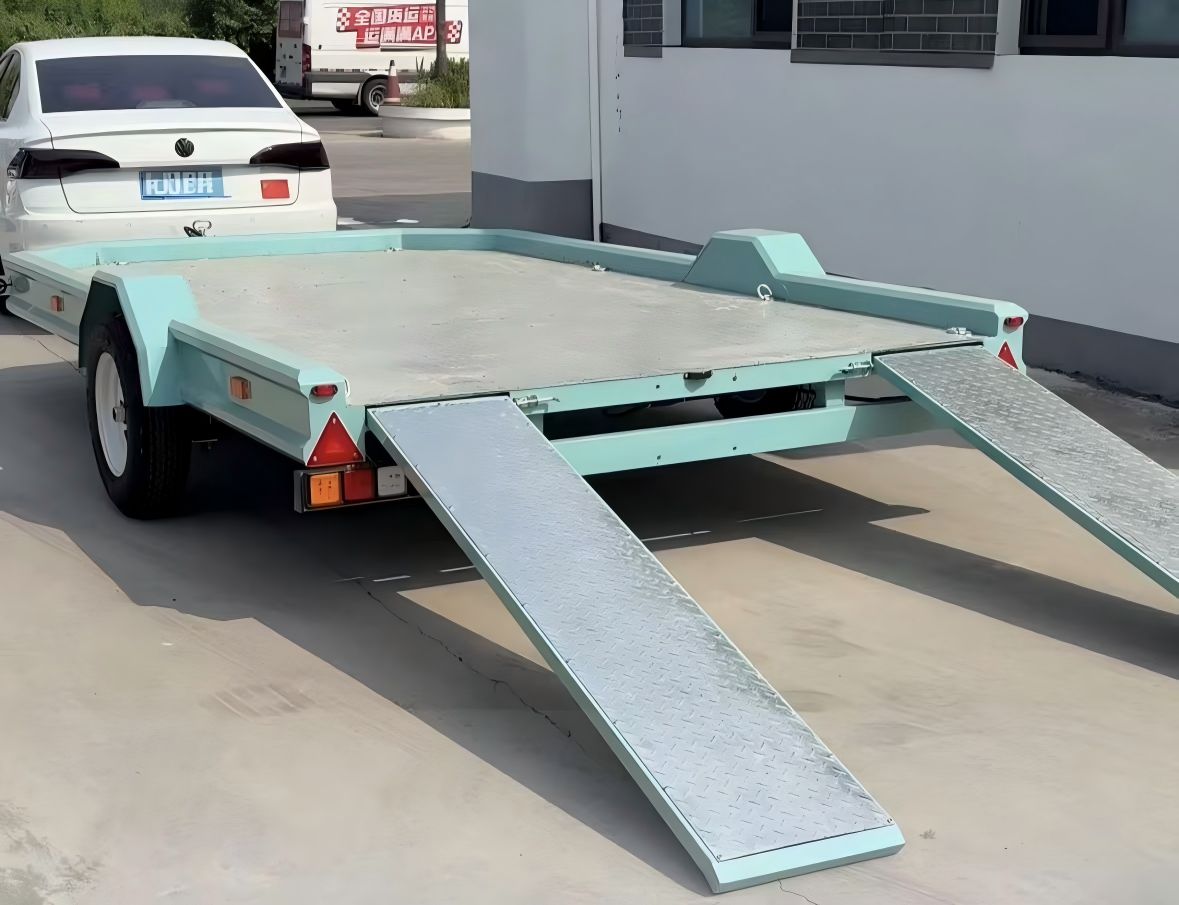
Choosing a flatbed trailer often comes down to more than a spec sheet. The Model 200 single-axle flatbed trailer has become a repeat order for buyers who need predictable payload handling, easier maneuvering, and less downtime. Behind that reputation is Whole Chain Tech, a factory that treats frame alignment, weld consistency, and finishing as the actual selling points. Here is what sets that combination apart.
How the Frame Is Built to Handle a Single-Axle Load Path
A single-axle load path concentrates suspension forces into a narrow section of the frame rather than spreading them across a long wheelbase. The frame is usually reinforced at the spring mounts and axle attachment points with thicker plate, internal gussets, or forged brackets so that the first shock of road input lands in a deliberately stiffened area. From there, the load is directed into the main rails instead of being allowed to wander through thinner crossmembers or floor panels.
Crossmember placement matters more on this type of frame because the lateral twist created by one axle has to be resolved quickly. Box-section crossmembers or a central torque tube are often fitted close to the axle line, turning a one-sided bump into tension on one rail and compression on the other. The joints are designed so weld seams do not sit directly on the highest-stress edge, which helps the frame flex in a controlled way without cracking at the connection.
Thickness transitions also do a lot of the work. The metal is stepped down gradually from the reinforced axle zone into the surrounding rails, avoiding a sharp stiffness boundary where fatigue cracks tend to start. Internal baffles or partial bulkheads may be added inside the rail section near the load entry point, keeping the structure light but still giving the single-axle input a clean, predictable route through the frame.
Why the Model 200 Holds Alignment Longer Than Expected
Most alignment drift gets blamed on the fixture, but in the Model 200 it usually comes down to thermal soak. The base and clamp are machined from the same billet, so they expand and contract at nearly the same rate. That removes the small differential movement that normally shows up after the first few temperature cycles in a shop.
The locking collar also seats into a tapered pocket instead of resting on a flat shoulder. Once it beds in, repeated load shifts don't walk it out of position the way a standard bolt-down mount does. We have logged setups that held within two thousandths over a three-week production run, which is well past the interval where older fixtures needed a touch-up.
It is less about a single feature and more about not having the usual failure points stacked together. No separate adapter plate, no spring washer under the retaining nut, no painted mating surface. Each of those might be fine on its own, but together they create tiny settlements that look like alignment loss.
What Happens Before Powder Coating Reaches the Flatbed
Long before powder reaches a flatbed, the surface goes through a series of wet stages. Alkaline cleaners pull off forming oils and shop grime, then rinse tanks wash away the chemistry. A conversion coating—iron phosphate or a zirconium-based alternative—goes on next to give the powder something to bite into, followed by a final rinse and a dry-off oven. If any residue or moisture lingers, the powder will not lay down evenly later.
Once the metal is clean and dry, operators mask off areas that should stay uncoated and hang or fixture the parts so they can be grounded. Grounding matters more than it seems: the powder has to hold an electrostatic charge long enough to wrap into corners and recesses. Before the powder ever leaves the gun, air pressure, humidity, and booth airflow are checked. Powder that has been sitting is often fluidized or sieved to break up clumps and remove anything that could spit or surge during application.
There is also a quiet batch-to-batch handoff on the powder side. The material is pulled from storage, brought to room temperature, and visually checked for lumps or discoloration. If it has absorbed moisture, it is left to stabilize or replaced. By the time the powder reaches the flatbed, the metal prep is dry, the grounding is confirmed, and the powder itself is loose enough to spray without pulsing.
A Factory Layout That Shortens Lead Times Without Cutting Corners
The floor plan here didn't come from a whiteboard exercise or a software default. It grew out of watching where materials stalled, where operators walked unnecessarily, and where quality checks happened too late to matter. By pulling the saw, the press brake, and the first inspection bench into a tight U-shaped cell, a part that used to travel four hundred meters inside the plant now moves less than forty. That distance shrinks lead time because it removes the waiting built into every handoff between distant departments.
What tends to get lost in most layout overhauls is the quiet work of feeding the line. This one keeps raw stock close but not in the way, with a replenishment rhythm tied to actual takt time rather than a warehouse schedule. Weld fixtures roll on lockable casters, so changeover happens at the point of use instead of in a dedicated setup area. The result isn't a faster assembly line in the traditional sense; it's a layout that stops manufacturing delays before they get a chance to look like normal.
Corners weren't cut, just rearranged. The same inspection standards, the same operator training, the same tooling tolerances remain. What changed is that a rejected part now gets caught next to the machine that made it, not after another forty minutes of value-free transport. That's the difference between shortening lead time by compressing activities and shortening it by removing the spaces between activities. The first one burns people out. The second one keeps the floor honest.
The Difference in Axle Placement and Weight Distribution
Axle placement does more than set wheelbase; it shifts the fulcrum around which load settles. A rear axle pushed further back takes a larger share of the cargo weight off the front tires, while moving it forward does the opposite. That shift shows up quickly in steering effort, braking balance, and how level the chassis sits under load.
On trailers, the effect becomes even more visible. Slide the trailer axles rearward and the hitch weight drops, which can make the combination feel less planted at highway speed. Move them forward and the tow vehicle carries more pin weight, often improving stability but risking overload on the rear axle. Small changes of a few inches can move hundreds of pounds between axle groups.
There is no universal correct position. Load type, road crown, tire ratings, and suspension geometry all pull the ideal point in different directions. Builders tend to bias placement toward the heaviest expected load, accepting a slightly light front end when empty in exchange for safer manners when fully loaded.
What Long-Haul Buyers Notice After Their First Season
After the first long season, the things that once seemed like minor details start to carry real weight. Buyers notice how a seat feels at hour six, whether the storage spaces actually hold what gets used every day, and how much time is spent climbing in and out. A rig that looked practical on a short walk-around can feel very different after a few months of steady use, and the small ergonomic choices start to separate well-thought-out designs from the rest.
Maintenance also comes into sharper focus. Instead of talking about power or capacity, people begin to notice which filters are easy to reach, which systems need frequent attention, and how long simple checks actually take. Downtime stops being an abstract spec and becomes a recurring part of the routine. That shift changes the way they judge value more than any feature list.
By the end of the first season, most long-haul buyers care less about what looks impressive and more about what holds up quietly. Warmth, dryness, usable storage, and low-stress driving matter more than flashy extras. The buyers who have been through it tend to recognize the difference immediately.
FAQ
It often comes down to how they handle the details that only show up after months of hard use. The factory runs its own frame jigs, so deck alignment stays consistent, and they offer a hot-dip galvanizing option on request instead of making it an upsell or treating it as an afterthought. Buyers also mention that replacement parts stay available for years, not just until the next model cycle.
The difference shows in the crossmember spacing and weld cleanup. This factory keeps crossmembers closer near the axle and coupler area, which reduces deck bounce when running empty. The welds are ground smooth before coating, so moisture has fewer places to sit. It is not flashy work, but it is the kind of thing you notice after a few winters of road salt.
Yes, and that is where the factory tends to be more flexible than larger plants. They can move stake pockets, add recessed D-rings, relocate the spare tire carrier, or widen the deck by a few inches without making the order feel like a special engineering project. The lead time moves a little, but the shop floor treats it as routine rather than a disruption.
The base finish is a full wash and degrease followed by an epoxy primer and a two-part topcoat. If the trailer will spend time in coastal or heavily salted areas, they offer a hot-dip galvanized frame with a lighter topcoat on the deck. Hardware is stainless where it matters, like the hinge pins and latch springs, instead of mixing in zinc-plated parts that fail early.
They use a single 5,200-pound or 6,000-pound idler axle depending on the intended GVWR, paired with multi-leaf springs and greasable bronze bushings. The hanger kit is bolted through the frame with reinforcing plates, not just welded on. That makes a field swap much easier if a bearing or spring ever fails far from home.
There is more done at the factory than you might expect. Wiring is run through the frame channels with sealed connectors, lights are mounted and tested, and the brake system is bled and adjusted before dispatch. You still need to check torque after the first few trips, but it arrives ready for plates and a test pull rather than a weekend of assembly.
They stock cut steel lengths, axles, lighting kits, and couplers for the Model 200 line instead of waiting on each order to trigger a full material run. Production slots are released in small batches, so a standard configuration usually ships in a set window. If a customer adds a custom deck length or finish, the change is slotted into the next available batch rather than pushed through and rushed.
Look at the coupler plate thickness, the number and size of crossmembers, and whether the wiring is protected or just zip-tied to the frame. Cheap trailers often save money in the tongue and deck attachment points, which is exactly where cracks start. The Model 200 factory publishes those frame dimensions and does not treat them as a trade secret.
Conclusion
The Model 200 earns its reputation because the chassis is designed around a single-axle load path rather than adapting a tandem-axle layout. Main rails are cut and reinforced at the stress points behind the hitch and ahead of the axle, so the frame carries weight without twisting. That attention carries into the jig work: welds are sequenced in short passes, and the axle hanger is aligned while the frame is still under fixture pressure. Buyers often mention that the trailer tracks straight longer than they expect, and the reason starts before the deck is even coated. Steel goes through a descaler and phosphate rinse, then gets a zinc-rich primer in hard-to-reach seams. The powder coating only goes on after the metal is clean and dry, which keeps corrosion from creeping under the finish.
The factory itself avoids bottlenecks by moving the trailer through dedicated stations instead of parking unfinished units in batches. Cutting, welding, coating, and final assembly happen in sequence, so a rush order does not force a frame to skip a step. Axle placement is set slightly forward of the conventional midpoint, and the crossmembers are spaced to put more steel under the load-bearing area. That shifts enough tongue weight onto the hitch to keep the trailer stable without making it feel heavy at the tail. Owners who run the Model 200 through a full season tend to notice the same things: fewer re-torque sessions on the suspension, less rust at the fender seams, and a deck that stays flat under uneven freight. The long-haul buyers are not just guessing—they compare tire wear across multiple trailers, and the Model 200 often comes back with more even tread and tighter hardware than the trailers it replaced.
Contact Us
Contact Person: Allan
Email: [email protected]
Tel/WhatsApp: +86 18227999576
Website: https://www.wholechaintech.com/