
Top Tubular Steel Poles from China – A Buyer’s Guide to Quality and Reliability
2026-08-26
Buying tubular steel poles from China shouldn't feel like a gamble. Yet too many buyers end up with subpar materials, hidden defects, or deliveries that miss deadlines. This guide strips away the guesswork—covering everything from material certifications to anti-corrosion coatings—and introduces you to Anbang, a manufacturer that's quietly setting a higher bar for quality and dependability. Curious what separates the good from the great? Keep reading.
The Steel Grade and Wall Thickness Conversation Most Buyers Skip
Most purchasing teams fixate on price per ton and delivery windows, treating steel grade and wall thickness as line items rather than decisions. That habit quietly erodes margins. Two coils of "structural steel" can share a spec sheet but diverge in yield strength, weldability, and how they behave under fatigue. A lower grade might pass a visual check, yet fail weeks later in service because the thinner wall wasn't matched to the actual load cycle, not just the static load.
The skipped conversation usually starts after a supplier says "equivalent grade" or "within tolerance." Wall thickness tolerances are not trivial. A 10% under-tolerance on a schedule 40 pipe changes pressure ratings and corrosion allowance. If the buyer never asks for actual mill certificates or confirms which standard the grade references, the project inherits risk that no warranty fully covers. It's not about distrusting suppliers; it's about knowing which variables change the math.
A practical fix costs less than a failed inspection. Before signing, ask three questions: What exact grade and standard does this quote assume? What is the minimum wall thickness at its thinnest point, not the nominal? And what does the supplier do when a heat doesn't meet that? Buyers who ask these early usually get better material or at least honest trade-offs, instead of discovering the mismatch on a shop floor three months later.
What Straight Clean Welds Say About a Tubular Pole Factory
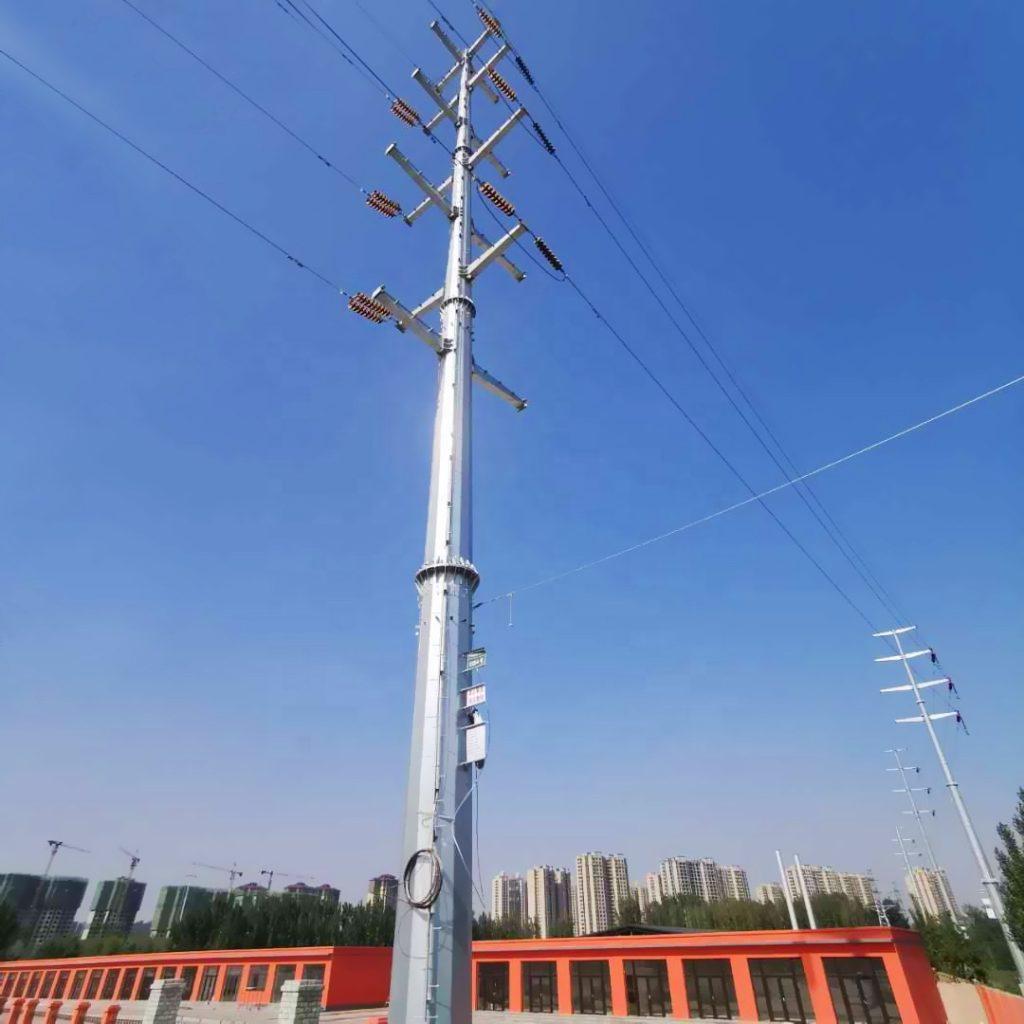
A weld that runs straight with a uniform bead and no visible spatter isn't just a nice detail—it's a fingerprint of the entire production line. When you see that kind of consistency on a tubular pole, it tells you the factory has dialed in its welding parameters and isn't relying on last-minute touch-ups. The travel speed, voltage, and wire feed all have to stay within a tight window, and any drift shows up immediately as a wavy or uneven seam. That kind of control doesn't happen by accident; it comes from operators who understand the material and equipment that's been properly maintained.
Clean welds also speak to the raw material quality and the prep work done before the arc ever strikes. Tubular steel with inconsistent wall thickness or surface contaminants will fight the welder every step of the way, forcing adjustments that leave telltale variations. A factory that consistently produces straight, clean welds is one that sources its tubing from reliable mills and takes the time to clean and bevel edges properly. It's a sign that the front end of the process—cutting, fitting, and tacking—isn't being rushed just to push product out the door.
Beyond the visual appeal, that weld quality maps directly to how the pole will perform under load and weather over decades. A straight, fully penetrated weld with minimal heat distortion means the joint will resist fatigue and corrosion far better than a sloppy one that's been ground down and painted over. When you see a factory turning out poles with that level of weld integrity, you're looking at a place where the people on the floor take ownership of the outcome, not just the output.
Hot-Dip Galvanizing Done Right Without Hidden Rust Traps
A proper hot-dip galvanizing process relies on more than just dipping steel into molten zinc. The real skill lies in designing and preparing the steel so that every surface—inside corners, overlapping joints, and hollow sections—gets full drainage and ventilation. Without careful attention to these details, trapped moisture or air pockets can create hidden rust traps that quietly corrode from the inside out, long after the initial coating looks perfect.
One common mistake is treating galvanizing as a purely cosmetic finish. Thick zinc layers on the outside mean little if the inside of a tube is sealed off from the zinc bath. Vents and drain holes must be sized and positioned to let zinc flow in and out freely, while also allowing any pre-treatment solutions to escape. When these paths are blocked, residual acid or flux remains inside the steel, later weeping out and staining the surface or triggering localized corrosion that spreads beneath the coating.
The difference between a durable galvanized structure and one riddled with rust often comes down to small, deliberate choices made before the steel reaches the kettle. Sharp edges should be rounded, weld spatter removed, and overlapping surfaces avoided or sealed with intermittent gaps. By treating galvanizing as an engineered system rather than a simple dip, fabricators eliminate hidden traps and deliver steelwork that stays sound for decades, even in harsh environments.
Five Minutes of Inspection That Reveal More Than a Factory Tour
Walk past the polished reception area and head straight to where raw materials are unloaded. Spend five minutes watching how a supplier handles incoming pallets, checks labels, and stores inventory. A factory tour usually highlights gleaming assembly lines and smiling operators, but the loading dock tells you about real priorities: whether boxes sit in the rain, how often someone glances at a checklist, and whether damaged goods are quietly set aside or flagged immediately. That quiet corner reveals more about quality culture than any scripted walkthrough.
Next, stand near the maintenance bench or tool crib for a few minutes. Watch how workers sign out tools, whether they return them clean, and how they react when a machine hiccups. Do they improvise a quick fix and move on, or stop the line to trace the root cause? A factory tour rarely pauses here because it is not photogenic, but this is where preventive discipline lives. If the tool board is a mess and everyone shrugs at loose bolts, assume that same attitude will show up in your finished product.
Finally, observe the shift change or a short break. Who updates the whiteboard? Who checks the previous shift's notes? If production targets are scribbled without context and nobody talks about yesterday's rejects, you are looking at a team that measures motion instead of meaning. Five minutes of watching handoffs—not machines—will tell you whether the operation learns from mistakes or simply repeats them faster. That is the kind of insight no factory tour brochure ever includes.
Questions to Ask Before Trusting a Factory's Capability Claims
When a factory touts advanced equipment or high output, the first thing to do is press for specifics that can be verified on the ground. Ask for line-by-line details of their current production schedule, the exact models of key machinery, and maintenance logs from the last six months. Without that level of granularity, broad statements about capacity remain little more than marketing language.
Next, probe how they handle variability. Any plant can hit a target in ideal conditions, but real orders come with rush changes, material shortages, and quality hiccups. Request concrete examples of recent disruptions and what they did to recover, including turnaround times and any customer references you can contact directly. A factory that hesitates to share past problems is signaling that its claims have never been stress-tested.
Finally, ask about the people behind the machines. Capability is not just hardware; it lives in the skills of the operators and the oversight of the quality team. Ask how many years the core staff have worked on similar products, what ongoing training looks like, and whether the same team would run your order or be pulled to other accounts. Answers that feel vague or defensive usually point to gaps that will show up on your own production line.
How Smart Packing Keeps Tubular Poles Damage-Free at the Port
Loading tubular poles into containers or onto flat racks often looks straightforward, but hidden risks multiply the moment the ship rolls or a crane swings. Smart packing starts by mapping each pole's center of gravity and pairing it with custom-cut timber cradles that stop rotation before it begins. Instead of relying on generic dunnage, crews mark load-bearing points and align them with the container's corner posts, leaving zero room for mid-voyage shifting.
The next layer of protection comes from sequenced stacking patterns that respect both the pole's diameter and the port's lifting schedule. Rather than filling every gap with foam, packers leave calculated air channels that prevent trapped moisture from corroding galvanized surfaces. Straps are tensioned to a specific load rating, checked twice after the first hour, then sealed with edge protectors that stop chafing against lashing rings.
Finally, the packing plan is documented with timestamped photos and a one-page load diagram shared with the vessel's chief officer. This closes the loop between warehouse and deck: if a port inspector questions stability, the answer is visual, not verbal. The result is fewer rejected deliveries, no surprise dent claims, and tubular poles that arrive ready for installation without a single touch-up coat.
FAQ
Start with the raw material certificate. Reputable factories use Q235B, Q355B, or ASTM A572 Grade 50 steel, and they should be able to show mill test reports for every batch. If a supplier hesitates to provide these documents, that is usually a sign the material is recycled or mixed-source, which affects load-bearing capacity.
Most quality-focused factories rely on hot-dip galvanizing to ASTM A123 or ISO 1461, with a minimum coating thickness of 85 microns for poles. Some also offer an additional powder coat or epoxy layer for extra abrasion resistance. Ask for a salt spray test report if the poles will be installed near the sea.
You can usually specify height, top and bottom diameters, wall thickness, base plate dimensions, hole patterns for luminaires or antennas, and even the color of a polyester powder topcoat. Many factories also offer custom welding of brackets, cable entry slots, and hinged or removable base sections. Provide a detailed drawing early to avoid rework.
Request a pre-production sample and a detailed inspection checklist that covers weld penetration, straightness tolerance, galvanizing thickness, and dimensional accuracy. Third-party inspections from firms like SGS or Bureau Veritas are common for larger orders. Also ask for photos or live video of the actual production line, not just the showroom.
Hot-dip galvanizing bonds zinc to the steel at around 450 degrees Celsius, creating a metallurgical layer that can last 30 to 50 years outdoors. Cold galvanizing or zinc-rich paint is just a surface film, often 10 to 20 microns thick, and it chips or wears away quickly. If a quote seems unusually low, check which process is actually included.
For a standard 20-foot container load of poles, production typically takes 20 to 35 days after drawing approval and deposit. Shipping from major ports like Shanghai or Ningbo to Europe or North America adds another 25 to 45 days. Bundling poles of different diameters can reduce freight cost, but make sure the factory uses proper spacers to avoid damage during transit.
Watch out for suppliers who quote below market average without explaining how they save cost, avoid sharing factory registration details, or push for full payment before production. Other warning signs include vague tolerances, no clear warranty on galvanizing, and reluctance to accept third-party inspection. A reliable factory will usually welcome an audit.
Yes. For structural steel, ASTM A36, A572, or EN 10025 S355 are common. For galvanizing, insist on ASTM A123 or ISO 1461. For welding, AWS D1.1 or ISO 5817 quality levels should be referenced. Also ask about wind load calculations. Many Chinese suppliers can provide basic structural analysis if you share the local wind speed and pole configuration.
Conclusion
Sourcing tubular steel poles from China often goes wrong when buyers skip the material conversation. The steel grade and wall thickness are not interchangeable details; a pole specified for coastal wind loads needs more than a generic Q235 label and a thin wall. Ask for mill certificates and verify the actual thickness at the base and along the taper, because some factories quietly reduce wall thickness to save cost. Welds tell you even more. Straight, clean, and consistent weld seams indicate proper fixturing and trained operators, while erratic or heavily ground welds suggest poor fit-up and hidden stress points. On the corrosion side, hot-dip galvanizing should coat every internal surface and drain hole without leaving zinc spikes or sealed cavities that trap moisture. A quick inspection of the base plate, the pole tip, and the area around the handhole will reveal whether galvanizing was done with real care or just for appearance.
You do not need a full factory tour to judge capability. Spend five minutes checking the pole you are about to approve: measure the wall thickness, run a straight edge along the weld, look inside for rust or missed galvanizing, and check the flange bolt pattern. Then ask the factory how they handle specific load cases, what welding procedure they use for the longitudinal seam, and whether they have tested a pole from the same batch to failure. Vague answers are a red flag. Finally, do not overlook packing. Tubular poles that arrive with dented shafts or damaged flanges usually failed in the container, not in the factory. Smart packing uses steel cradles, interlocking layers, and weatherproof wrapping to keep the galvanized surface intact until the port. When these details align, you are far more likely to get poles that actually perform.
Contact Us
Contact Person: antor khan
Email: [email protected]
Tel/WhatsApp: 8613863903569
Website: https://www.qdabtower.com/