

Top Direct Expansion Air Handling Unit Solutions for Modern HVAC Systems
2026-10-16
Ask any HVAC engineer what keeps a modern building comfortable year-round, and direct expansion air handling units will come up fast. These units are the silent backbone of precise temperature and humidity management, yet many off-the-shelf options fall short when faced with demanding spaces. That's why forward-thinking teams are turning to solutions that prioritize coil performance, airflow control, and serviceability. At shairko, we've built our reputation on DX AHUs that deliver where it counts. This post explores the top solutions you should know before your next spec.
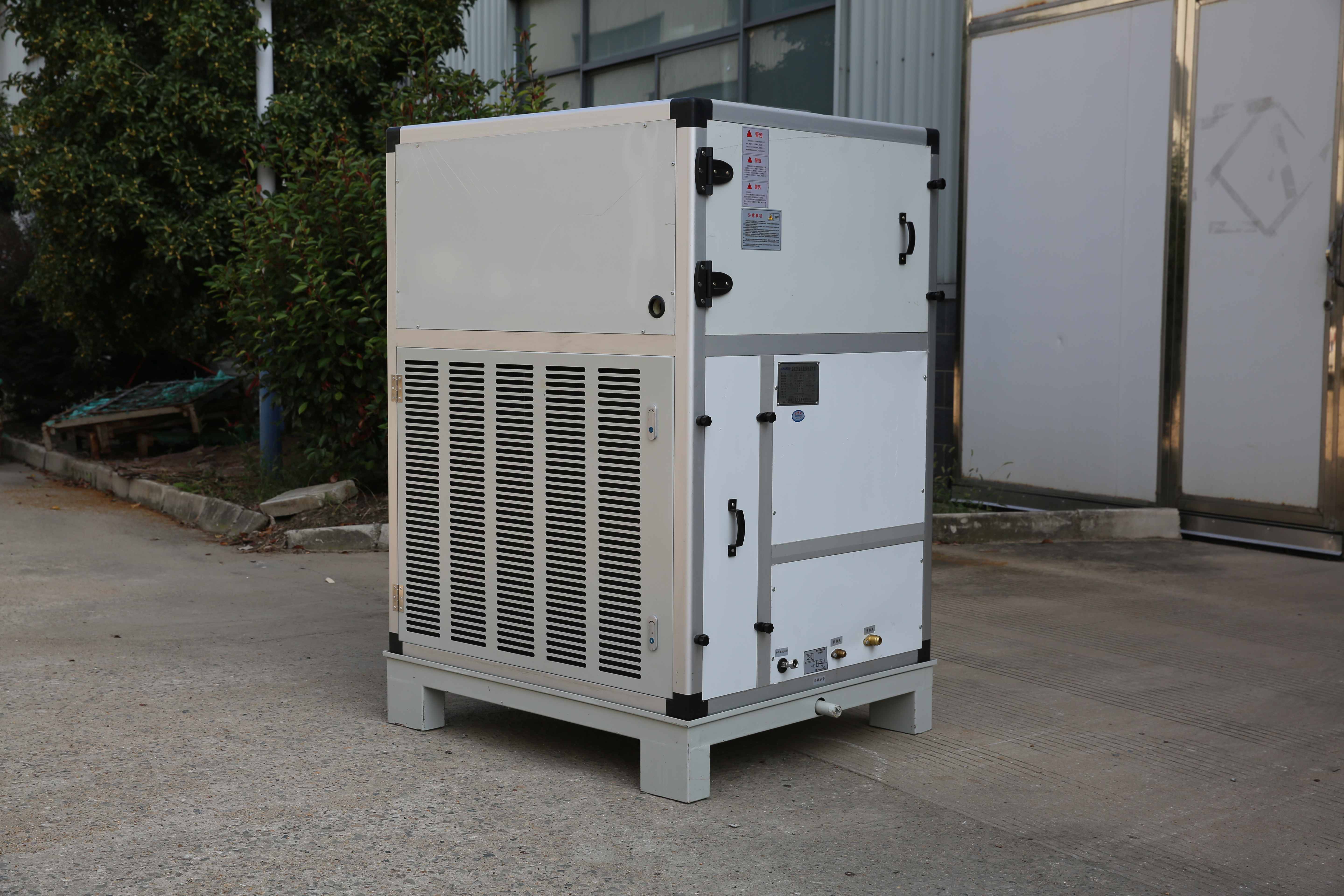
Compact DX Units That Fit Where Chilled Water Can't
Finding space for a chilled water system in older buildings or tight retrofits often feels like trying to park a bus in a bicycle lane. Compact DX units sidestep that entirely. They bring direct expansion cooling right where you need it, without the bulky piping, cooling towers, or dedicated mechanical rooms that eat up valuable square footage. Think small server rooms, converted office corners, or under-stair niches—places where a chilled water line simply can't reach.
These units are built for awkward layouts and low ceilings. Unlike central plants that demand long pipe runs and careful slope calculations, a compact DX unit only needs a small footprint, power, and a path for the condenser air. Installation often takes a day instead of a week, and there's no risk of chilled water leaks damaging the space below. The result is precise cooling that adapts to the building, not the other way around.
For facility managers juggling limited floor area and strict humidity control, compact DX delivers a practical middle ground. It handles partial loads efficiently, and with variable-speed compressors now common, it avoids the short-cycling that plagued earlier direct expansion systems in small spaces. So you get stable temperatures and quiet operation, even when the only available spot is a closet near the elevator shaft.
Variable Speed Compressors Change the Part-Load Game
Fixed-speed compressors waste energy at part load because they only have two states: full output or off. That on-off cycling creates pressure swings, condensate carryover, and frequent starts that hammer contactors and bearings. A variable speed compressor flips this by modulating motor frequency to match real-time air demand. Instead of dumping excess air through a blow-off valve or letting the compressor idle against a closed inlet, the drive trims motor speed and power draw almost linearly with load. This keeps the package running continuously in a stable band while using only the electricity actually needed at the moment.
The payoff shows up in part-load figures. Most compressed air systems rarely sit at 100 percent demand for long; they drift with shift changes, tool usage, and leaks. With a variable speed compressor, bypass and blow-off losses disappear, and the machine holds discharge pressure inside a much tighter control band without repeated start-stop cycles. That directly lowers kWh per cubic meter produced and can shave peak demand charges. In plants where night shifts run at a fraction of daytime load, the difference in annual energy cost is not a rounding error.
Not every variable speed design handles low turndown well. Cheap packages may overheat the motor at low rpm or starve the oil separator when refrigerant velocity drops. A solid variable speed compressor pairs an inverter-duty motor with a drive that can operate continuously below 30 percent load without tripping thermal limits. Look for models that adjust cooling fan speed and oil circulation alongside the main motor. That is where the real part-load game is won: not just saving watts at mid-load, but staying reliable when the load almost disappears.
Controls That Learn Tenant Patterns Before They Complain
The system stops guessing after the first week. It notices which rooms warm up faster in the afternoon sun, when the third-floor conference room actually fills on Tuesdays, and how often the corner offices nudge the thermostat down at 4 p.m. Those signals quietly build a working picture of the building’s rhythm.
Instead of waiting for a complaint ticket, the controls adjust the airflow in advance. A meeting-heavy morning triggers a pre-cooling shift in the affected zones. The empty wing on Friday afternoons gets eased back to a lower-energy state. Small corrections happen continuously, so tenants rarely notice a sudden blast of hot or cold air.
Over time the system learns which patterns repeat and which are one-off events. It does not overreact to a single late-night login or an unusually crowded lunch. That restraint keeps comfort steady without making the building feel like it is being micromanaged, and it quietly removes most of the reasons people used to complain about.
Low-GWP Refrigerants Without Sacrificing Capacity
The push to drop global warming potential in refrigerants used to come with a hidden tax: less cooling per cubic foot of vapor moved. That assumption no longer holds. New blends pair mildly flammable hydrofluoroolefins with established HFCs in ratios tuned to keep evaporator temperatures and mass flow rates close to their predecessors. Engineers are finding that capacity losses can stay within a few percentage points—or disappear entirely—when the entire system is retuned around the new fluid.
Take R-454B as an example. Its GWP sits under 500, yet it delivers nearly the same volumetric capacity as R-410A at typical air-conditioning conditions. The trick is in the temperature glide: instead of evaporating at a single pressure-temperature point, the blend boils across a small range, and modern heat exchangers exploit that glide to wring out extra heat absorption. Compressor manufacturers have responded by adjusting displacement and motor windings, so the unit doesn't need a larger footprint to hit the same nameplate rating.
What matters more than catalog numbers is how these fluids behave in a live system. Field tests of rooftop units and chillers charged with low-GWP blends show energy efficiency ratios staying flat or even improving, provided technicians recover, evacuate, and charge with the same care they'd give an R-22 retrofit. The lesson is straightforward: capacity is not a property you sacrifice; it's a design target you maintain through smarter matching of refrigerant, compressor, and coil.
Pre-Piped Modules That Cut On-Site Labor by Days
Instead of assembling piping piece by piece on the job site, these modules arrive with all internal lines already connected, pressure-tested, and labeled. The moment the unit is set in place, crews can tie into the building systems directly, skipping the slow, error-prone process of measuring, cutting, and threading pipe in tight mechanical rooms. This shift removes a full phase of field labor that used to eat up several days—sometimes more than a week—on a typical commercial or industrial project.
Because the piping is pre-routed inside the module, fittings and joints are made under controlled shop conditions rather than in cramped, weather-exposed areas. That means fewer leaks, fewer rework calls, and no waiting on a specialty pipefitter to show up for a short spool piece. In one retrofit where a chiller plant had to be replaced, the pre-piped skid allowed the contractor to drop the old unit on a Friday and have the new one circulating chilled water by Tuesday morning—mostly by swapping four flange connections and two control wires.
The savings go beyond just the pipe trades. Electrical and controls subcontractors also finish faster because sensor wells, valve actuators, and drain stubs are already in the exact positions shown on the submittal drawings. There’s no guessing where a differential pressure sensor should be tapped, no field drilling into a freshly painted frame. When every trade can start their portion as soon as the module lands, the general contractor compresses the schedule without adding manpower—just by choosing equipment that was built to eliminate the usual on-site piping puzzle.
Humidity Control That Doesn't Overcool the Space
Many systems chase humidity by simply cranking down the temperature, which leaves the room cold and clammy. A better approach separates moisture removal from sensible cooling, using a dedicated dehumidification coil or a desiccant wheel that pulls water vapor out of the air without forcing the thermostat into the low sixties.
By targeting the latent load directly, the equipment can keep the space at a comfortable set point while still hitting a 50–55% relative humidity range. This avoids the common complaint of “freezing offices” in summer, where occupants pile on sweaters because the AC is overcooling just to strip moisture.
Smart controls make this even more effective: they monitor dew point rather than just temperature, then modulate the compressor or reheat only when needed. The result is stable comfort—dry air without the drafty chill that makes people reach for the thermostat wars.
FAQ
A direct expansion AHU cools or heats air directly using refrigerant coils inside the unit, rather than relying on chilled water or hot water from a central plant. In modern systems, it's often chosen for mid-sized commercial buildings, data centers, or retrofit projects where adding hydronic piping would be costly or impractical. The unit pulls return air, passes it over the DX coil where refrigerant evaporates or condenses, and then supplies conditioned air to the space.
DX AHUs can be very efficient when paired with variable speed compressors and electronic expansion valves, because they avoid the pumping losses and heat transfer losses of a chilled water loop. However, in very large campuses with multiple air handlers, a central chilled water plant often wins on part-load efficiency and heat recovery. For standalone or smaller buildings, a well-designed DX AHU with inverter-driven scroll or screw compressors can deliver excellent seasonal efficiency without the complexity of a water loop.
Look for a unit with a robust cabinet and thermal break construction to prevent condensation, high-efficiency EC fans or backward-curved plenum fans, a variable capacity compressor (digital scroll, inverter, or tandem setup), and an electronic expansion valve for precise superheat control. Also check whether the coil has a corrosion-resistant coating if outdoor air is part of the mix, and whether the controls can handle complex sequences like demand-based ventilation or dew point control.
Yes, many modern DX AHUs come with a reversing valve heat pump configuration, allowing the same refrigerant circuit to provide heating in winter. Some units add a secondary hydronic heating coil or electric strip heat as backup for extreme cold. The key is matching the compressor's heating capacity at low ambient conditions and using hot gas reheat or a dedicated reheat coil to manage humidity without overcooling the space.
In humid climates, a DX AHU can struggle with moisture removal at part load if the compressor cycles on and off too frequently. Top solutions use variable speed compressors that run continuously at low capacity, which keeps the coil cold longer and removes more moisture. They also use hot gas reheat or a separate condenser reheat coil to reheat supply air without adding external energy, preventing the space from becoming clammy and cold.
The control system is critical. A DX AHU with a basic on/off thermostat will short cycle and waste energy, while one with a programmable controller can stage compressors, adjust fan speed based on static pressure or CO2, and modulate the expansion valve in real time. Look for units that offer open protocols like BACnet or Modbus so the AHU can talk to the building management system and coordinate with other equipment.
Absolutely, and this is often where they shine. Because a DX AHU does not need large chilled water pipes, pumps, or a separate chiller, the mechanical footprint is smaller. Many manufacturers offer compact, modular cabinets that can be split into sections to fit through existing doorways. This makes them ideal for replacing old constant-volume units in schools, offices, or retail spaces without major structural work.
The move toward lower-GWP refrigerants like R-32, R-454B, or R-513A is reshaping DX AHU designs, with new coil and compressor compatibility requirements. Leak detection systems and improved cabinet sealing are becoming standard to minimize emissions. Additionally, some top solutions incorporate heat recovery wheels or plate exchangers in the AHU to precondition outdoor air, reducing the DX coil load and improving overall system sustainability.
Conclusion
In many retrofit and urban infill projects, the mechanical room simply isn't sized for chilled water infrastructure. Direct expansion air handling units have become the practical answer, especially compact DX designs that slide into tight ceiling voids or closet spaces where piping loops and chillers make no sense. What makes these units stand out today isn't just their footprint; it's the way variable speed compressors match output to the building's actual thermal load. Instead of cycling hard and wasting energy at part load, they dial back smoothly and keep discharge air temperature steadier. Add controls that observe occupancy patterns and begin preconditioning spaces before tenants even notice a shift, and the system stops being reactive. The result is comfort that feels effortless, without the constant hum of a unit fighting itself.
Refrigerant choices have also evolved, with low-GWP options now delivering the same or better capacity than legacy blends, so sustainability doesn't force a performance compromise. On the installation side, pre-piped modules with factory-mounted valves, sensors, and electrical connections can shrink on-site labor from days to hours, reducing coordination headaches and change orders. Humidity control is another area where modern DX AHUs have matured: hot gas reheat and modulating coils remove moisture without driving the space temperature down to an uncomfortable chill. This is particularly valuable in mixed-use buildings, schools, and clinics where latent loads fluctuate. Taken together, these advances make direct expansion air handling units a genuinely flexible, efficient backbone for contemporary HVAC systems rather than a fallback option.
Contact Us
Contact Person: Crystal
Email: [email protected]
Tel/WhatsApp: 8613524235353
Website: https://www.airkohvac.com