
Top 10 Corrugated Plastic Box Solutions for Durable Storage and Shipping
2026-10-31
Cardboard boxes sag, wooden crates splinter, and flimsy plastic bins crack under real-world handling. That’s why corrugated plastic has become the go-to material for durable storage and shipping—but with so many designs on the market, finding the right one is its own job. Below, we’ve gathered ten practical corrugated plastic box solutions that hold up to rough transit, moisture, and years of reuse. Each pick reflects the field knowledge of ShiTeng Packaging, so you can skip the trial and error.
Corrugated Plastic vs. Cardboard: What Actually Survives a Forklift Impact?
A slow-speed forklift bump against a cardboard box usually ends with a caved-in corner, a torn flap, or a split down the side. Corrugated plastic, on the other hand, tends to flex and then snap back into shape. You might see a scuff or a shallow dent, but the container rarely loses its ability to hold the load.
The difference comes down to how each material fails. Cardboard relies on paper fibers that break and stay broken under sudden force; once the wall is crushed, it cannot recover. Corrugated plastic is made from polypropylene or polyethylene, which can absorb impact energy through temporary deformation. Even when a forklift tine punctures it, the hole stays small and the surrounding area usually remains strong enough to keep the stack from collapsing.
In a side-by-side test at about 4 mph, a standard 200 lb. capacity cardboard bin got a 6-inch gash and spilled its contents, while a comparable corrugated plastic bin showed a white stress mark and a slight crease but still held its shape. Wet or humid conditions make the gap even wider, since cardboard loses up to half its strength when damp, but plastic is unaffected. For recurring forklift traffic, the choice isn't really close.
Stacking and Nesting Features That Keep Warehouse Floors Clear
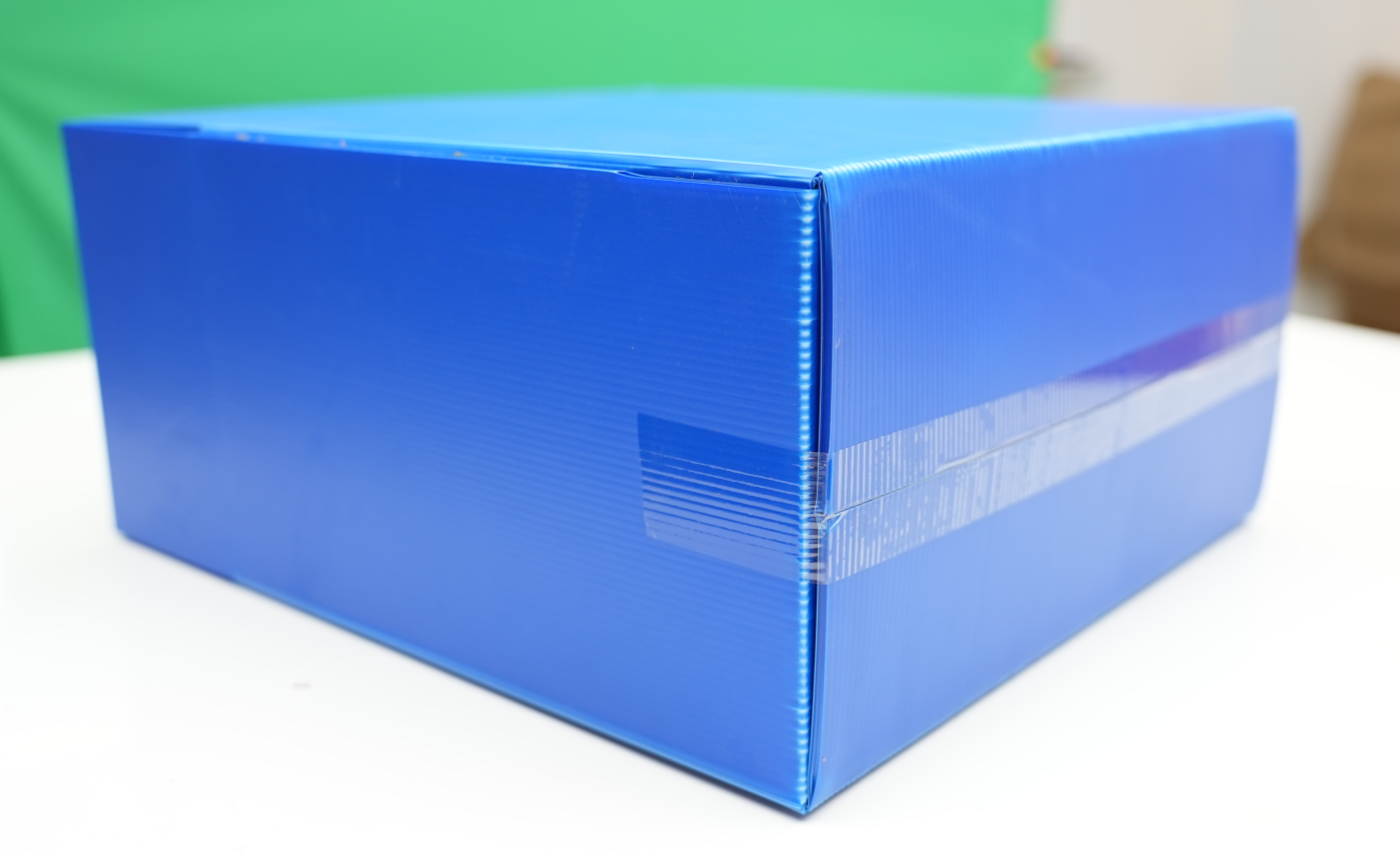
Empty storage totes and pallets often eat up more floor area than the goods they hold. Units designed to nest drop into each other when idle, shrinking a stack of ten empty containers down to the footprint of one or two. That alone can reclaim long stretches of aisle space without any extra racking.
When containers are full, the same design flips roles. Reinforced rims and interlocking feet let loaded bins stack vertically without wobbling or jamming. Four high or six high is common, but the key is that the load path stays straight down through the corners, so narrow aisles stay passable and pickers don't have to step around scattered pallets.
Mobility helps too. Many nesting models roll on casters or fit onto standard hand trucks, so a single worker can move a collapsed column back to storage or bring an empty stack to the packing area without dragging individual pieces across the floor. The result is less clutter at the dock and fewer trip hazards in the middle of a shift.
Waterproof and Chemical-Resistant Boxes for Unpredictable Freight
When a shipment gets caught in a downpour on an open dock or a container leaks next to your cargo, the last thing you want is a box that turns to mush. These boxes are built with a sealed outer layer that keeps water from soaking through, and the material doesn't break down when it comes into contact with common industrial chemicals, oils, or cleaning agents. That means less worry about ruined labels, weakened walls, or contaminated goods.
Freight doesn't always get handled gently, and weather isn't the only thing that can go wrong. A pallet might sit in a puddle, a drum could drip solvent, or humidity in a shipping container can spike overnight. These boxes hold their shape and strength in those conditions because they're treated to resist both moisture absorption and chemical attack. You get a box that still looks and functions like a box when it reaches the warehouse, not a soggy pile of cardboard.
The real advantage shows up in mixed loads where different types of cargo share space. A box that can shrug off a splash of something harsh without delaminating or losing its print keeps the whole shipment safer. For freight forwarders and warehouses dealing with unpredictable handling and storage, these boxes cut down on repacking time and damage claims.
Custom Die-Cut Inserts That Stop Fragile Parts From Shifting
Every shipment of delicate components runs the same risk: movement inside the box turns minor bumps into cracked housings or bent pins. Off-the-shelf foam rarely matches the actual profile of the part, leaving gaps that let things drift during transit. A custom die-cut insert removes that slack by tracing the part's exact silhouette, holding it in a recess that mirrors its shape, so the piece stays put from dock to dock.
Instead of relying on loose fill or layered sheets that compress unevenly, these inserts are cut from dense foam or corrugated material to grip the part at its strongest points. Because the cavity is designed around the specific item, there's no need for extra tape, wedges, or guesswork. The result is a cleaner pack-out, fewer damaged returns, and a presentation that feels intentional rather than improvised.
Reusable Containers That Pay for Themselves After a Dozen Trips
The math behind reusable containers often gets reduced to a simple break-even point, but the real tipping point sits closer to twelve uses than most people expect. After that, every single trip chips away at the upfront cost until the container has literally paid for itself. What rarely gets mentioned is how that twelfth trip changes your relationship with the thing — it stops being a conscientious purchase and starts becoming a quiet habit, a small rebellion against the endless cycle of flimsy takeout boxes and single-use plastics.
Once you cross that dozen mark, the economics get almost embarrassingly favorable. A sturdy glass or steel container that cost you twelve dollars has now effectively cost a dollar per use, and it will likely survive another hundred trips. Compare that to the hidden tax of disposable packaging, which gets baked into every meal you order or every bulk item you buy. The container isn't just recovering its purchase price; it's actively earning back money every week, especially if you start refusing the extra bags, wraps, and sauce cups that typically come with takeout.
But the real payoff isn't just financial. There's a subtle satisfaction in grabbing the same reliable container day after day, knowing it has already outlived dozens of its plastic counterparts. You stop treating it as an investment and start treating it as a tool — one that has quietly crossed from novelty into necessity. By trip thirteen, you're not doing math anymore. You're just living with something that works, and the money it saved you has already disappeared into groceries, coffee, or the next small upgrade to your routine.
Choosing Flute Density: The Hidden Factor Behind Crush Strength
When engineers talk about corrugated packaging, they often fixate on board thickness or paper grade, but the real story behind crush strength lives in flute density. A-flute, with its tall, widely spaced waves, offers excellent cushioning but sacrifices top-load resistance. Swap to E-flute, and you get a tighter wave pattern—more flutes per linear foot—which dramatically increases how much vertical force the board can take before buckling. The difference isn't marginal; it's the difference between a box surviving a warehouse stack or collapsing under its own weight.
That said, higher flute density isn't a universal win. Dense flutes like F or N create stiffer boards that resist bending, but they also become brittle under repetitive impact. For shipping fragile electronics, a mid-range B or C flute often outperforms because it balances crush resistance with enough flex to absorb shocks. The hidden variable is how the flutes interact with the linerboard: too many flutes per inch concentrate stress along the glue lines, leading to premature failure at the bond rather than in the paper itself.
Practical selection usually comes down to testing real-world loads. If your boxes will be stacked six high in a humid environment, lean toward a dense flute combined with a moisture-resistant liner, as humidity softens the paper and magnifies any structural weakness. On the other hand, for lightweight retail packaging that never sees heavy compression, a coarser flute saves material costs without meaningful risk. The trick is to match flute density to the exact failure mode you're trying to prevent—not just the headline crush rating printed on a spec sheet.
FAQ
They handle moisture, impacts, and repeated use far better. The fluted polypropylene structure gives them rigidity without the weight of wood or metal, so they protect contents without adding freight costs.
Most suppliers offer die-cutting, scoring, and custom sizes. You can get dividers, foam inserts, and locking tabs designed around specific items, which cuts down on filler material and movement during transit.
They hold up well in damp or cold environments because the material doesn't absorb water or become brittle easily. Many are treated for UV resistance, so they can sit outside without degrading quickly.
It depends on handling, but many are built for dozens of trips. Unlike cardboard, they don't weaken much from humidity or minor impacts, so they're often used in closed-loop shipping systems for years.
They are significantly lighter than wood or metal crates, which lowers shipping costs and makes manual handling easier. Yet they still stack well and hold substantial loads when designed correctly.
Polypropylene is recyclable through many industrial plastic streams. Some manufacturers also run take-back programs, turning old boxes into new sheets rather than sending them to landfill.
Automotive, agriculture, food processing, and medical supply chains use them heavily. Any operation that needs cleanable, durable, returnable packaging tends to favor corrugated plastic over single-use options.
Look at your load weight, handling method, and trip count. Heavier products or automated lines need thicker walls and stronger flutes, while light parts can use thinner sheets to save money.
Conclusion
Corrugated plastic boxes outperform cardboard in nearly every rough handling scenario. A direct forklift hit that would crush a standard carton leaves these containers with little more than a scuff because the polypropylene walls flex and recover instead of tearing. That same toughness extends to unpredictable freight: sealed seams and non-porous surfaces keep out rain, oil, and most industrial chemicals without breaking down. When you add the right flute density—thicker or tighter flutes for heavier loads—you gain crush strength that stays consistent trip after trip.
Warehouse operations benefit just as much from how these boxes behave at rest. Many designs nest when empty and stack securely when loaded, which clears floor space without needing racks. For fragile or oddly shaped parts, custom die-cut inserts hold each piece in place so nothing shifts during transit. Because the containers themselves survive dozens of cycles, the upfront cost is recovered quickly compared to single-use cardboard. Together these features make corrugated plastic boxes a practical choice for durable storage and shipping in demanding environments.
Contact Us
Contact Person: Mr. Ge Man
Email: [email protected]
Tel/WhatsApp: 8613710506492
Website: https://www.shitengzx.com