
Stainless Steel Threaded Rod Supplier Guide for Choosing High-Quality Fasteners
2026-11-01
Most fastener guides read like spec sheets and leave you guessing at the one thing that matters: will the threaded rod actually hold up? If you're sourcing stainless steel threaded rods, the gap between a decent supplier and a costly failure often comes down to details nobody mentions. This guide cuts through the noise—material grades, thread tolerances, surface finish, and the red flags that separate reliable stock from subpar imports. Whether you're upgrading existing specs or starting from scratch, you'll see why Wanluo approaches rod manufacturing with a different kind of scrutiny. Let's get into the decisions that determine performance before you place your next order.
Reading the Markings Before You Buy
Most shoppers give a quick glance at the price tag and call it a day, but the real story is usually printed in the tiny markings on the label or the product itself. Those little symbols and codes are not just decoration—they tell you where something was made, what it is actually made of, and whether it meets safety standards. For example, a clothing tag that says 100% cotton means a very different washing routine and lifespan compared to a polyblend.
Pay attention to certification marks, too. An item might claim to be waterproof or flame-resistant, but unless there is a recognized testing mark like UL, CE, or ASTM, you are taking the seller's word for it. These marks are printed small for a reason: they are not meant to sell you, they are meant to inform you. If a product lacks the markings that similar items carry, ask why before handing over your money.
Finally, learn to read the care and safety symbols. A crossed-out triangle on a plastic container means it is not dishwasher safe; a snowflake on a car tire means it is designed for winter. These markings are consistent across many brands, but most people never learn them. Spend two minutes studying the markings on your next purchase and you will avoid the frustration of buying something that looks great on the shelf but fails in real life.
Why 316 Outperforms 304 in Harsh Environments
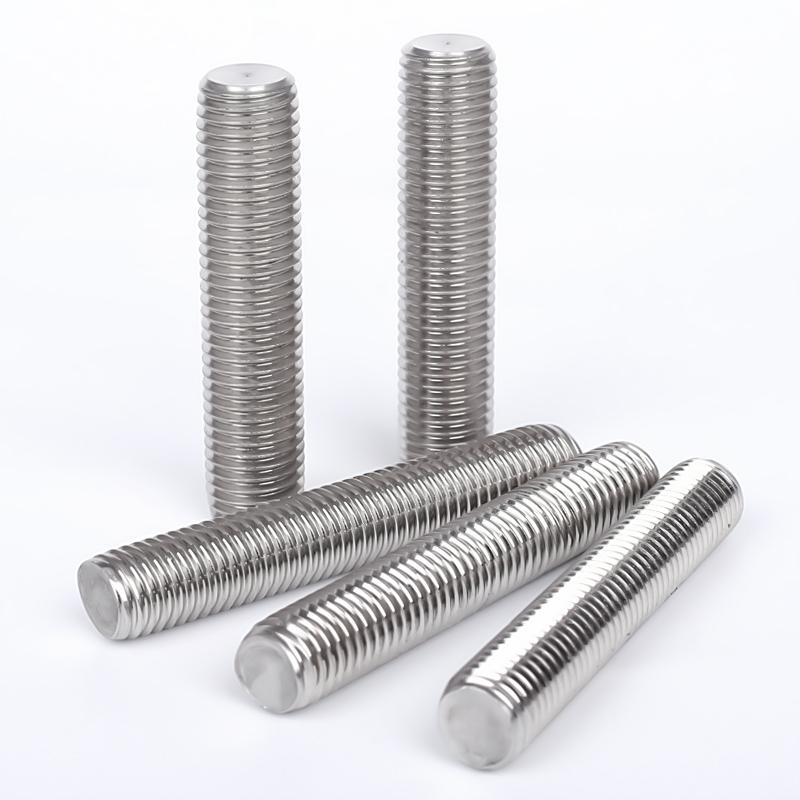
The key difference between 316 and 304 stainless steel lies in their chemical composition. 316 contains molybdenum, typically 2-3%, which significantly improves its resistance to chlorides and industrial solvents. This addition makes 316 far less prone to pitting and crevice corrosion when exposed to saltwater, de-icing salts, or acidic chemical environments.
In real-world applications, 304 performs well in mild atmospheric conditions but quickly degrades in marine settings or chemical processing plants. Fasteners, tanks, and piping made from 316 maintain structural integrity longer, reducing maintenance downtime and replacement costs. For industries like offshore drilling, pharmaceutical manufacturing, or coastal architecture, the extra upfront cost of 316 is recovered many times over through extended service life.
Temperature also plays a role. While both alloys handle high heat, 316 retains better tensile strength and oxidation resistance at elevated temperatures, especially in the presence of sulfur compounds. This makes it the preferred material for exhaust manifolds, heat exchangers, and furnace parts where 304 would scale or warp prematurely.
Tolerance, Thread Fit, and the Cost of Getting It Wrong
When a bolt threads into a tapped hole, the clearance between mating flanks isn't just a design detail—it's the difference between a joint that holds and one that fails in service. Tolerance classes like 6H/6g or 2A/2B define how much wiggle room exists, but many shops treat them as interchangeable. That assumption falls apart on the assembly line: too tight, and you get galling or cross-threading; too loose, and vibration backs the fastener out long before the warranty expires.
The real cost shows up later, often in the form of a field failure or a scrap bin full of parts that won't pass final inspection. Tightening torque specs assume a certain thread engagement, and when the fit drifts, the clamp load follows. One mismatched batch of tapped holes can stall a production run, force rework, or trigger a recall—expenses that dwarf any savings from relaxing tolerances at the machine.
In practice, thread fit is a negotiation between function and manufacturability. A precision assembly may demand a closer class to maintain alignment under cyclic loads, while a high-volume consumer product might tolerate more clearance to speed up tapping and reduce tool wear. The trick is knowing which end of the tolerance band you're actually cutting, because guessing wrong doesn't just cost parts—it costs trust.
Questions Worth Asking a Supplier Before Placing an Order
Before you send a deposit, pin down the real minimum order quantity and whether the supplier actually holds stock or makes to order. A low MOQ on a quote often only applies to their least popular variants, so ask what happens if you need a smaller trial run and get that in writing rather than a quick chat message.
Quality claims mean little until you know how they are verified. Ask if the factory does inline inspection or only final checks, and whether you can pay for a third-party audit before shipment. If a pre-production sample is required, clarify exactly who covers the cost of extra rounds when something is off.
One more thing worth asking is how the supplier handles returns and defects. Who pays return shipping for faulty units? Is there a credit note or a rework timeline? A supplier that answers these without deflecting tells you more than any polished catalogue ever will.
Surface Finish and Passivation: More Than Just Appearance
A surface that looks polished may still harbor microscopic defects which become initiation points for corrosion or contamination. In sanitary processing, for instance, even a slightly rough finish on stainless steel can trap product residue and bacteria, making cleaning far more difficult than a mirror-smooth alternative. The choice of Ra value, abrasive type, and final electropolishing step directly influences how easily a surface can be rinsed free of soils, and these decisions often separate a hygienic design from one that merely appears clean.
Passivation, on the other hand, is frequently misunderstood as a cosmetic treatment. In reality, it removes free iron and other surface contaminants left over from machining or welding, then encourages the formation of a uniform, chromium-rich oxide layer. This layer is what gives stainless steel its self-healing corrosion resistance. Without proper passivation, even a visually flawless component can suffer pitting or crevice corrosion in chloride-containing environments, leading to premature failure far sooner than expected.
Engineers who treat surface finish and passivation as afterthoughts often discover the consequences during operation: galled threads, leaking seals, or unexpected rust stains on supposedly stainless equipment. The best practice is to specify both the mechanical finish and the chemical passivation together, because each complements the other. A finely ground surface with poor passivation may still corrode, while a properly passivated surface with deep scratches can harbor stress risers. The real value lies not in how the part looks on the shelf, but in how reliably it performs after months or years of real-world exposure.
Matching the Rod to the Job Without Overpaying
Most anglers end up with a rod that's either too stiff for finesse work or too soft for punching heavy cover, simply because they bought into a brand story instead of actual casting needs. Start by listing the three techniques you fish most often, then pick a power and action that covers at least two of them cleanly. If you're mainly throwing weightless senkos and small jigs, a medium-light fast action does the job for under a hundred bucks — no need for a three-hundred-dollar specialty stick.
The sweet spot is in the mid-range blanks from smaller builders who skip the fancy reel seats and decorative wraps. Look for a rod with a graphite or composite core, quality guides, and a warranty that actually gets honored. You can often match a sixty-dollar rod to a two-hundred-dollar technique by focusing on line rating and lure weight rather than the label on the butt section. Swap handles, check the guide alignment, and test the bend against a wall before you commit.
Overpaying usually comes from chasing tournament hype or a pro's signature model. Instead, borrow a friend's setup or rent a demo at a local shop, feel how it loads with your normal reel, then shop by those specs. A well-chosen budget rod that fits your casting stroke will outfish an expensive mismatch every single day — and leave cash for the next tank of gas to the ramp.
FAQ
Look for someone who can tell you the melt source, offer mill certificates without being chased, and keeps both 304 and 316 rods in common diameters and lengths. A real supplier will ask about your environment and load requirements instead of pushing whatever is on the shelf.
Request a material test report that lists the heat number and chemical composition. If you want extra certainty, have an independent lab run a PMI check. A quick magnet test isn't definitive—cold-worked 304 can show some attraction, and 316 is often nearly non-magnetic.
Stainless is prone to galling when threads are too tight or rough. Quality rods are rolled to standard tolerances so nuts spin on without slop or seizing. Ask for a sample and run a nut down the full length; if it binds halfway, walk away.
For dry indoor settings, 304 usually holds up well. But if there's any humidity, chlorides, or occasional washdown, 316 gives noticeably better corrosion resistance. The price gap has narrowed, so many buyers now standardize on 316 to avoid mixed inventory.
Look at the thread crests and ends. Sharp burrs, torn threads, or dark oxide patches suggest poor tooling or skipped passivation. Passivated rods should have a uniform, dull silver-gray surface. Any signs of rust on a new rod means the passivation didn't work.
When a supplier cuts and chamfers rods to the exact lengths you need, the thread lead-in is clean, and you don't waste hours with a hacksaw and die. It also keeps the zinc or oxide layer intact at the ends, which matters for corrosion resistance.
Significant weight differences between rods of the same size—that can indicate wrong alloy or diameter core. Also beware of certificates that don't match the heat number stamped on the rod. If the price is far below the market for the declared grade, the material is probably not what it claims.
Traceability helps even on regular jobs. If a batch of rods fails after installation, you can identify which lot to replace instead of tearing everything out. Good suppliers keep electronic records and can pull a heat number from the rod markings, which is a sign they have real quality control.
Conclusion
A lot of fastener selection still comes down to checking details that get skipped when orders are rushed. Before anything else, read the grade markings stamped on the rod—if the supplier can’t tell you what they mean, that’s already a warning sign. For any job that sees salt, chemicals, or constant moisture, pay the small premium for 316 over 304; the molybdenum in 316 is what keeps pitting and crevice corrosion from turning a minor stain into a structural failure. Fit matters just as much as alloy. A rod with loose thread fit or an out-of-spec tolerance might thread in easily but will back out under vibration or load, and the cost of rework or replacement far exceeds what you saved on the cheaper batch.
A good supplier should welcome questions about their passivation process and surface finish because those aren’t cosmetic extras—they determine how well the threads resist galling and corrosion over time. Ask for mill certificates, whether the rod was tested for tensile strength, and what their tolerance standard actually is. Then match the rod to the actual job: a heavy hex bolt in a dry indoor frame doesn’t need the same alloy or finish as a marine anchor bolt. Over-specifying costs money, under-specifying costs downtime. The suppliers that give straight answers about markings, alloy differences, thread fit, and passivation are usually the ones worth keeping on your list.
Contact Us
Contact Person: Shane
Email: [email protected]
Tel/WhatsApp: 8613357785029
Website: https://www.wanluohardware.com