
Silicon Dioxide Food Additive: Which Type Is the Strongest?
2026-09-19
When scanning ingredient lists, silicon dioxide often gets a passing glance—just another anti-caking agent. But dig deeper and you'll find distinct types, each with unique structural strength. The question isn't whether it works, but which form genuinely outperforms the rest. At Zhonglian, we've tested the boundaries, and the strongest candidate may not be the one you expect.
What Actually Makes One Silica Stronger Than Another
Not all silica is the same, even though chemically it boils down to silicon dioxide. The real difference lies in how readily it converts into bioavailable silicic acid inside the body. Plant-based sources like bamboo and horsetail naturally bind silica to cellulose and other fibers, which can slow release. In contrast, some synthetic amorphous silicas and mineral-derived forms are processed into smaller, more soluble particles. The form itself often matters more than the raw silica percentage on a label.
Particle size and surface area play a huge role too. A finely milled, highly porous silica exposes far more surface area to digestive fluids, so it dissolves faster and enters the bloodstream more efficiently. Purity is another factor—traces of heavy metals or unwanted minerals can interfere with uptake. The production method, whether it uses high-temperature calcination or a gentler extraction, changes the final structure and ultimately determines how much usable silicon your body actually receives.
Fumed Silica’s Grip on Moisture and Flow
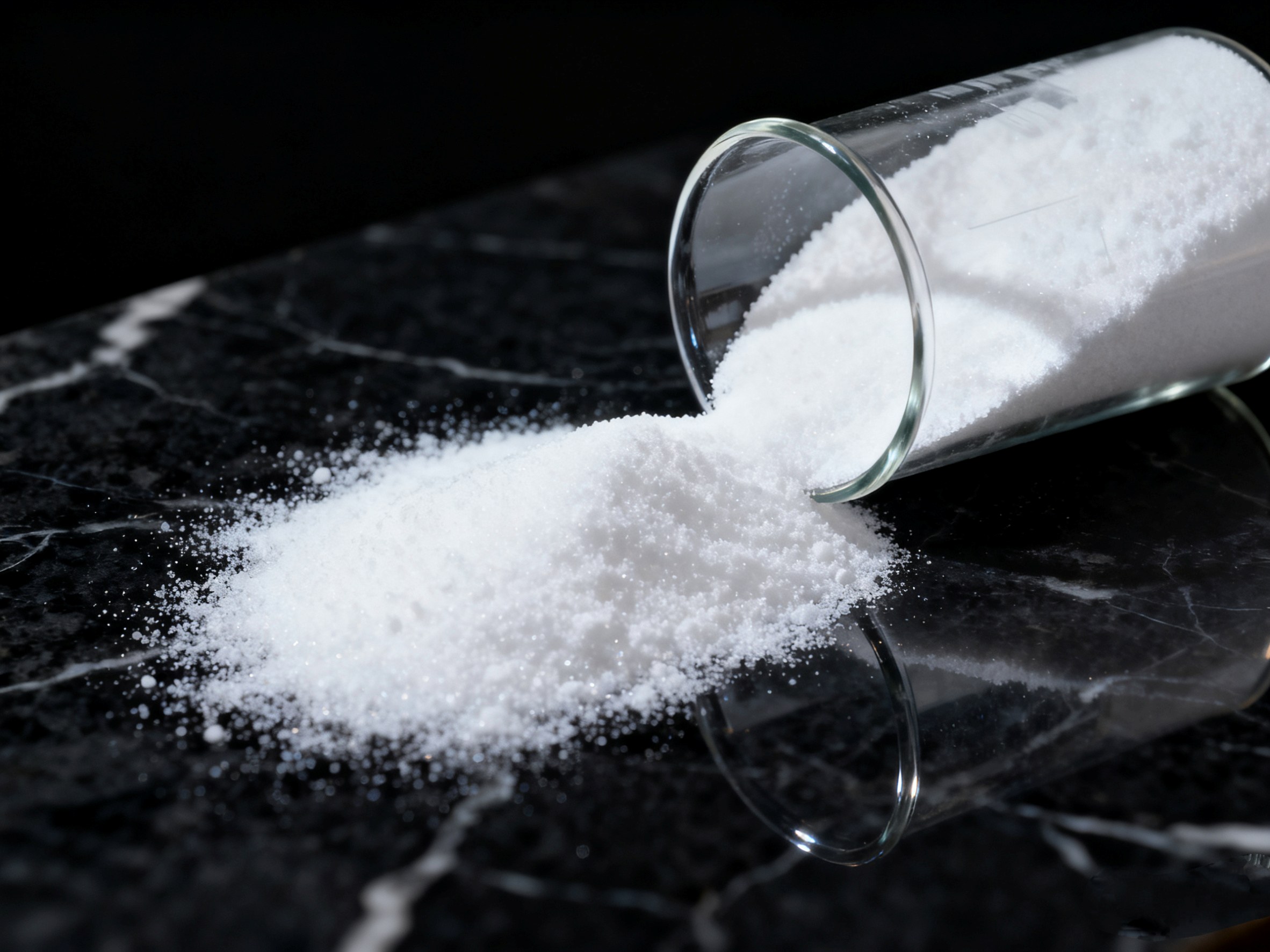
Fumed silica doesn’t just sit there—it actively hunts for moisture. Its chain-like clusters of nanoparticles form a wild, branching network that can lock up water molecules through surface silanol groups. Even at low humidity, this powder pulls vapor out of the air, changing the way surrounding materials behave. A tiny addition to a coating or adhesive can keep it from turning gummy in a damp room, acting like an invisible sponge that never drips.
But water isn’t the only thing it grabs. When mixed into a liquid, fumed silica creates a scaffold that traps particles and prevents them from settling. The same hydrogen bonds that snag moisture also build a loose, thixotropic cage—thick when still, fluid when shaken. That’s why a ketchup bottle pours smoothly after a shake, yet holds its shape on a plate. It’s not chemistry in a textbook sense; it’s more like thousands of microscopic hands briefly linking and letting go.
The real trick is how fumed silica balances both roles at once. Too much moisture-locking can make a powder clumpy, while too much flow control can leave a liquid runny. Formulators tweak the surface area—anywhere from 50 to 400 square meters per gram—to tune the grip. A paint that needs to stay put on a vertical wall, a toner that must flow freely through a printer, a vitamin powder that shouldn’t cake in the jar: each one leans on a slightly different handshake between silica, water, and motion.
Precipitated Silica: The Underestimated Workhorse
Walk through any tire plant or toothpaste factory and you'll find precipitated silica doing heavy lifting without much applause. It hides in plain sight as a reinforcing filler that improves wet grip and rolling resistance, yet its role rarely makes headlines. Unlike carbon black, this synthetic amorphous form of silicon dioxide offers a lighter, brighter alternative that quietly reshapes rubber performance.
Beyond tires, the material slips into food powders, paints, and coatings, preventing caking and controlling viscosity where few people notice. Its high surface area and tunable particle size let formulators dial in properties such as absorption, abrasion resistance, or matting. That versatility is exactly why it deserves more credit: one substance, dozens of industry-specific grades, almost no public recognition.
Part of the reason for its low profile is that precipitated silica doesn't have a dramatic origin story or a single flagship use. It functions as an enabler—improving flow, extending durability, or reducing weight—often in formulations where it remains invisible in the final product. The next time you stop safely on wet pavement or brush with a smooth toothpaste, consider the workhorse that made it possible.
The Role of Surface Area in Anti-Caking Power
Powders clump when individual particles find enough contact points to fuse together, and surface area sits at the heart of that process. A fine powder with a high specific surface area exposes far more particle boundaries to moisture, static charge, and mechanical pressure than a coarser material with the same bulk volume. This means the fine particles have a greater tendency to interlock or sinter at contact zones, turning a free-flowing ingredient into a stubborn mass. Yet that same expansive surface area can become an advantage when an anti-caking agent is introduced: the more surface available, the more sites there are for the additive to attach and create a physical barrier between host particles.
Anti-caking agents typically work by competing for those surface interactions. A highly porous or finely divided host powder might seem like a nightmare for flow, but it also allows a relatively small amount of anti-caking agent—often itself a very fine silicate or clay—to spread over an enormous area. This coverage disrupts the liquid bridges and van der Waals forces that would otherwise pull host particles together. In contrast, a powder with low surface area and large, smooth particles may suffer fewer initial contact points, but those contacts are strong and concentrated; an anti-caking additive has a harder time interrupting them without migrating or leaving bare patches.
The practical upshot is that surface area is not simply a villain or hero—it changes how anti-caking power must be delivered. Formulators often measure the Brunauer–Emmett–Teller surface area of the host powder and match it to an anti-caking agent with a compatible particle size and morphology. Too little surface coverage and the additive fails; too much and you may get dustiness or unwanted texture changes. The sweet spot lies in balancing the host's exposed area with enough barrier material to prevent interparticle bonding without overwhelming the powder's own character.
Gel-Type Silica: Strength in a Different Form
Gel-type silica is often mistaken for a hard, glassy solid, but its real strength comes from an amorphous, open network rather than a neatly ordered crystal. During the sol-gel process, silica particles link into a continuous three-dimensional cage that traps solvent in countless tiny pores. This structure gives the material surprising crush resistance and dimensional stability for its low density, and the pore size can be adjusted over a wide range to suit different applications.
That porous framework is what separates gel-type silica from fused quartz or ordinary sand. It can absorb mechanical shock, hold large amounts of adsorbate, and survive repeated heating and cooling without losing its shape. In high-pressure liquid chromatography, for instance, the particles remain intact under intense flow, allowing faster runs without the column bed collapsing. Similar benefits show up in thermal insulation and catalyst supports, where the material is formed into beads, monoliths, or coatings while retaining its structural integrity.
A less obvious advantage is that gel-type silica can be deliberately strengthened through careful aging and drying. The capillary forces that develop when solvent leaves the pores have to be controlled to prevent cracks, but once the network is dry, it becomes a lightweight yet tough solid. That blend of high porosity, chemical inertness, and physical resilience is why gel-type silica keeps finding new roles in moisture control, optics, and precision manufacturing.
Matching Silica Strength to Your Food System
Not all food-grade silica behaves the same way once it hits your mixer. The term strength here usually refers to aggregate size, porosity, and how much surface area is available to interact with food particles. A fine, low-structure silica spreads easily through dry seasonings and powdered spice blends, coating individual particles just enough to stop clumping without leaving a chalky residue.
High-hygroscopicity systems call for a different animal. Grated cheese, instant beverage powders, and soup bases pull moisture from the air fast, so they benefit from a higher-strength silica with deeper internal pore volume. That extra porosity acts like a buffer, absorbing free moisture and surface oils before they can bridge particles. But over-dosing here backfires: the powder can start to feel dry or gritty, and you may see dusting issues at the packaging line.
For liquid and paste matrices—think oil-based seasoning slurries or low-fat chocolate coatings—match silica strength to the rheology you need. A moderate-structure silica can suspend solids and delay settling without turning the batch into a thick gel. Start with a bench-top trial at 0.5–1.5% by weight and adjust based on shear during mixing; the right grade should disappear into the texture, not announce itself.
FAQ
The main food-grade types are fumed silica, precipitated silica, and silica gel. Fumed silica has an extremely fine, chain-like particle structure, precipitated silica forms larger porous aggregates, and silica gel is a bead-like porous form. All are listed as E551 in the EU but differ in particle size, surface area, and bulk density.
Fumed silica generally shows the strongest anti-caking performance per gram because its nanoscale primary particles create a very high surface area and a low bulk density. It coats host particles more uniformly and prevents moisture bridging even at low addition rates, often below 1%.
In the context of food additives, 'strongest' usually refers to anti-caking and free-flow efficiency rather than thickening. Fumed silica excels at both anti-caking and viscosity control, but if you focus purely on thickening in liquid systems, fumed silica also builds higher yield stress than precipitated silica at equal loading.
Not always. Fumed silica is stronger by weight in most dry blends, but in coarse, high-fat, or high-moisture powders, a larger-particle precipitated silica or silica gel can sometimes perform better because they create more mechanical spacing between particles rather than relying on surface coating.
Fumed silica is produced by flame hydrolysis of silicon tetrachloride, resulting in branched, three-dimensional aggregates of primary particles around 7–40 nm. This open, fractal network gives it an exceptionally low tapped density and high external surface area, which translates to stronger particle separation at low doses.
No, the choice depends on the food matrix and processing. Fumed silica is often used in powdered drink mixes, grated cheese, and seasoning blends where a very fine, highly active powder is needed. In tableted supplements or oily powders, precipitated silica or silica gel may be preferred to avoid dusting issues or excessive thickening.
All food-grade silicon dioxide types share the same E551 approval and are considered safe at regulated usage levels. The 'strength' difference is functional, not toxicological. However, fumed silica's extremely small particle size raises more dust, so occupational exposure limits and good manufacturing practices matter more during handling.
A practical approach is to run a flowability test like angle of repose or bulk density measurement with each candidate at 0.2%, 0.5%, and 1.0% addition. Also check caking under controlled humidity. Often fumed silica wins at the lowest dose, but you should validate with your actual blend because particle shape, fat content, and moisture can flip the ranking.
Conclusion
When formulators ask which silicon dioxide food additive is the strongest, the answer hinges on how "strength" gets measured. Fumed silica tends to win in anti-caking efficiency because its production process creates flame-hydrolyzed particles that fuse into branched, chain-like aggregates. Those aggregates carry an exceptionally high surface area—often above 200 m²/g—so a tiny dose can coat a large volume of powder and seize moisture through surface silanol groups. The result is a dry, free-flowing mix even in hygroscopic seasonings or cheese powders. Precipitated silica, by contrast, is produced through a wet chemical reaction that yields larger, more rounded primary particles and lower surface area. It is often dismissed as a weaker sibling, but that view misses its real strength: it offers reliable, predictable anti-caking at a lower cost and with less dusting, which makes it the workhorse for many dry blends.
Gel-type silica brings another dimension. Its highly porous, three-dimensional network can absorb moisture and sometimes oil, giving it a different kind of "strength" in systems where liquid retention matters more than sheer particle separation. Surface area is the core driver of anti-caking power, but it is not a simple linear race. Excessive surface area can cause powders to feel sticky or reduce bulk density, so the strongest silica for a specific food system is the one that balances surface chemistry, particle shape, and dosage. Fumed silica generally delivers the highest anti-caking force per gram, but precipitated and gel types earn their place by matching the physical demands of the product—whether that means low dust, oil binding, or stable flow under humid processing conditions.
Contact Us
Contact Person: Levin Wang
Email: [email protected]
Tel/WhatsApp: 8618668999988
Website: https://www.silicaplant.com/