
Recloser Supplier You Can Trust for Dependable Power Distribution
2026-08-31
When a momentary fault knocks out power to an entire feeder, every second of downtime costs money and trust. That's why utilities and industrial operators are turning to reclosers engineered for fast, reliable fault isolation and restoration. But not all recloser suppliers are equal. Some promise dependability; very few deliver it in the field. That's where Deepwill comes in. In this post, we'll explore what makes a recloser supplier truly trustworthy, and why Deepwill's approach to power distribution is changing expectations.
Why Utilities Replace Breakers With Our Reclosers
A standard breaker does one job: it trips. When a tree branch slaps a line or a squirrel bridges a phase, the breaker opens and the entire feeder goes dark until a crew arrives. That's the hidden cost nobody puts in the budget. Our reclosers think before they act. They test the line with a series of brief interruptions—usually two or three quick shots—and if the fault is temporary, the circuit closes back in and power is restored in seconds. Customers barely notice a blink.
The difference shows up in the data. Utilities that swap legacy breakers for reclosers typically see a 60–80% drop in sustained outage minutes on protected feeders, because roughly 70% of faults are transient. Those are tree contacts, wind slap, lightning-induced flashovers—events that clear themselves. A breaker can't tell the difference between a dead short and a branch that bounced off the wire. A recloser can, and it acts accordingly.
There's also a mechanical angle. Breakers at the substation accumulate wear every time they interrupt fault current. Using reclosers out on the line keeps that stress away from expensive switchgear and lets utilities defer capital replacement. Add in directional protection, remote monitoring, and event logs, and the question isn't why utilities replace breakers—it's why any still haven't.
The Recloser That Learns Your Grid's Habits
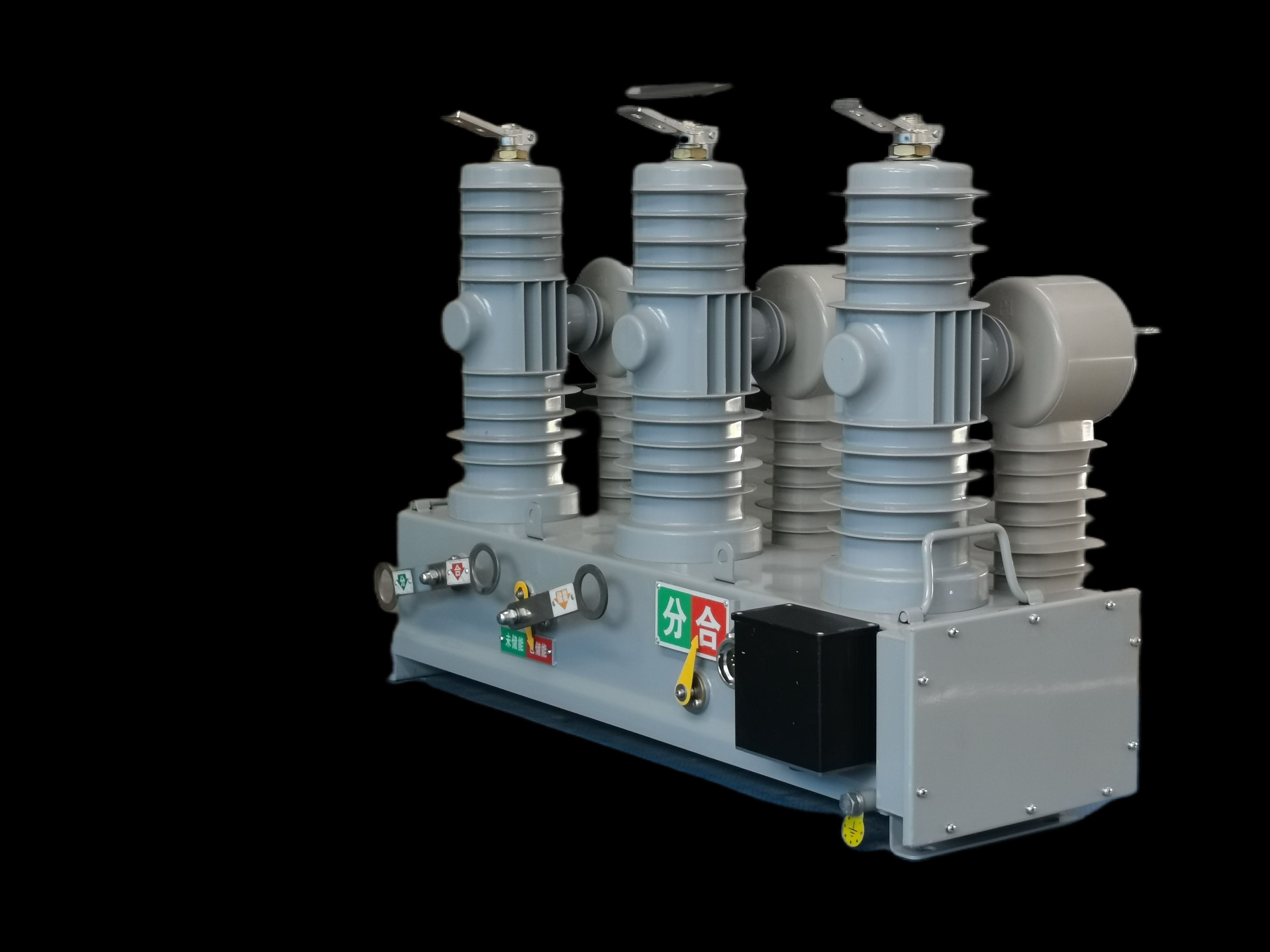
Most reclosers follow fixed timing curves that were programmed once and never adapt. This one watches load patterns, fault signatures, and switching events over time. It builds a working memory of what "normal" looks like on your specific feeder, so a passing disturbance isn't treated the same as a tree branch on the line.
The result is faster restoration for real faults and far fewer nuisance trips. When solar inverters, battery storage, or new commercial loads change the rhythm of your grid, the recloser quietly updates its expectations. It doesn't need a technician to tweak settings every season—it just keeps learning.
Over weeks and months, the device gets better at predicting where and when trouble will appear. That means line crews spend less time chasing false alarms, and customers experience fewer sustained outages. Instead of reacting to what the grid used to be, it works with what the grid is right now.
No More Midnight Calls for Avoidable Outages
The 2 a.m. phone call that drags you out of bed usually has one thing in common: it didn't have to happen. Most unplanned outages trace back to minor issues that simmered unnoticed for days or weeks. By the time an alarm sounds, the damage is already done. But with continuous condition monitoring and smarter diagnostics, these small failures surface long before they can knock down a critical system.
Traditional maintenance schedules assume equipment wears out on a calendar, not in real life. That leaves gaps where a perfectly good part gets replaced too early, while a stressed component goes ignored until it fails. Shifting to predictive indicators—vibration changes, thermal drift, irregular current draw—keeps your focus on what is actually degrading. The result is fewer surprises and far less unplanned downtime.
Automated response takes it a step further. When a deviation is detected, systems can adjust load, reroute traffic, or shed non-critical functions before a full outage develops. That means your team gets an informative notification during working hours instead of an emergency call at midnight. The goal is not just to react faster—it's to make the urgent call the exception, not the routine.
Designed to Reclose, Built to Endure
The resealable strip doesn't just snap shut—it clicks with a confidence that says your crackers won't go stale by tomorrow. Each closure is engineered to survive dozens of openings without losing its grip, so the bag works as hard on day thirty as it does on day one.
Beneath that easy-open top lies a film that refuses to quit. It shrugs off punctures from sharp pantry corners, holds its shape in a crowded freezer, and won't turn brittle when temperatures drop. You can fold it, stack it, or tuck it into a lunchbox—the material springs back instead of cracking.
What really sets this apart is how the two ideas reinforce each other. A tight reclose means less exposure to air and moisture, which keeps the material from degrading prematurely. And because the structure stays strong, the seal stays aligned. The result is packaging that feels less like a temporary wrapper and more like a reusable tool you'll reach for again and again.
Smart Fault Sensing Without the Complexity
Fault detection usually means wiring in extra sensors, configuring thresholds, and hoping the system doesn't cry wolf. What if reliability didn't demand that overhead? The core idea here is simplicity by design: use the data you already collect and let lightweight logic do the heavy lifting. No new hardware, no elaborate calibration routines—just cleaner signals turned into actionable alerts.
Traditional monitoring stacks often collapse under their own weight when every minor glitch triggers a cascade of notifications. Smart fault sensing flips that model. Instead of reacting to every anomaly, the system learns what normal looks like from routine operation, then flags only meaningful deviations. That means fewer false positives, faster root-cause checks, and maintenance teams spending time on fixes rather than chasing ghosts.
The practical win is resilience without the integration headache. Whether you're watching motor currents, pressure trends, or thermal drift, the approach stays the same: observe, compare, and act only when the pattern breaks. You don't need a data science team to run it, and you don't need to rip out existing infrastructure. Just a smarter way to read what's already there.
From First Fault to Final Reclose: One Less Headache
A fault on a distribution feeder rarely announces itself politely. The first trip can be triggered by a tree branch, a lightning strike, or an animal across bushings. What matters is what happens next. Instead of leaving the line dead until a crew arrives, modern reclosers step through a programmed sequence: open on the first overcurrent, wait a short dead time, then close again to test whether the fault is still present. If it was transient, service returns before most customers even check the clock.
The real headache begins when the fault is permanent. Each reclose attempt has to balance two competing goals: keep customers in service and avoid cooking a damaged conductor or transformer. A well-tuned recloser reduces that tension by adapting its sequence to the type of fault and the condition of the line. For example, on a rural tap with lots of tree exposure, an aggressive first reclose makes sense. On a heavily loaded urban feeder, a slower curve and fewer shots may be the wiser call.
By the time the final reclose ends in lockout, the recloser has already gathered the information a troubleshooter needs: fault current magnitudes, phase selection, and the number of successful or failed attempts. That turns a long patrol into a focused drive to the most likely span. From first fault to final reclose, the process is less about guesswork and more about letting the device do the tedious part — so the crew can fix the problem instead of hunting for it.
FAQ
Our reclosers combine robust fault interruption with smart grid readiness, so utilities can reduce outage times without adding complexity to their existing setup. Each unit undergoes a 48-hour load cycle test before shipping.
We use stainless steel enclosures and sealed electronics rated for extreme temperatures and humidity. Field data from installations in coastal and desert regions shows a mean time between failures above 20 years.
Yes, they support DNP3, IEC 61850, and Modbus out of the box. We also provide pre-configured communication maps for common RTUs, so commissioning typically takes less than a day.
You get direct access to our engineering team, not a call center. We offer on-site commissioning assistance, remote diagnostics, and a 10-year spare parts guarantee with no minimum order quantity.
Absolutely. We work with your protection engineers to tailor inverse-time, definite-time, or hybrid curves to your coordination study. Settings are preloaded and verified before dispatch.
We stock standard 15kV, 27kV, and 38kV reclosers in regional warehouses. For urgent orders, we can ship within 48 hours and arrange field technician support if needed.
Each unit is tested to IEEE C37.60 and IEC 62271-111. We also provide third-party type test reports from KEMA and DNV upon request, not just a certificate of conformity.
We provide a 5-year full replacement warranty on the entire recloser, including the controller and batteries. If a unit fails due to manufacturing defect, we replace it and cover the freight both ways.
Conclusion
Utilities replace breakers with our reclosers for a simple reason: the equipment knows the difference between a temporary fault and a real problem. It watches the line, picks up on normal patterns, and only trips when something actually needs to be cleared. That means fewer avoidable outages and fewer midnight phone calls for crews who already have enough on their plate. The build quality backs that up—contacts and mechanisms are made to handle repeated reclose cycles without falling apart after a season of storms. Fault sensing stays straightforward too, giving clear trips without drowning technicians in configuration screens.
From the first fault to the final reclose, the whole sequence runs with less guesswork. Over time, the recloser adjusts to how a feeder behaves, so it won't lock out over harmless quirks that are just part of the grid's routine. That dependability is what makes the supplier worth trusting when reliability metrics matter. It's not about adding another layer of complexity to the distribution network; it's about giving field teams a device that does the hard, repetitive work of interrupting faults and restoring power quietly. The result is fewer truck rolls, shorter outage durations, and a distribution system that recovers faster after every disturbance.
Contact Us
Contact Person: Julion
Email: [email protected]
Tel/WhatsApp: 8617351370631
Website: https://www.deyunelectric.com