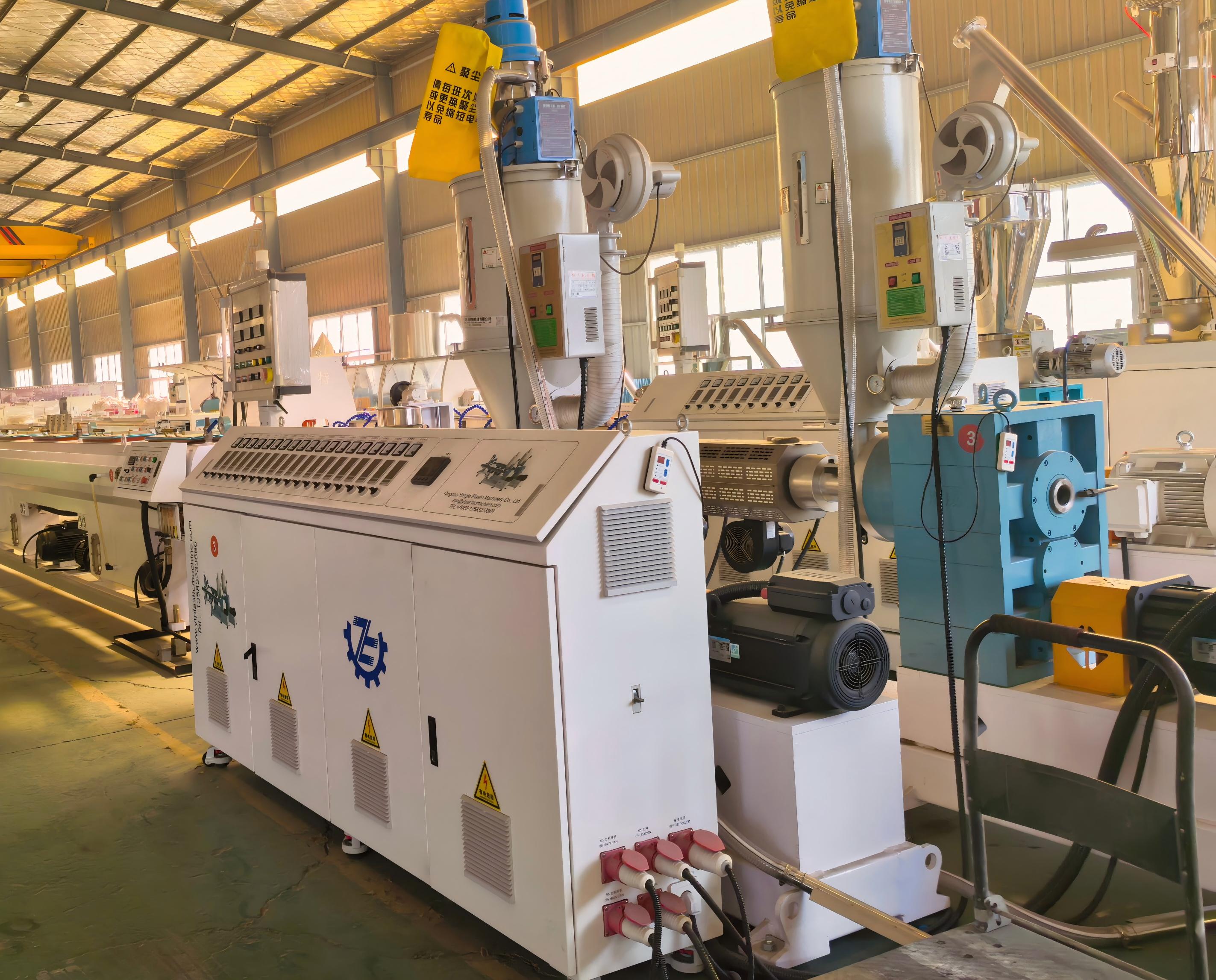

Plastic Lumber Machine Solutions: Turn Waste into Durable Building Materials
2026-10-04
Every year, staggering amounts of plastic waste pile up in landfills and waterways while builders pay premium prices for lumber. Yongte plastic lumber machines offer a practical fix: they transform discarded bottles, bags, and packaging into heavy-duty boards that resist rot, insects, and moisture. Instead of treating waste as a problem, these systems turn it into a reliable raw material for decks, fences, and outdoor furniture. If you're curious how a single machine can close the loop between trash and construction, keep reading — the economics and the environmental payoff might surprise you.
What You Can and Can't Feed a Plastic Lumber Machine
Many people assume a plastic lumber machine will happily eat any plastic you toss in, but it's actually pickier than that. HDPE from milk jugs and detergent bottles, along with LDPE from shopping bags and shrink wrap, are the star ingredients. They melt at relatively low temperatures and don't break down easily, which means a smoother flow through the extruder. Polypropylene, like bottle caps and yogurt cups, can be used too, but it often works best blended with HDPE or LDPE to keep the melt stable. Whatever you feed it, make sure the plastic is clean and dry. Food residue, paper labels, or glue can ruin a whole batch.
On the other side, there are plastics you should never introduce. PVC, found in pipes and old credit cards, releases hydrochloric acid gas when heated. That will corrode the machine's internals and create a serious health hazard. PET from soda and water bottles melts at a much higher temperature and tends to carbonize, which clogs the nozzle and ruins the output. Polystyrene foam, multi-layer snack bags, and anything mixed with metal, glass, or rubber are also off the menu. Even a tiny bit of contamination can lead to blocked dies or boards with weak spots and ugly streaks.
It helps to think of the machine less as a universal recycling bin and more as a fussy chef. If you're not sure whether a particular plastic is safe, run a small test batch and watch how the melt flows and what it smells like. In the end, the quality of your plastic lumber depends far more on how you prepare the feedstock than on the machine itself.
The Melt and Filtration Stage Nobody Talks About
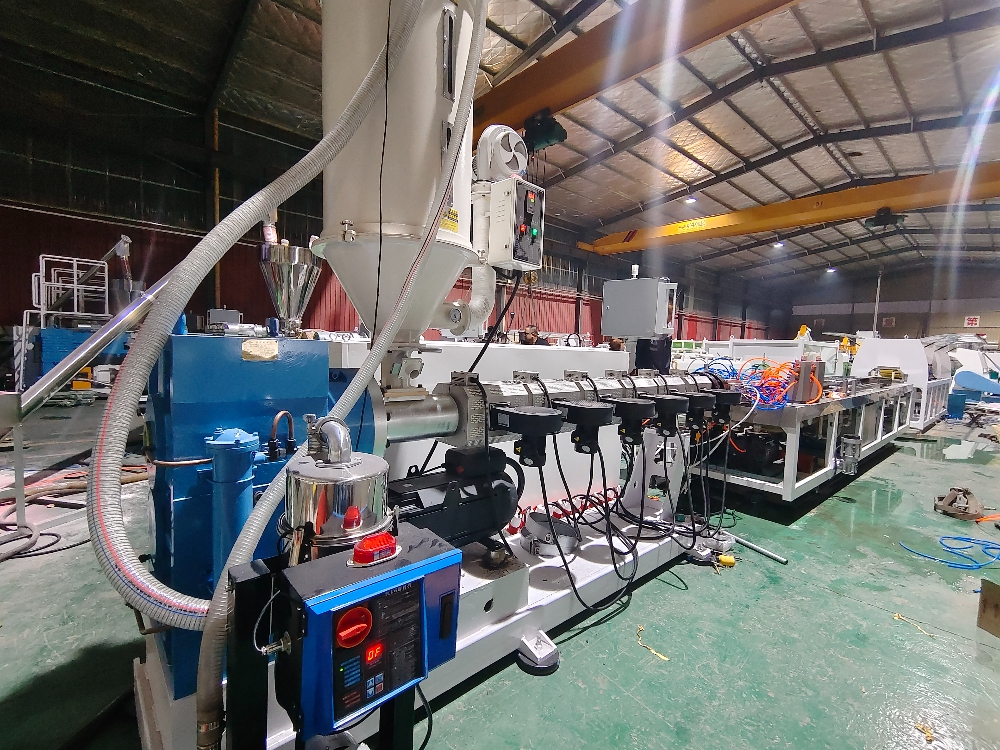
Most processors treat melt filtration as a checkbox item: install a screen changer, pick a micron rating, move on. But the actual stage hides a lot of subtle failures. Melt temperature at the screen pack often runs 10–15°C hotter than the barrel setpoint because of shear heating, and that extra heat quietly breaks down heat-sensitive additives before the extrudate ever reaches the die.
Filter pressure drop is another quiet variable. A fresh screen might sit at 20 bar, but after an hour of running regrind, that number can climb to 80 bar without anyone noticing until surging starts. The real trouble isn't the clog itself—it's the long dwell time upstream. Polymer sits in the melt channel longer than intended, and stabilizers get consumed. What comes out looks fine but fails a brittleness test weeks later.
Then there's the filtration media nobody audits. Woven wire, sintered metal, and candle filters all change flow patterns differently. A cheap screen can let 200-micron gels slip through while catching 50-micron particles because of channeling. If you're not logging pressure before and after the filter every half hour, you're flying blind.
Wet Climates Are Where Plastic Lumber Finally Wins
In damp coastal towns or rain-soaked backyards, traditional wood decking and fencing rot, warp, and invite mold within a few seasons. Plastic lumber shrugs off constant moisture because it never absorbs water. There's no fiber to swell, no grain to split, and no organic matter for fungi to feast on.
What often gets overlooked is the long-term maintenance cost. Homeowners in humid regions spend weekends sanding, staining, and replacing boards. Plastic lumber eliminates that loop entirely. A quick rinse with a hose is usually enough, and the color stays consistent because the pigment runs through the entire profile, not just a surface coat.
Builders who once dismissed synthetic wood as a niche product now recommend it for docks, boardwalks, and shaded garden paths where standing water is unavoidable. In these environments, even pressure-treated wood eventually fails. Plastic lumber's resistance to rot, insects, and moisture gives it a clear functional advantage that no amount of sealant can match.
What Breaks First and How to Stay Ahead of It
Most systems don’t fail from dramatic events—they fail from the component that has been quietly absorbing stress without anyone watching. In practice, that is often a legacy integration, a single point of contact who holds undocumented knowledge, or a batch job that has been retrying silently for weeks. The first thing to break is rarely the most complex part; it is the part with no feedback loop. Staying ahead means identifying these invisible load-bearing pieces and giving them a way to complain before they collapse.
A useful habit is to treat near-misses and low-level anomalies as early drafts of a future outage. When a backup runs late, a queue starts backing up, or a key person is out sick, the system is telling you where its margins are thin. Instead of chasing only the loudest alerts, keep a short list of quiet metrics—queue depth, failed retries, cache hit rate, time since last successful restore—and review them weekly. The goal is not to build a perfect monitoring dashboard, but to notice the trend changes that indicate a component is running out of slack.
The final layer of protection is designing for partial failure. Ask what still works if the database goes down, if a supplier misses a deadline, or if a core team member leaves. Build small, independent paths so that one broken part doesn’t take the whole operation with it. Rehearse the failure itself—pull the plug on a non-critical service or simulate a key person being unavailable—so the team learns what degraded mode feels like. Staying ahead of what breaks first is less about prediction and more about reducing the cost of surprise.
The Real Cost per Plank: Energy, Labor, and Resin
When pricing out composite decking, most people fixate on the sticker price per board. But the true cost per plank is far more opaque, tangled up in three things that rarely appear on an invoice: the energy consumed during manufacturing, the labor needed to turn raw materials into a usable product, and the resin that binds everything together. Energy isn't just the electricity running the extruders—it includes the heat required to melt polymers, the power for cooling lines, and even the fuel burned to transport raw inputs. Labor, meanwhile, shifts depending on whether a plant runs automated lines or relies on hand-finishing edges. And resin, often the priciest ingredient, fluctuates with petrochemical markets, meaning a single plank's cost can swing by double digits without any change in the factory floor.
Breaking these down reveals some uncomfortable math. A mid-range composite plank might contain roughly 40% recycled wood fiber and 60% plastic, but the resin coating or capstock layer—typically polyethylene or polypropylene—can account for over half the material cost. Energy bills vary wildly by region: a plant in the Pacific Northwest might tap hydroelectric power at a fraction of the cost of one in Texas relying on natural gas peaker plants. Labor, too, hides in unexpected places. Trimming, embossing, and quality inspection are often still manual, and a single defect caught late can erase the profit from ten good boards. When you add the energy to re-grind scrap, reheat failed batches, or run dust collection systems, the real cost per plank often exceeds the nominal production cost by 20–30%.
None of this shows up in a big-box store price tag, but it matters for anyone comparing quotes. A cheaper plank might simply reflect a manufacturer running older, energy-hungry equipment with more manual touch-ups—costs absorbed elsewhere, like thinner capstock or lower recycled content. Conversely, a premium price doesn't automatically mean premium resin; some brands charge more for marketing while using the same base polymer as budget lines. The next time you're weighing decking options, ask where the energy comes from, how labor-intensive the finishing is, and exactly what resin grade sits under your feet. Those three answers will tell you more about the real cost per plank than any spec sheet ever will.
Scaling Up Without the Usual Pilot-Run Pain
Traditional scale-up often treats the pilot phase as a necessary ordeal—separate equipment, duplicated efforts, and a slow march toward full production. But there’s a quieter path: embed production intent into every R&D batch from day one. By matching mixer geometry, thermal profiles, and material contact surfaces at small scale, you capture the variables that actually matter before they become line-stopping surprises.
Instead of a single high-stakes pilot campaign, use overlapping micro-batches that run on the same control system as the main line. This builds operator muscle memory and reveals edge cases—like viscosity drift or sensor lag—without dedicating a full factory to trial runs. Paired with real-time multivariate monitoring, the transition feels less like a leap and more like turning up a dial.
FAQ
Generally, polyolefins like LDPE film, HDPE bottles, and PP packaging run well. Mixed loads with some PET or PVC can still be processed, but too much PVC causes acid fumes and barrel corrosion. The most forgiving feeds are post-consumer bags and agricultural film because they melt at similar temperatures.
Not necessarily. These machines often have vented barrels and melt filtration to handle some dirt, paper labels, and moisture. But if the moisture content stays above 8-10% by weight, you'll see bubbles and weak spots in the final board. A simple squeeze-dry or air drying step is usually enough for typical waste film.
The process combines shredding, melting, and extrusion. First the waste is ground into flakes, then it passes through a heated barrel where a rotating screw melts and mixes it. A die shapes the molten mass into a board or post, and cooling tanks solidify it under controlled pressure. The key is maintaining a steady melt temperature between 180°C and 220°C to avoid degradation.
Plastic lumber won't rot, splinter, or get eaten by termites. It also doesn't need painting or sealing every few years. The downside is that it flexes more under heavy loads and expands slightly in direct sun. For decking, fencing, and retaining walls, the lifespan often exceeds 30 years, which offsets the higher upfront cost.
Yes, most machines use interchangeable dies. You can switch from a 4x4 post die to a 2x6 board die in under an hour. Some systems also have adjustable calibrators to handle slight variations in width and thickness. If you want hollow profiles or tongue-and-groove edges, you'll need a custom die and vacuum calibration tank.
The main tasks are cleaning the screen changer, checking barrel temperature zones, and greasing the thrust bearing. Melt pressure should be logged every shift—if it climbs more than 15% above baseline, the screen needs backflushing. Also, never shut down with a full barrel of molten plastic; purge with polyethylene or a commercial purging compound.
Compact models for small workshops run 50-120 kg per hour. Mid-size industrial extruders handle 200-500 kg per hour. Throughput depends on bulk density of the feed, so fluffy film packs slower than densified regrind. For a startup, a 100-150 kg/hour machine with a forced feeding system usually balances cost and output well.
Conclusion
Running a plastic lumber machine isn't just about dumping any old scrap into a hopper. The line between useful feedstock and a clogged screw often comes down to simple sorting discipline: rigid HDPE and PP containers work well, while films, PVC, and heavily contaminated packaging create more downtime than usable board. Once the right material enters the system, the melt and filtration stage does the quiet heavy lifting. Screens and degassing steps pull out dirt, moisture, and degraded polymer fractions that would otherwise show up as weak spots or surface defects. This stage is especially important if you plan to sell planks for outdoor use in wet climates, where untreated plastic lumber finally outperforms wood because it won't rot, swell, or attract termites. In coastal or high-rainfall regions, the material's resistance to moisture becomes a genuine selling point rather than a claim.
That durability still depends on what breaks first in the machine itself. Barrel heaters, screen changers, and cutting blades tend to fail before the main drive, so a weekly inspection routine for these parts prevents most costly shutdowns. When you add up the real cost per plank, energy consumption is often the largest variable, followed by labor for sorting and the price of any virgin resin needed to adjust melt flow. Skilled operators who learn to fine-tune barrel temperatures can cut electricity use noticeably without hurting output. For anyone moving from a pilot line to full production, the smoother path is to lock down material recipes and machine settings at small scale first, then replicate those exact parameters on larger extruders. That approach avoids the usual trial-and-error pain because the variables you already understand stay controlled while you focus on throughput and cooling line speed.
Contact Us
Contact Person: Ms Qin
Email: [email protected]
Tel/WhatsApp: 8613583233866
Website: https://www.yongteplast.com