

OEM Office Chair Buying Guide: Key Features for Comfort and Durability
2026-09-24
When sourcing office chairs for your business, comfort and durability aren't just nice-to-haves—they're the difference between a team that thrives and one that just survives. But with so many OEM options flooding the market, how do you separate genuine quality from clever marketing? In this guide, we'll walk you through the key features that matter most, drawing on insights from OFCJNS, a brand known for balancing ergonomic support with rugged construction. Ready to make an informed choice? Let's dive in.
Why Lumbar Support Matters More Than You Think
Most people assume back pain starts with heavy lifting or a sudden injury, but the real culprit often hides in the hours spent sitting with a rounded lower spine. Without proper lumbar support, the natural inward curve of your lower back flattens, forcing discs and ligaments to bear extra pressure they were never designed to handle. Over time, that dull ache after a long drive or a full workday isn't just fatigue—it's your spine asking for help.
Good lumbar support does more than prevent soreness. It keeps your pelvis in a neutral position, which stops your shoulders from hunching forward and your neck from craning toward the screen. That chain reaction explains why a small cushion or an adjustable chair setting can ease tension you never connected to your lower back, like tight hips or morning stiffness.
The best part? You don't need an expensive ergonomic overhaul. Even a rolled towel placed at the small of your back while driving or a firm pillow wedged behind you on the couch can restore that gentle arch. The trick is consistency—your muscles and vertebrae respond to repeated support, not an occasional fix. Once you feel the difference, you'll wonder why you ignored that tiny curve for so long.
The Real Cost of Cheap Foam Cushions
A cushion that costs less than a pizza might look like a steal, but the savings evaporate the first time you sink through to the chair frame. Cheap foam is typically low-density polyurethane that starts compressing within weeks. The initial loft disappears, edges crumble, and the cushion turns into a lumpy wedge that offers no real support. You end up stacking folded towels or flipping it daily just to get through a season—time and energy you never factor into the price tag.
The hidden costs show up elsewhere. Flattened foam shifts your posture, leading to lower back strain, hip pressure, and restless evenings if the cushion is on a favorite reading chair or sofa. Cheap materials also break down faster, shedding dust and tiny particles that aggravate allergies. And because the cover is often sewn around a non-removable foam core, cleaning becomes a gamble: one spill and the whole thing starts smelling sour, forcing a replacement far sooner than expected.
Multiply that pattern over a few years and the math gets ugly. A $20 cushion replaced every eight months costs more than a well-made, high-density option that lasts five or more years. Landfills receive the worn-out foam, which doesn't decompose meaningfully, while the manufacturing cycle repeats for each replacement. The real cost isn't just dollars—it's the daily discomfort, the waste, and the endless loop of buying the same disappointment again and again.
Adjustability Features That Fit Real Bodies
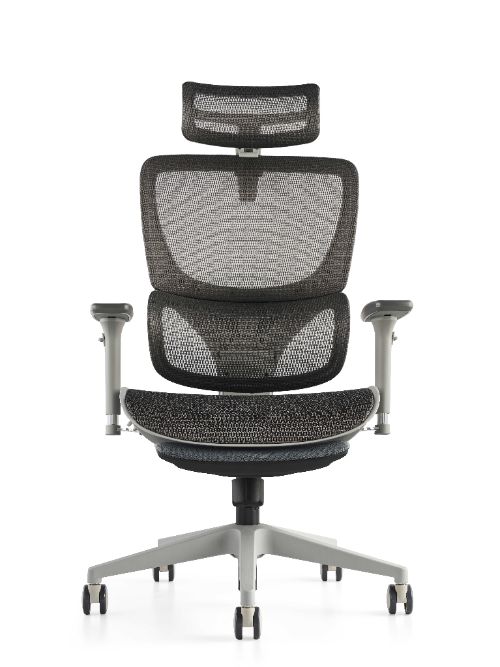
Most chairs feel like they were built for a mannequin, not a person. Real adjustability starts with the fact that leg length, torso height, and hip width vary wildly. A seat that slides deep enough for longer femurs, a lumbar pad that moves up and down independently of the backrest, and armrests that swing inward for narrower shoulders all address the gaps between average and actual.
The difference shows up in small, ordinary ways. If the seat pan is too long, shorter legs press against the edge and circulation gets pinched. If lumbar support sits too low, it pushes on the pelvis instead of the lower back. Adjustable features should let you change seat angle, backrest recline tension, and headrest height without standing up or hunting for a hidden lever. That kind of range matters more than having a dozen settings you will never touch.
Good adjustability also means the controls themselves are within reach and easy to operate while seated. A knob buried under the chair or a paddle that requires a strong grip can make an otherwise flexible design useless for smaller or older bodies. Fit is not just about measurements on a spec sheet; it is about whether the actual person using the chair can fine-tune the fit over a long workday and still feel supported.
Gas Lifts and Base Materials Under Stress
Gas lift systems rely on compressed nitrogen to deliver a smooth, controlled force that counteracts the weight of panels, lids, or seats. But the supporting base often receives less attention than the cylinder itself. Mounting plates, pivot brackets, and the surrounding frame must absorb not just the static load but also the shifting force vector as the lift extends. When the piston rod pushes at an angle, stress concentrates near fasteners and welds, and slight misalignment multiplies the strain.
Base materials that look sturdy on paper can fail prematurely if they are too thin or if the load path is interrupted by sharp corners and abrupt thickness changes. Repeated cycles introduce fatigue, and even high-strength steel can crack if the geometry doesn't spread the pressure evenly. A more resilient design pairs the gas lift with a base that uses gussets, backing plates, or localized reinforcement exactly where the rod exerts peak force. This approach avoids the common mistake of assuming that a heavier base automatically means a stronger one.
Breathable Upholstery Beats Leather Every Time
Sitting on leather in the middle of summer feels like sliding onto a hot skillet, no matter how premium the car. Breathable upholstery, by contrast, lets air move through the fabric so your back and legs don't stick to the seat after ten minutes. That simple difference changes how you feel during every commute, not just on long road trips.
The myth that leather means luxury falls apart once you experience a well-made breathable seat. It wicks away moisture, dries faster after a sweaty gym session, and never develops that cracked, stiff patina that turns leather into a regretful upgrade. Over years of daily use, breathable materials simply age better because they aren't fighting your body's heat.
You also don't need to precondition the cabin or park in the shade just to survive touching the seat. Breathable upholstery stays closer to room temperature and reduces that clammy feeling on long drives. When comfort is the whole point of an interior, something that breathes naturally outperforms a surface that traps heat and sweat every single time.
What a Long Warranty Actually Tells You
A ten-year warranty sounds reassuring, but its real message is often about accounting rather than engineering. The company has calculated that most buyers will sell the car, move, or simply forget to file a claim long before the coverage expires. The length is a marketing lever, not a promise that every component will survive a decade of hard use.
The fine print tells you more than the number on the brochure. Extended coverage usually applies only to a narrow list of parts—engine blocks and gearboxes, not the sensors, seals, and electronics that actually fail. If the warranty demands dealer-only servicing and strict documentation, the cost of maintaining eligibility can quietly cancel out the value of the "free" repairs.
Occasionally, a long warranty does signal genuine confidence, especially from a brand trying to rebuild a damaged reputation. But the smarter way to read it is as a bet on consumer behavior. The longer the term, the more the manufacturer knows that life, resale, and neglected maintenance will get in the way of paying out.
FAQ
Check whether the mesh is woven from high-tenacity polyester with a tight, uniform weave. Ask for the abrasion rating—anything above 50,000 Martindale cycles usually holds up well. Also, press the mesh with your thumb: it should bounce back immediately rather than leaving a deep dimple.
Look for a Class 4 gas lift certified to BIFMA or EN 1335 standards. It should have a thick chrome-plated piston rod and a smooth, silent stroke. Avoid lifts with thin plastic shrouds or no clear load rating.
Not necessarily. Density matters more than thickness. A 2-inch layer of 50–55 kg/m³ molded foam often outperforms 4 inches of soft 30 kg/m³ foam. Ask for the foam density, not just the total seat thickness.
A synchro-tilt mechanism with adjustable tension and a multi-position lock is a solid choice. Look for a steel plate or die-cast aluminum housing; plastic-only mechanisms tend to develop wobble and creaking within a few years.
Ask about the armrest load test—ideally 100 kg or more per arm. Also, check that the height adjustment uses metal inserts rather than raw plastic teeth. Give each arm a firm shake while locked in position; there should be minimal side-to-side movement.
Separate warranties for gas lift, mechanism, mesh, and foam are more meaningful than one blanket number. Look for at least 5 years on the mechanism and 3 years on upholstery. Also, confirm whether the supplier stocks replacement parts or expects you to handle returns.
Look beyond the showroom cushion. Check lumbar support adjustability, seat depth slide, and whether the backrest follows your spine when you recline. Ask for a 48-hour trial or a sample unit you can use at a real desk before committing.
Conclusion
Most office chairs look impressive in a catalog, but the real test comes after hour three of sitting. Lumbar support is not a luxury add-on—it prevents the slow slump that turns into lower back pain by keeping your spine aligned even when fatigue sets in. Cheap foam cushions might feel soft for the first week, yet they compress rapidly and leave you sitting on the chair frame, which explains why so many budget chairs become unbearable within months. Instead, look for dense, resilient foam or layered padding that holds its shape. Adjustability is equally personal: seat depth, armrest height, and tilt tension should match your body, not a one-size-fits-all average. If the chair cannot adapt to you, every other feature is wasted.
Durability often hides in the parts you never see. A low-quality gas lift can fail suddenly, dropping you mid-task, while a cheap nylon base may crack under daily stress—so demand a certified gas lift and a reinforced base, preferably metal or heavy-duty nylon. Upholstery matters more for comfort than appearance; breathable mesh or fabric beats bonded leather every time because it prevents heat buildup and won't peel after a year. Finally, a long warranty tells you how much the manufacturer trusts its own product. Ten years on the frame and at least two on moving parts is a sign of engineering confidence, not just marketing. Choose with these details in mind and the chair will support you for years, not just a season.
Contact Us
Contact Person: Diff Wang
Email: [email protected]
Tel/WhatsApp: +8613650281199
Website: https://www.ofcmeshchair.com/