
OEM Glass Filled PTFE Tube Benefits and Key Applications
2026-10-18
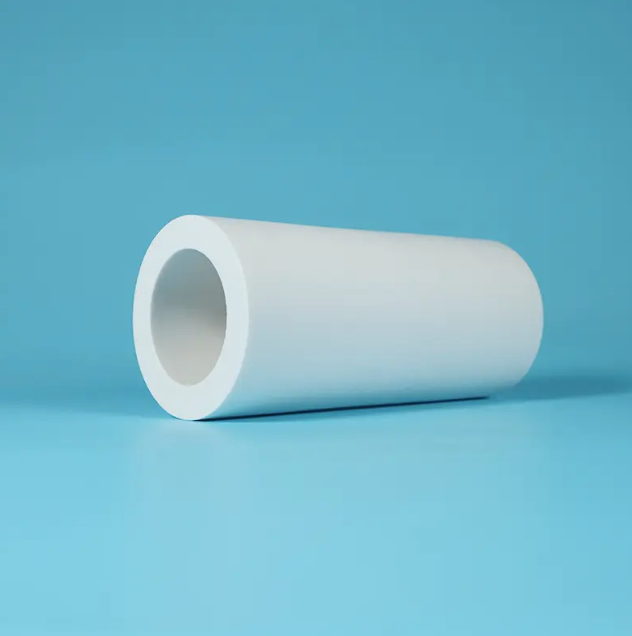
When standard PTFE tubing falls short under pressure, heat, or abrasive conditions, engineers know it’s time to look beyond the basics. That’s where OEM glass filled PTFE tubes come into play—offering the chemical resistance of PTFE with a serious upgrade in dimensional stability and wear performance. From high-precision fluid handling to demanding industrial seals, these tubes quietly power applications that can’t afford to fail. As a specialist in fluoropolymer solutions, TAIFNO has seen firsthand how the right glass-to-PTFE ratio transforms a simple tube into a critical component. In this post, we’ll break down the key benefits and real-world uses that make glass filled PTFE a go-to choice for OEM designers and maintenance teams alike.
What Makes Glass Filled PTFE Tubes a Better Fit for OEM Parts?
Glass filled PTFE tubes address a persistent headache in OEM design: the tendency of unfilled PTFE to deform under load or shift dimensionally with temperature swings. By dispersing glass fibers through the resin, the material gains a much stiffer backbone without sacrificing the low friction and broad chemical resistance that make PTFE attractive in the first place. For parts like bushings, seals, and wear rings that must hold tolerances over thousands of cycles, that added rigidity means less cold flow and a tighter, more predictable fit inside an assembly.
Beyond dimensional stability, the glass reinforcement also cuts thermal expansion noticeably, which helps when a tube has to mate with metal housings or rotate against a shaft at elevated temperatures. OEM engineers often turn to these tubes because they can be machined into precise, thin-walled components that still resist creep under side loads—something pure PTFE struggles with. The result is a drop-in upgrade that reduces rework and extends service intervals without forcing a redesign of surrounding parts.
From a manufacturing standpoint, glass filled PTFE lends itself well to repeatable production runs. The material machines cleanly, holds fine details, and delivers consistent batch-to-batch performance, all of which matter when you're building hundreds or thousands of identical units. Rather than chasing exotic polymers for modest gains, many OEMs find that a well-specified glass filled PTFE tube strikes the right balance between performance, cost, and ease of integration.
How Glass Reinforcement Reduces Deformation and Improves Wear Resistance
Adding glass fibers to a polymer matrix sharply increases the material's elastic modulus, making it far stiffer than the unfilled resin. Under sustained or cyclic loads, the high-modulus fibers carry a disproportionate share of the stress, limiting the viscoelastic creep and permanent set that plague neat plastics. This means components retain their critical dimensions and flatness over long service lives, even when exposed to elevated temperatures or continuous pressure.
Wear resistance improves through a different but complementary mechanism. The hard glass fibers become exposed at the rubbing surface, acting as microscopic load-bearing asperities that shield the softer polymer from direct contact with the counterface. Frictional energy is distributed across many rigid fiber tips instead of being concentrated on the matrix, so adhesive and abrasive wear are both suppressed. Additionally, the fibers prevent deep plowing or tearing of the surface, keeping wear debris fine and reducing the rate of material removal.
In practical terms, a glass-reinforced part can often replace a metal component in sliding or load-bearing applications without sacrificing dimensional stability. Gears, bushings, and structural brackets made from these compounds show measurably less wear after thousands of cycles than their unreinforced counterparts, and they maintain tighter tolerances throughout their operating life. This combination of deformation resistance and wear durability is why glass-filled grades are the default choice for demanding engineering environments.
Glass Filled PTFE Tubing in Extreme Temperatures and Corrosive Media
Glass filled PTFE tubing exhibits remarkable dimensional stability when exposed to thermal cycling that would quickly degrade standard polymers. With 15% to 25% glass fiber reinforcement, the material retains its shape and compressive strength from cryogenic conditions down to -250°C up to service temperatures near 260°C. Unlike unfilled PTFE, which tends to creep under load at elevated temperatures, the glass-filled variant resists deformation, making it suitable for valve seats, bearings, and structural liners in high-heat process equipment.
Exposure to concentrated acids, alkalis, solvents, and oxidizing agents proves the tubing's resilience. The continuous PTFE matrix encapsulates the glass fibers, preventing direct chemical attack while preserving the base fluoropolymer's inertness. This allows the tubing to withstand boiling aqua regia and fuming sulfuric acid without cracking or swelling. Consequently, specifiers choose it for sampling lines, sensor housings, and fluid transfer systems in semiconductor fabrication, petrochemical refining, and pharmaceutical synthesis where both temperature extremes and corrosive media are present.
A practical benefit in demanding service is the lower friction loss relative to metal alloys under similar conditions. While glass fibers slightly increase surface roughness compared to virgin PTFE, the coefficient of friction remains below 0.1, which minimizes pressure drop and prevents scale buildup even when handling slurries or viscous corrosive fluids. This combination of thermal endurance, chemical resistance, and flow efficiency makes glass filled PTFE tubing a dependable choice for long-term reliability without frequent maintenance shutdowns.
Key Differences Between Virgin PTFE and Glass Filled PTFE Tubes
Virgin PTFE is as close to a universal tube material as you can get—unmodified, chemically inert, and slippery enough that almost nothing sticks to it. The trade-off is mechanical: under sustained load or high temperature, it creeps and cold-flows, which can loosen fittings or change dimensions over time. Glass filled PTFE addresses that by blending in glass fibers, usually around 25%, which stiffens the material considerably. You get higher compressive strength, much lower creep, and better dimensional stability, but you also lose some of the pure polymer's flexibility and elongation.
Wear behavior is another practical difference. Virgin PTFE has an extremely low coefficient of friction but poor abrasion resistance—it tends to deform and transfer material rather than wear away cleanly. Adding glass fiber improves wear resistance significantly, which helps in dynamic applications or where the tube is subject to rubbing. However, that glass filler is harder and can be abrasive to softer mating surfaces like aluminum or brass, so you need to consider what the tube runs against.
Chemical compatibility also shifts. Virgin PTFE resists nearly everything except molten alkali metals and a few fluorine compounds at high temperature. Glass filled PTFE, on the other hand, can be attacked by hydrofluoric acid and strong hot bases because they dissolve or degrade the glass reinforcement. This makes virgin PTFE the safer default for aggressive chemical service, while glass filled is better suited to mechanical load, wear, or tight-tolerance structural roles where chemical exposure is milder.
OEM Design Tips for Machining and Assembling Glass Filled PTFE Tubing
When machining glass filled PTFE tubing, tool geometry matters more than most engineers expect. Standard high-speed steel tools dull quickly against the glass fibers, so use carbide or diamond-coated cutters with sharp, positive rake angles. Keep speeds moderate and feeds light—too aggressive a cut can tear the PTFE matrix and leave a fuzzy surface. Flood coolant or compressed air helps clear chips and prevents localized heat buildup, which can distort the tubing. For tight-tolerance bores, consider a two-step rough and finish pass, leaving only 0.005–0.010 inch for the final cut. This approach reduces spring-back and keeps dimensions stable.
Assembly presents its own set of challenges because glass filled PTFE is stiffer and less forgiving than unfilled grades. Press fits should be designed with lower interference than you would use for virgin PTFE, typically 0.001–0.003 inch per inch of diameter depending on wall thickness. If you are threading the tubing, use coarse threads and avoid sharp root radii—stress concentrates there and can lead to cracking. When inserting flared fittings or barbed connectors, heat the tubing gently to 120–150°F to ease expansion without risking permanent deformation. Always support the tube wall with a mandrel during crimping or swaging to prevent the glass fibers from fracturing under localized pressure.
Common Applications Where Glass Filled PTFE Tubes Outperform Alternatives
In high-cycle hydraulic and pneumatic systems, glass filled PTFE tubing consistently proves its worth in piston rings, rod seals, and wear bands. The added glass fibers reduce cold flow under load, so dimensions stay predictable even after thousands of strokes. This is a major advantage over unfilled PTFE, which tends to deform and leak in dynamic sealing applications.
Chemical processing plants also rely on these tubes for valve seats and diaphragms exposed to aggressive media at elevated temperatures. The glass reinforcement raises compressive strength, meaning the tubing can handle tighter assembly torques without cracking or extruding. Unlike PEEK or metal alternatives, it retains PTFE's broad chemical compatibility while offering enough rigidity for reliable sealing.
Another area where glass filled PTFE stands out is in electrical insulation for connectors and sensor housings. The material maintains excellent dielectric properties while resisting creep under mechanical stress, so thin-walled tubes can be machined to tight tolerances. Compared to standard PTFE, this filled grade allows for more compact designs without sacrificing long-term insulation performance.
FAQ
Glass fibers substantially reduce cold flow and creep under load, so dimensions stay stable even when the tube is clamped, pressed, or subjected to continuous stress. Standard PTFE tends to deform over time, but the glass reinforcement keeps parts fitting properly and extends service life in dynamic applications.
You'll often find these tubes in chemical processing seals, valve seats, pump housings, and electrical insulators. The combination of chemical inertness, low friction, and improved wear resistance makes them especially useful where both aggressive media and mechanical movement are present, such as in metering pumps or rotary unions.
The glass fibers increase hardness and abrasion resistance, so the tube holds up longer against sliding contact with metals or ceramics. Friction remains low compared to most engineering plastics, though slightly higher than unfilled PTFE. That trade-off is usually worthwhile when parts must survive thousands of cycles without significant dimensional loss.
Yes, glass filled PTFE machines fairly well with sharp carbide tooling, though the glass content makes it more abrasive to cutting edges than pure PTFE. Shops can turn, mill, or drill these tubes into bushings, insulators, seal rings, and other precision components while holding tolerances of a few thousandths of an inch.
Strong alkaline environments or hydrofluoric acid can attack the glass filler, so unfilled PTFE or a different reinforced grade may be better for those chemicals. Also, the glass content reduces elongation and flexibility, so tight bend radii or repeated flexing can cause cracking. It's best used where rigidity and dimensional stability matter more than flexibility.
It generally performs well from about -200°C up to 260°C, similar to virgin PTFE. The glass reinforcement does not significantly lower the upper limit, but at the high end the mechanical strength drops faster than at room temperature. For short excursions, it can tolerate brief spikes above 260°C without immediate failure.
Reputable suppliers typically certify the filler percentage, verify tensile strength and elongation on each lot, and check dimensional consistency with laser or optical measurement. Some also provide surface finish data or pressure test certificates when the tubes are intended for fluid handling or high-voltage insulation, ensuring every batch meets the same performance envelope.
Conclusion
Glass filled PTFE tubing earns its place in OEM designs by solving the biggest weakness of virgin PTFE: cold flow under load. The addition of glass fibers—usually around 25% by weight—raises compressive strength and dramatically cuts deformation, so parts like seals, bushings, and thrust washers hold their machined dimensions even after long service. This means fewer leaks, less retorquing, and lower warranty costs. Wear resistance also jumps several times over unfilled PTFE, which matters in dry-running or abrasive slurry conditions. At the same time, the material keeps PTFE’s broad chemical compatibility and useful temperature range from cryogenic to roughly 260°C, though strong hydrofluoric acid or hot concentrated alkalis can attack the glass filler. Compared to virgin PTFE, glass filled tubes are stiffer, less prone to creep, and easier to machine to tight tolerances, but they sacrifice some elongation and electrical insulation properties. OEM machinists should use sharp carbide tools, avoid thin wall sections, and ream or hone bores to final size because the glass fibers are abrasive and can tear out during aggressive cuts.
These properties push glass filled PTFE tubing into applications where alternatives fall short. Valve seats and stem seals in chemical processing plants rely on the material’s dimensional stability to maintain a reliable shutoff after thousands of cycles. Pump wear rings and lip seals benefit from low friction plus improved load support, extending run times between rebuilds. In automotive and aerospace systems, glass filled PTFE tubes serve as lightweight, self-lubricating bushings and wire harness protection that withstands fuel, hydraulic fluid, and temperature swings. Semiconductor wet benches and pharmaceutical lines use them for chemical delivery because they resist deformation at fittings and keep fluid paths contamination-free. When designing assemblies, avoid high-interference press fits due to lower elongation; instead, use snap rings or thermal shrink fits. By balancing chemical resistance, thermal stability, and mechanical strength, glass filled PTFE tubes routinely outperform PEEK, PPS, and virgin PTFE in cost-sensitive OEM parts that must run reliably without lubrication.
Contact Us
Contact Person: Tommy Xiao
Email: [email protected]
Tel/WhatsApp: 8615651509888
Website: https://www.ptfe-factory.com