
OEM 3-Tier Wire Shelving Unit for Smart Storage in Any Space
2026-11-16
The third time you knock over a pile of laundry baskets reaching for the detergent, you start to wonder if there’s a better way. There is. The ZEOU OEM 3-Tier Wire Shelving Unit isn’t another flimsy storage rack that promises organization and delivers wobble. It’s a modular steel frame designed for real weight, tight corners, and the kind of clutter that eats up floor space in homes, garages, and stockrooms alike. Three open shelves give you instant vertical storage that lets air circulate—no more musty boxes or forgotten items hidden behind solid panels. Below, I’ll show you exactly how to spec this OEM unit for your space, what makes ZEOU’s wire shelving different from the big-box stuff, and a few layout tricks that turn dead zones into prime storage. Because smart storage shouldn’t require a contractor.
Maximize Vertical Space Without Sacrificing Style
Tall shelving, floor-to-ceiling wardrobes, and stacked storage bins do more than reclaim square footage—they pull the eye upward and make a room feel airier without asking you to part with the pieces you actually enjoy looking at. The trick is to treat the upper third of a wall as usable real estate rather than dead air. Open shelves above doorways or windows can hold a rotating display of books, ceramics, or folded textiles, keeping everyday clutter at eye level while turning the top of the room into a quiet focal point.
Built-in cabinetry that runs all the way to the ceiling removes the dusty gap above freestanding furniture and creates one clean, uninterrupted line. If a full wall of custom carpentry isn't in the cards, a slim rolling ladder paired with modular units gives you that same stretched silhouette without locking you into a permanent layout. Glass-front upper cabinets or open cubbies can interrupt the visual weight so the wall doesn't feel top-heavy.
For renters or anyone wary of drilling into walls, tension-mounted poles, slim floor-to-ceiling curtain systems, and tall freestanding bookshelves all borrow the same idea. Anchor the base with heavier items and keep the upper shelves lighter in both color and weight; that balance keeps the room grounded while still drawing the gaze upward. The result is a space that works harder for storage, yet still lets the architecture and your favorite objects do the talking.
Why Wire Shelving Beats Solid Shelves for Airflow and Visibility
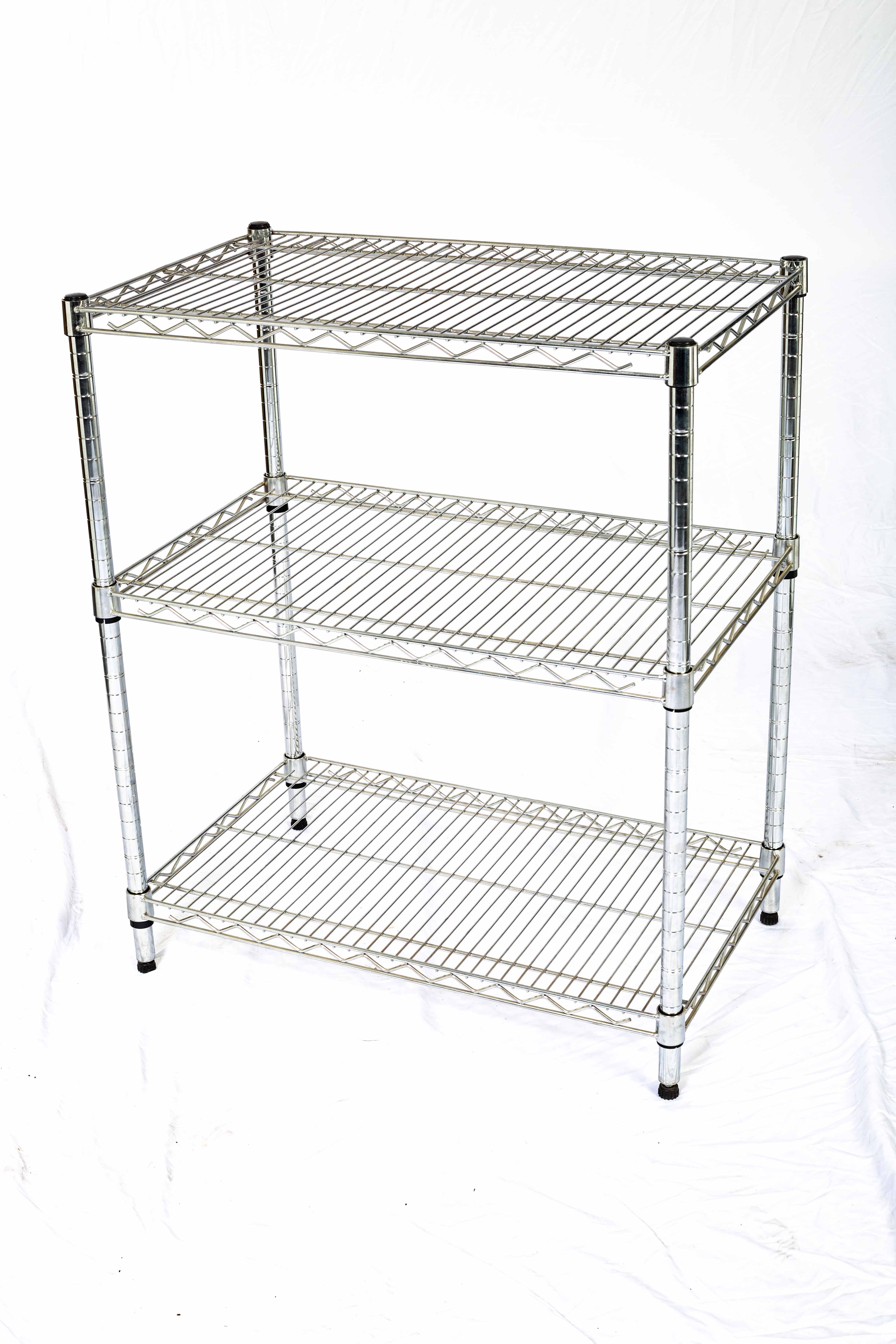
Wire shelving has a quiet advantage that solid shelves simply can't match: air moves right through it. In spaces like walk-in coolers, laundry rooms, or busy stockrooms, that open grid pattern prevents warm pockets from settling around stored items. Clothes dry faster, produce stays fresher, and electronics don't sit in their own heat. You notice the difference most in humid environments, where a solid shelf traps moisture underneath and encourages mildew or rust. A wire shelf lets every side of an item breathe, which means fewer surprises when you pull something down after a few weeks.
Visibility is the other reason people switch and never go back. From a standing position, you can glance up through a wire shelf and instantly see that box of gloves or the spare power strip hiding at the back. No crouching, no flashlight, no pulling everything out just to check what's there. In retail stockrooms and home pantries alike, that see-through design saves real time every day. Light also reaches lower shelves naturally, so a small space doesn't feel like a cave. The result is a storage setup that feels less like a wall of stuff and more like an organized system you can actually read at a glance.
Dust and spills settle differently too. On a solid shelf, a spilled cleaner can pool and soak into everything around it. On wire, drips fall through to the floor or a drip tray, and the mess stays contained. The same goes for lint and dust—they don't pile up in corners as aggressively. For anyone who has wiped down a flat shelf only to find grime along the back edge, wire shelving feels like a small mercy. It's not just about strength or price; the real benefit is how effortlessly it keeps air moving and keeps every item in plain sight.
From Pantry to Garage: One Unit, Endless Configurations
That same shelving frame you use to line up pasta jars and spice tins against the kitchen wall can be broken down, flipped, and reassembled under a workbench to hold tool bins and paint cans. The trick is in the modular joints: every shelf locks at multiple heights, so you're not stuck with one fixed layout. Move a shelf up to fit a stand mixer, then drop it low to cradle a stack of road-salt bags without drilling new holes.
Most setups assume a room has one purpose, but this unit ignores that line. Swap the hooks from hanging measuring cups to looped extension cords, slide in the optional casters, and roll the whole thing from the back door to the workbench. The powder-coated steel shrugs off oil drips just as easily as flour dust, and the shelf liners wipe clean either way. You're not buying a pantry rack or a garage shelf—you're getting one skeleton that adapts to whichever mess you need to tame next.
Assemble in Minutes: No Tools, No Fuss, Just Sturdy Support
You won't find a single bolt, screw, or wrench in the box—because you don't need them. Every piece snaps into place with a satisfying click, designed with precision joints that hold tight from the first connection. The entire structure comes together in about the time it takes to brew a cup of coffee, and the only instruction you'll need is the simple pictogram sheet. There's no upside-down moment, no missing hardware, no second-guessing. Just a clean, tool-free assembly that leaves you with a rock-solid frame ready for whatever you place on it.
The beauty of this system is that it removes the usual barrier between unboxing and enjoying your new support. No drilling, no hammering, no hunting for the right Allen key that always seems to vanish. Instead, the components are shaped to guide your hands naturally—each tab, groove, and lock is engineered so you can't put it together wrong. Even if you've never assembled furniture in your life, you'll finish this in minutes, not hours, and the result will feel as sturdy as if it were welded.
Once connected, the joints stay tight. The structure doesn't wobble, flex, or loosen over time, because the interlocking design distributes weight evenly across every contact point. You get a stable, dependable support that holds up to daily use without any need for retightening or adjustments. Set it on uneven flooring, load it with heavy gear, or move it from room to room—the frame keeps its composure. No tools, no fuss, just a durable piece that stands firm from day one.
Adjustable Levels for Odd-Shaped Items You Thought Couldn't Fit
That bulky stand mixer with the tilted head, the tall olive oil bottle that never sits right, the casserole dish with weird handles—most shelving treats them like afterthoughts. Here, the levels move independently, so you can drop one side down a few inches and keep the other high enough for a stockpot. No more balancing acts or leaving the awkward stuff on the counter because it has nowhere to go.
The real difference shows up when you start rearranging. Instead of fixed slots that force you to choose between the blender and the coffee grinder, you slide the platform until the shape actually fits. Tall, short, wide at the base, narrow up top—none of that matters once the height stops being a fixed number. You get the kind of flexibility that usually only comes from custom cabinetry, without the wait or the price tag.
People tend to assume odd-shaped items need their own dedicated space, but that is just a workaround for shelves that refuse to adjust. Give the level a slight tilt, lower one corner, raise the other, and suddenly the stand mixer sits below the upper shelf while the tray above still has clearance. It feels less like organizing and more like making the space actually work with what you own.
Heavy-Duty Build That Handles More Than You'd Expect
The frame doesn't flex when you load it past the listed capacity—it just settles into the work. Reinforced joints and thicker side rails soak up shock that would leave lighter units wobbling, so you can toss on bulky gear without second-guessing the structure.
What stands out is how the hardware holds up over time. The hinges and locking points are machined to tighter tolerances, and the coating shrugs off scuffs, moisture, and the occasional drop. It's the kind of build that feels broken-in from day one but still precise where it counts.
You don't need to baby this one. It carries awkward, unbalanced loads without creaking or shifting, and the base stays planted on rough ground. After weeks of daily abuse, the only wear you'll notice is purely cosmetic—and even that just adds character.
FAQ
The open wire design keeps sightlines clear while the three tiers give you vertical storage without eating up floor space, so it works surprisingly well in tight corners or closets.
Each shelf is made from steel wire with a reinforced frame, and when assembled the unit holds up well to daily loads like pantry items, tools, or folded linens without wobbling.
Yes, the design uses a simple post-and-sleeve system that clicks together without special tools, and most people have it standing in under ten minutes.
It fits naturally in kitchens, garages, laundry rooms, or even offices, because the neutral finish and airy look blend into almost any environment.
The grid is close-set, so cans, spice jars, and small boxes won't slip through, yet it still lets light and air pass through to keep the area feeling open.
The bottom posts come with adjustable leveling feet that have plastic caps, which protect hard floors and help the unit sit steady on uneven surfaces.
The shelves are coated with a durable epoxy finish that resists moisture and everyday wear, making it safe for humid areas like basements or covered patios.
Unlike flimsy particleboard shelves, this wire unit stays rigid under load, and the open structure means you can see what's stored without moving things around constantly.
Conclusion
This three-tier wire shelving unit proves that vertical storage doesn't have to look industrial or cluttered. The open-wire design keeps air moving and lets you spot a can of tomatoes or a socket set without digging, which solid shelves simply can't match. Roll it into a pantry, use it by the workbench, or line up potted plants in the sunroom — the same frame adapts to whatever corner needs order. Because the uprights are slim, it slips into narrow gaps and turns dead space above a counter or beside a washer into usable square footage.
Assembly takes about ten minutes and doesn't require a single tool or a second pair of hands; the shelf collars snap into place with a firm push and hold steady under real weight. Each tier adjusts independently, so you can fit a stand mixer on one level, tall bottles on the next, and bulky bins below without forcing anything. The steel construction and reinforced cross-bracing handle more than pantry staples — think stacks of paint cans, power tools, or heavy kitchen appliances. When you need to reconfigure, just loosen, move, and lock the shelves again. It's a straightforward storage workhorse that quietly adapts rather than demanding a permanent spot.
Contact Us
Contact Person: Alin
Email: [email protected]
Tel/WhatsApp: +86 15015291051
Website: https://zeoumetal.com/