

ODM Energy-Saving HVAC Systems: How Smart Design Cuts Energy Costs
2026-10-22
Every facility manager knows the pain of watching energy bills climb while comfort levels drop. ODM energy-saving HVAC systems flip that narrative by treating smart design as the primary lever for cutting costs—not an afterthought. At Tongbaote, we engineer custom solutions that integrate load-matching compressors, intelligent airflow, and real-time controls. The result? Lower kWh consumption without sacrificing a single degree of indoor comfort. But how exactly does smart design drive down operating expenses? Keep reading to see the engineering details behind the savings.
Why Oversized HVAC Units Quietly Drain Your Budget
It starts with a simple miscalculation: a contractor adds extra capacity just to be safe, and suddenly your cooling system is working against you. An oversized unit reaches the thermostat setting so quickly that it shuts off before completing a full cycle. That brief blast of cold air tricks you into thinking everything is fine, but the short runtimes leave moisture hanging in the air and force the compressor to restart dozens of extra times a day.
Each of those starts draws a surge of electricity far beyond normal running wattage, and the repeated on-off pattern chews through contactors, capacitors, and compressor windings years before their time. Meanwhile, you are paying for all that extra tonnage upfront and on every monthly bill, even though the system never runs long enough to deliver the efficiency it was rated for.
The real sting comes from what you don't notice right away: poor humidity removal makes the space feel sticky at higher thermostat settings, so you end up lowering the temperature to compensate. That means more runtime, more strain, and a budget quietly bleeding from both energy waste and premature repairs.
Matching Compressor Output to Real Building Loads Without Guesswork
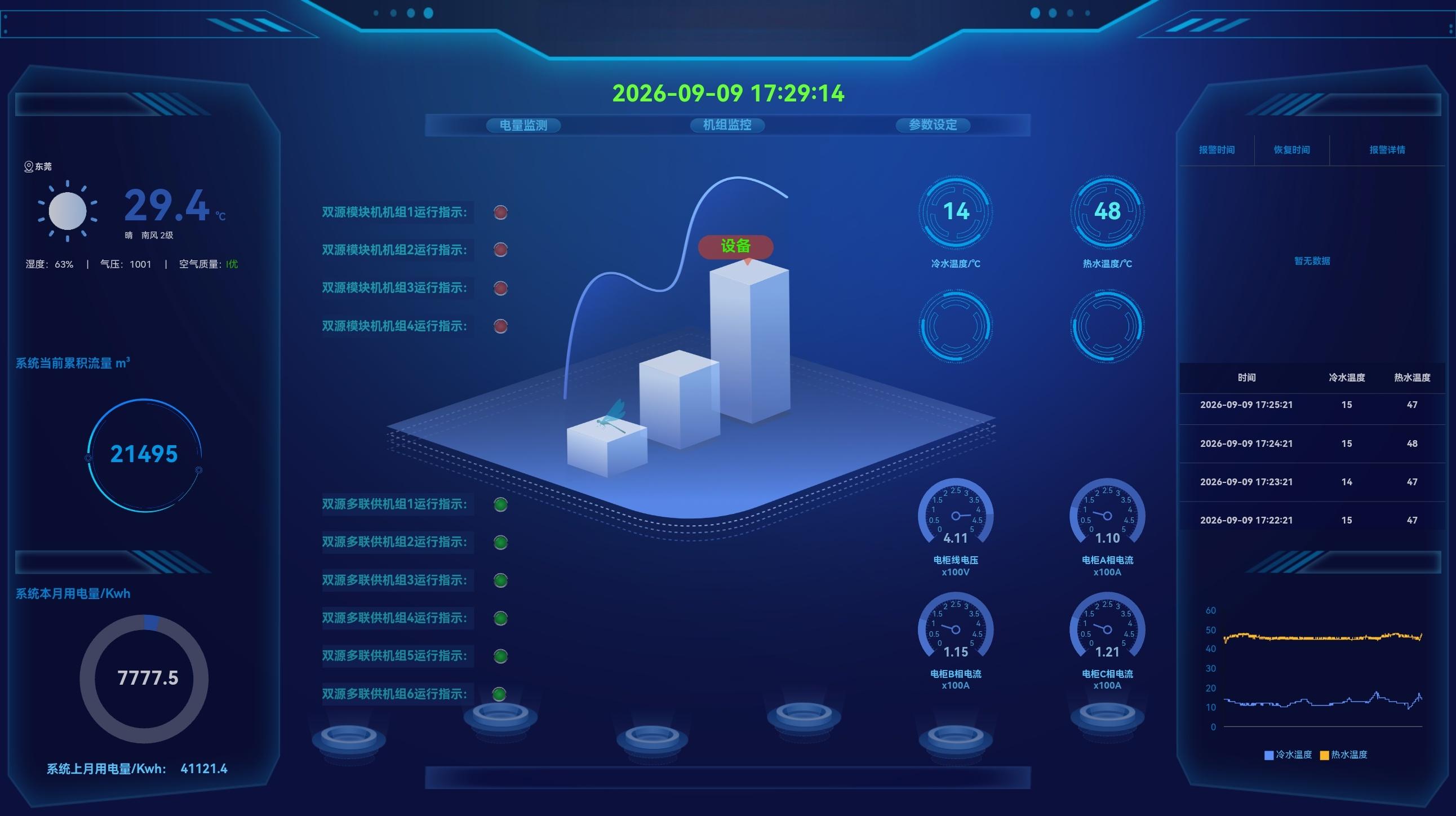
Traditional compressor sizing leans on peak-load assumptions that rarely reflect how a building actually behaves hour to hour. That mismatch shows up as excessive cycling, uneven temperatures, and wasted energy. A better starting point is the thermal response of the spaces themselves—supply air temperature drift, humidity swings, and occupancy patterns collected over time. This live load profile, not a static catalog number, becomes the target the compressor must follow.
Variable capacity compressors paired with short-horizon load prediction can adjust output before a demand spike arrives. Instead of reacting to a thermostat call after the space is already uncomfortable, the system reads the slope of return air temperature and recent solar gain trends. For example, a west-facing zone on a cloudy afternoon needs a very different ramp rate than the same zone during morning warm-up. Matching output to that moving target removes the need for fixed staging or oversized equipment.
A practical way to lock in this match is to run a short monitoring period with temporary sensors, capturing at least two weeks of real load variation across different weather and occupancy conditions. That measured data then calibrates the compressor control curve, stripping out conservative safety factors. The result is usually quieter operation, longer runtimes at efficient part-load, and a tighter indoor temperature band—all based on observed building behavior rather than rule-of-thumb estimates.
Sensor-Driven Zoning That Stops Overcooling Empty Rooms
In a typical multi-room home or office, the thermostat reads one temperature and sends chilled air everywhere. That means a spare bedroom, a storage closet, or a conference room sitting empty all afternoon gets just as cold as the living room where people are actually working or relaxing.
Sensor-driven zoning changes that by placing small occupancy and temperature sensors in each zone or room. When a sensor detects no one has been present for a set period, it tells the system to reduce airflow or raise the setpoint for that area. The moment someone walks in, cooling resumes at the normal comfort level.
The result is not just lower energy use but also fewer hot and cold complaints. You stop paying to cool rooms nobody uses, and the system adapts on its own without constant manual tweaking of vents or remotes.
Recovering Heat from Exhaust Air Before It Escapes
Stale air heading out through the vents is usually warmer than the outdoor air being pulled in. A heat recovery core lets those two flows exchange temperature through thin conductive plates or a rotating wheel, so the incoming stream gets a head start before it reaches your heating equipment. The two airstreams never mix; only heat moves across the barrier.
Different buildings call for different approaches. Fixed-plate exchangers have no moving parts and handle a steady ventilation load without much upkeep. Rotary heat exchangers bring back some moisture as well, which is useful in dry winter conditions and can reduce humidification demand. Matching the exchanger type to your climate and airflow keeps the system from fighting itself.
Cold-weather operation brings its own quirks. If outdoor temperatures drop far enough, condensation in the exhaust can freeze inside the core and restrict airflow. Controls often cycle the supply fan or open a bypass to let frost clear while still preserving most of the recovered heat. That balance keeps ventilation running without throwing away the heat you already paid for.
Variable-Speed Fans Stop Wasting Energy at Part Load
Most HVAC systems spend the bulk of their operating hours at partial load, yet traditional fans keep spinning at full speed regardless of actual demand. This constant-speed approach burns through electricity needlessly, as dampers or inlet vanes throttle airflow while the motor continues drawing near-rated power. Variable-speed fans flip that logic: they adjust rotational speed to match real-time cooling or heating requirements, so the energy consumption drops in proportion to the reduced load. The result is not a marginal tweak but a fundamental shift in how fan energy is managed across the entire operating range.
At part load, the savings are especially dramatic because fan power follows a cubic relationship with speed. Running a fan at 80% speed cuts power draw to roughly half of full-speed operation; at 50% speed, consumption falls to about one-eighth. Compare that with a fixed-speed fan using discharge dampers, where a 20% reduction in airflow might only trim power by 5-10%. This nonlinear advantage means that even modest reductions in speed produce outsized energy savings, making variable-speed technology one of the highest-impact upgrades for facilities with highly variable thermal loads.
Beyond raw energy savings, variable-speed fans reduce wear on belts, bearings, and motors by eliminating abrupt starts and stops. Soft-start capabilities extend equipment life and lower maintenance costs, while improved part-load control helps maintain tighter temperature and humidity setpoints without the hunting or overshoot common with fixed-speed systems. For building owners and operators, the payoff shows up in lower utility bills, quieter operation, and a more stable indoor environment—all from letting the fan slow down when full output simply isn't needed.
Predictive Maintenance Alerts That Prevent Efficiency Fade
Imagine a chiller quietly losing 0.8% of its heat exchange capacity every month. No alarms go off, no fault codes appear, yet energy draw climbs while cooling output dips. This is efficiency fade, and it costs facilities more than sudden breakdowns ever could. Predictive maintenance alerts step in here by tracking subtle performance drift against the asset's own baseline, not just manufacturer specs. When the system spots a trend that matches early-stage fouling or refrigerant undercharge, it sends a notification weeks before conventional thresholds would trigger anything.
The real value is in prioritization. A maintenance team might get three alerts on a Tuesday morning: one fan bearing showing rising vibration at 2x line frequency, one air handler with a slowly widening supply-return temperature split, and one compressor whose discharge superheat has crept up for six consecutive days. The platform ranks them by estimated efficiency impact per day of delay, not by severity code. That way, the crew first fixes the issue that quietly wastes the most energy, not necessarily the one that sounds most urgent.
Over time, these alerts reshape how schedules are built. Instead of replacing belts and filters on a fixed calendar, technicians respond to condition-based nudges that come with a likely window of safe operation. Some teams cut their reactive work orders by half while lifting overall system COP by a few points. The alerts don't just prevent failure; they keep the asset from drifting into a comfortable but expensive underperformance. That's the kind of maintenance that pays for itself in utility bills, not just avoided downtime.
FAQ
It refers to heating, ventilation, and air conditioning equipment designed and manufactured by an original design manufacturer with a focus on reducing energy consumption. The ODM handles the engineering, prototyping, and production, which allows for tighter integration of energy-saving technologies and custom configurations.
Smart design cuts energy costs through several routes: variable-speed compressors and fans adjust output to real-time demand, advanced heat exchangers recover waste energy, and intelligent controls learn occupancy patterns to avoid heating or cooling empty spaces. These elements work together to trim consumption without sacrificing comfort.
The features with the biggest impact are inverter-driven components, demand-based ventilation, high-efficiency filtration with low pressure drop, and building automation integration. Heat recovery ventilators and thermal storage can also play a large role in climates with extreme seasonal shifts.
ODM systems typically deliver 20–40% lower operating costs because they are engineered from the start for efficiency rather than retrofitted. The upfront price may be slightly higher, but the reduction in monthly utility bills usually covers the difference within a few years.
Commercial buildings with long operating hours—offices, hotels, hospitals, data centers, and retail spaces—see the greatest benefit. Also, any facility with strict temperature or humidity requirements can gain more from the precise control that smart design enables.
Yes, customization is a core advantage. Because the ODM controls design and manufacturing, it can adapt coil sizes, airflow paths, control logic, and modular configurations to fit irregular floor plans, partial loads, or specific indoor air quality needs.
Look for a partner with verified performance data from similar projects, strong after-sales support, and a willingness to share detailed engineering drawings. Also check whether the system can integrate with existing building management software and whether local service technicians are available.
Maintenance costs are often lower than expected because smart diagnostics catch issues before they become failures. Components like brushless motors and sealed bearings reduce wear, but the control sensors and software may require periodic updates and calibration to stay accurate.
Conclusion
Most commercial buildings are still paying for heating and cooling they don't actually use. Oversized units short-cycle, compressors run at fixed output against partial loads, and empty rooms get conditioned to the same setpoint as occupied ones. ODM energy-saving HVAC design starts by removing that mismatch: right-sizing equipment to real load profiles, not rule-of-thumb estimates, and pairing it with variable-speed fans and sensor-driven zoning so that every watt goes where it has a job to do. When a conference room is dark, its damper closes; when outside air needs conditioning, an exhaust-air heat recovery loop grabs much of that thermal energy before it leaves the building.
What often gets overlooked is how quickly efficiency erodes after installation. Filters load up, coils get dirty, refrigerant charge drifts, and no one notices until the utility bill spikes. Predictive maintenance built into ODM systems watches those slow changes and sends alerts before compressors or fans start working harder than they should. The result is not a one-time retrofit saving but a system that holds its performance year after year. For building owners, that translates into lower demand charges, fewer comfort complaints, and a longer equipment lifespan. Smart design, in this sense, isn't about adding complexity; it's about removing the waste that conventional HVAC treats as normal.
Contact Us
Contact Person: Wanshu Chen
Email: [email protected]
Tel/WhatsApp: +86-13662871206
Website: https://www.mbcee.com