

ODM Commercial Energy HVAC System Solutions for Efficient Building Climate Control
2026-09-18
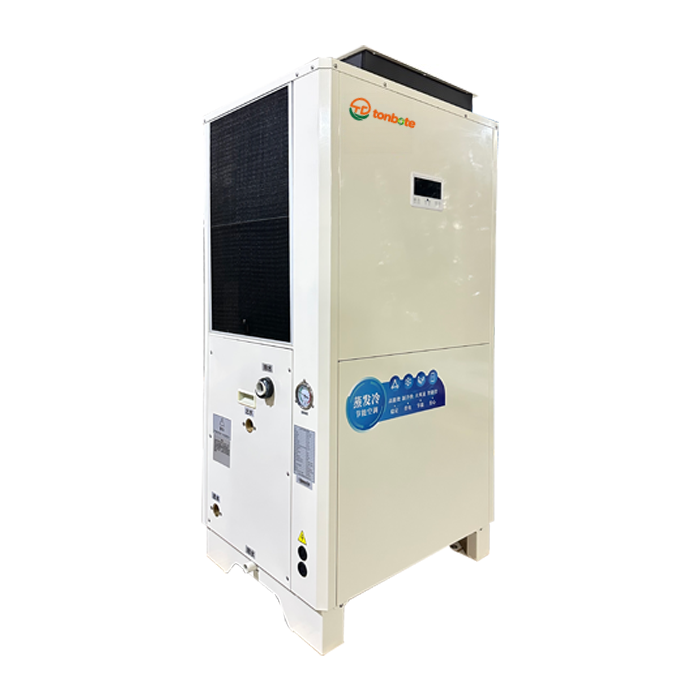
Every degree of overshoot in a commercial building's climate control is money leaking through the roof. ODM commercial energy HVAC system solutions flip that equation, using real-time load matching and modular design to keep indoor conditions tight while cutting peak demand. Tongbaote has been deploying these systems across offices, retail, and industrial sites—turning inefficient air handling into a measurable operational gain. Here's what makes the difference.
ODM Engineering That Fits Your Building, Not the Other Way Around
Too many off-the-shelf solutions force you to reshape your floor plan, reroute ductwork, or compromise on ceiling height just to make the equipment fit. That inversion of priorities is exactly what our ODM approach eliminates. We start with your building's actual constraints—column spacing, load paths, existing utility chases, thermal zones—and engineer the system around them, not the other way around. The result is a mechanical, electrical, or plumbing package that slips into the space you already have, without demanding expensive structural changes or awkward field modifications.
What makes this possible is a design process that treats every building as a one-off, not a template. Instead of pulling a generic catalog unit and asking your site to adapt, our engineers map the real-world conditions first: vibration limits, clearance for maintenance access, acoustic isolation needs, even the way doors swing and lifts move through the space. From there, component layouts, mounting points, and connection details are generated to match those conditions. This isn't just customization for its own sake—it's the difference between a system that fights the building for its entire lifespan and one that quietly coexists with it.
The practical payoff shows up on-site. Contractors don't burn days fabricating transition pieces or reworking openings. Facility managers don't inherit a tangle of inaccessible valves or panels blocked by structural steel. And owners don't pay for square footage that gets sacrificed to equipment that was never designed to live there. When the engineering bends to the building, every downstream decision gets simpler—and the finished installation looks like it was always meant to be there.
Energy Recovery Strategies That Lower Peak Demand Charges
Many facilities still treat demand charges as a fixed penalty, but the highest 15-minute interval each month can account for a third or more of the bill. Regenerative drives on cranes, elevators, and downhill conveyors are one of the most direct energy recovery strategies: they convert braking energy into electricity and push it back into the facility’s own grid exactly when other motors start drawing heavy current. That timing matters more than total energy recovered, because it shaves the peak rather than just lowering overall consumption.
Thermal recovery often outperforms battery storage for demand charge reduction because it is cheaper and easier to schedule. Air compressors reject up to 90% of input energy as heat; ducting that heat into process water or building heating during the utility’s peak window offsets electric heating load at the worst moment. Similarly, refrigeration plants can run harder at night to chill a thermal storage tank, then circulate that stored cooling during the afternoon peak. The recovered energy does not need to be stored as electricity to lower a demand charge.
The missing piece is usually control, not hardware. A demand controller that prioritizes recovered energy ahead of grid draw lets a facility hold a target kW threshold and use waste heat, regenerative power, or stored cooling to fill the gap. When elevator regenerative units and compressor heat recovery are tied to that threshold, operators often see demand charges drop 10–20% in the first year without cutting production. That reduction also eases load on transformers and switchgear, which can defer equipment upgrades that would otherwise be triggered by peak loading.
Adaptive Climate Control for Mixed-Use Commercial Spaces
In a single building where a ground-floor bakery fires ovens at 6 a.m., upstairs law offices don't fill until 9, and a gym stays humid until midnight, one thermostat setting cannot satisfy everyone. Mixed-use developments blend retail, dining, office and residential zones under one roof, each with distinct heat loads, occupancy spikes and ventilation demands. A fixed schedule or central setpoint often leaves the bakery sweltering while the lobby feels frozen, forcing tenants to run portable heaters or prop open doors—both of which quietly undo any energy savings.
Adaptive climate control treats each zone as a living system rather than a static room. Sensors track occupancy, CO2, humidity, outdoor temperature and solar gain, then nudge air volume and setpoints before conditions become unpleasant. A café zone might begin pre-cooling at 11:20 because lunch traffic reliably builds by noon, while an empty conference room drops into setback mode until a calendar booking triggers airflow. The system learns weekday and weekend rhythms, but it also reacts to anomalies—like a rainy Tuesday that fills the lobby with damp coats and demands extra dehumidification.
What separates this from basic zoning is the ability to negotiate competing demands in real time. Instead of letting the gym and bookstore fight over chilled water, adaptive controls shift capacity based on actual heat gain and tenant priority schedules, not arbitrary time clocks. Over a season, this trims peak electrical demand and reduces hot-cold complaints that property managers typically field by email. The result feels less like automation and more like an attentive building operator who knows that the north-facing co-working lounge needs heat before 7 a.m. and the south-facing restaurant patio doors stay open till 10 p.m.
Serviceable by Design for Reduced Downtime in Critical Facilities
In critical facilities, every minute of downtime carries a cost that goes far beyond lost productivity. Serviceable by design means the equipment doesn’t just sit in a rack—it invites fast, safe intervention. Front-access panels, clearly labeled connection points, and tool-less entry turn routine inspections into quick checks rather than scheduled outages. When a component shows wear, the layout allows technicians to isolate and replace it while the rest of the system keeps running.
That philosophy extends to the internal architecture. Rather than burying high-failure items deep behind fixed mounting brackets, these systems group serviceable parts near the access plane. Fans, filters, and power modules are within arm’s reach, often with captive fasteners and color-coded guides. This reduces the chance of errors during hurried maintenance and shortens mean time to repair, which matters most in hospitals, data centers, and industrial control rooms.
Redundancy and serviceability work together here. A hot-swappable power supply or fan tray isn’t just a convenience—it’s a deliberate design choice that lets a facility maintain N+1 or 2N resilience without shutting down. By planning for service from the first schematic, engineers remove the hidden penalty of maintenance windows. The result is a system that supports continuous operation not because it never needs attention, but because attention never forces a stop.
Low-GWP Refrigerant Options Without Performance Tradeoffs
The assumption that a refrigerant with a low global warming potential must sacrifice cooling capacity or energy efficiency has quietly fallen apart. Modern fluids like HFO blends, R-32, ammonia, and propane now operate within the same pressure and capacity envelopes as the high-GWP refrigerants they replace, often with better heat transfer coefficients. Engineers no longer face a binary choice between climate impact and system output. Chillers, rooftop units, and cold storage equipment using these fluids routinely meet the same design conditions as legacy R-410A or R-134a systems without oversized compressors or larger condenser coils.
Part of the shift comes from blending chemistry. Mixtures such as R-454B, R-452B, and R-455A are intentionally formulated to match the pressure-enthalpy curves of older HFCs, so existing compressor platforms and expansion valves can be reused with minimal changes. In some cases, the low-GWP fluid actually improves volumetric efficiency, allowing a slight drop in compressor displacement for the same cooling load. Mildly flammable A2L candidates add a requirement for leak sensors and modest charge limits, but these are straightforward design adjustments, not performance penalties. Independent lab tests have recorded seasonal energy efficiency ratios equal to or better than conventional HFC systems, with direct emissions cut by up to 80 percent.
What rarely gets mentioned is that performance tradeoffs stem from rushed drop-in replacements rather than any inherent property of low-GWP chemistry. When the equipment is designed around the fluid from the start, the results shift dramatically. Transcritical CO₂ booster systems in northern climates now beat traditional HFC racks on annual energy use, while propane-based display cases run quieter, pull less power, and require less maintenance than the units they replaced. The evidence is stacking up: lowering the climate footprint of cooling no longer means accepting a weaker, less efficient, or less reliable system.
Lifecycle Cost Modeling That Justifies the Upgrade
Most upgrade decisions stall at the sticker price. A lifecycle cost model flips that conversation by pulling in the less obvious numbers: the energy wasted by an aging compressor, the emergency repair that shut down line three for six hours, the spare parts your maintenance team keeps ordering from a vendor that no longer supports the old firmware. When you tally those across a realistic service window—say seven to ten years—the cheaper upfront option often turns out to be the expensive one. This isn't a theoretical exercise; it's how plant managers get budget approval when the CFO only sees the capital outlay.
Building the model forces you to name your actual operating reality. Start with energy draw per unit of output, not the nameplate rating. Add labor hours for unplanned downtime, lost production during each failure, and the cost of running temporary workarounds. Factor in training time for operators who have to relearn quirks after every patch. For one food processing line, the model showed that a new drive system costing $48,000 more than a rebuild would break even in 26 months purely from reduced energy use and lower scrap rates. No magic assumptions—just measured usage data and failure logs.
The real payoff comes when you present the model as a range, not a single number. Show the optimistic case, the pessimistic case, and the most likely outcome. Decision makers trust a forecast that admits uncertainty. Highlight the hidden liabilities: an obsolete control panel may have a $3,200 rebuild cost today, but when the manufacturer ends support next year, that same fix jumps to $11,000 plus three weeks of lead time. Lifecycle costing isn't about predicting the future perfectly—it's about making the cost of doing nothing visible enough that the upgrade stops looking like a luxury and starts looking like the financially conservative choice.
FAQ
It stands for Original Design Manufacturer, meaning the provider engineers and builds the equipment to your specifications rather than offering off-the-shelf units. This allows building owners to get climate control solutions matched to unusual layouts, local climate demands, or energy targets without paying for a fully custom design from scratch.
They often combine variable-speed compressors, heat recovery ventilation, and smart zoning controls. Instead of running at full blast, equipment modulates output based on real-time occupancy and outdoor conditions. Some systems also use low-GWP refrigerants and advanced coil designs to cut electricity use by 20–40% compared with older constant-volume setups.
Mid-sized to large facilities with fluctuating loads see the biggest gains—think office towers, hospitals, hotels, warehouses, and retail centers. Buildings with simultaneous heating and cooling needs, like labs or data centers, also benefit because heat recovery can redirect energy from one zone to another instead of wasting it.
Yes. Most ODM units support open protocols like BACnet, Modbus, or LonWorks, so they can talk to your current BMS. If you have an older automation system, the manufacturer can add gateway modules or custom I/O mapping to avoid a full controls overhaul.
You can specify capacity ranges, physical footprint, noise limits, coil coatings for corrosive environments, and even control logic priorities. For example, a coastal hotel might request epoxy-coated coils and salt-resistant cabinets, while a cold-climate warehouse might need low-ambient operation down to -30°F.
Maintenance is generally similar in frequency but easier to plan. Because these systems often include remote diagnostics and fault logging, technicians can arrive with the right parts instead of troubleshooting on site. Filter changes, coil cleaning, and belt inspections remain routine, but modular design can cut downtime by allowing component swaps rather than full unit replacement.
Many projects see a simple payback of 3 to 6 years, depending on local utility rates and building usage. Beyond energy savings, you avoid oversizing penalties and can often downsize ductwork or electrical service since the equipment runs more efficiently. Some owners also capture additional value from improved tenant comfort and lower peak demand charges.
Request case studies from similar buildings in your climate zone, ask about lead times for replacement parts, and clarify who owns the control software. Also check if the manufacturer provides performance guarantees—some will include a seasonal efficiency floor in the contract, which is more useful than a single lab-tested number.
Conclusion
ODM commercial HVAC systems are engineered around the actual constraints of a building rather than forcing a structure to adapt to off-the-shelf equipment. This approach matters most in mixed-use facilities where office, retail, and light industrial zones demand different temperature and humidity profiles at the same time. Adaptive climate control logic responds to occupancy patterns and internal heat gains, shifting airflow and compressor staging without manual intervention. On the electrical side, energy recovery strategies reclaim waste heat from exhaust air and couple it with thermal storage or demand-controlled ventilation. The result is lower peak demand charges, not just reduced total consumption, because the system avoids running every major component at full load during expensive utility windows.
Serviceability has been treated as a design parameter rather than an afterthought. Critical facilities cannot afford extended shutdowns for routine maintenance, so key components are arranged for direct access, with modular sensors and controls that can be swapped without recalibrating the entire network. Low-GWP refrigerant options are offered across the capacity range, preserving cooling performance while aligning with current and anticipated refrigerant regulations. When owners hesitate over upfront costs, lifecycle cost modeling provides a defensible case for the upgrade by mapping energy savings, maintenance labor, peak demand penalties, and equipment longevity over a realistic operating horizon. Taken together, the system delivers predictable comfort, lower operating expense, and a clearer path toward building performance targets.
Contact Us
Contact Person: Wanshu Chen
Email: [email protected]
Tel/WhatsApp: +86-13662871206
Website: https://www.mbcee.com