
Maize Grinding Machine Plant Setup Requirements and Production Workflow
2026-11-18
Setting up a maize grinding mill is rarely just about choosing a motor and a millstone. The difference between a plant that runs smoothly and one that stalls often comes down to how space, power, cleaning stages, and grinding flow are matched from the start. In this guide, we explore the setup requirements and production workflow that shape an efficient maize milling operation—and why teams aiming for consistent output keep PINGLE equipment at the center of their line.
Evaluating Floor Space, Foundation Loads, and Utility Routing Before Equipment Arrives
Walking the site with nothing more than a tape measure and the equipment spec sheets often reveals what drawings miss. Start by checking whether the actual clear height and doorway width match the stated dimensions—many facilities have conduit racks, sprinkler lines, or door frames that quietly eat into the needed space. For floor load capacity, ask for the original structural drawings or a recent load rating rather than guessing from slab thickness; a polished concrete floor can look solid while hiding voids from old trenches. Mark the planned footprint with chalk or low-tack tape, then walk the full path the equipment will travel from the loading dock to its final position.
Utility routing deserves the same level of scrutiny before the first crate is unloaded. Trace where power, compressed air, cooling water, and data lines actually terminate relative to the machine's connection points—sometimes the nearest panel is on the wrong side of a firewall or behind a column that blocks cable tray access. Confirm breaker capacity and the available voltage under load, not just on paper, and check whether the transformer has enough headroom for startup surge. For cooling water, verify both flow rate and pressure at the point of connection, and note whether the return line has a proper drain path.
A practical habit is to create a single sketch that overlays the equipment footprint, the travel route, and all utility tie-in locations with measured distances. This tends to expose conflicts early—like a forklift turning radius that clips a pillar or a chilled water line that crosses a future maintenance aisle. Share that sketch with the rigging crew and facility manager before the truck shows up. The cost of moving a machine six inches after arrival is far higher than re-routing a cable tray while the floor is still empty.
Matching Motor Capacity and Power Stability to Daily Grinding Targets
A grinder that runs a few hours each morning has very different demands from one that stays under load across three shifts. Matching motor capacity starts with the daily target expressed not just in kilograms but in peak feed rate, material density, and burr clearance. If the motor is sized only for average throughput, the moment a denser batch or a worn burr set increases resistance, speed drops and the motor runs hotter than it should. That heat and voltage sag translate directly into uneven particle distribution, which is the last thing you want when the aim is repeatable output.
Power stability matters more than the nameplate number. A motor with enough headroom holds its speed through small load changes, so the burr gap does the cutting instead of the control system constantly compensating. Undersized motors tend to surge and recover, producing fines one moment and coarse particles the next. Oversizing brings its own problems: wasted energy, higher inrush current, and more vibration transferred into the grinding chamber. The practical approach is to work backward from the hardest realistic batch, not the easiest, and leave a margin that keeps speed deviation within a narrow band.
Daily grinding targets also change, and the drive system should tolerate that shift without requiring constant adjustment. A motor that is easy to keep cool, matched to the starter or variable frequency drive, and not running near its service factor limit will handle a sudden increase in orders or a switch to a denser product without losing consistency. The goal is a setup where the motor becomes almost invisible—quiet, steady, and predictable enough that operators stop checking it and start trusting the grind.
Raw Maize Intake, Pre-Cleaning, and Moisture Conditioning That Reduce Wear
Loads arriving at the intake pit carry more than grain. Soil, broken cobs, tramp iron, and stones ride along, and each of these has an abrasive effect on elevators, conveyors, and milling surfaces. Slowing down the receiving stream just enough to let heavy objects settle or scalp off early keeps that damage from moving deeper into the plant.
Pre-cleaning works best when it is staged. A coarse scalper removes cobs and stalks before the grain reaches the dryer, while a second pass after drying catches size-graded stones and metal that would otherwise chew through rolls and screens. Magnetic separators placed ahead of fine grinding are cheap insurance compared with replacing a scored roll.
Moisture conditioning changes the way the kernel breaks. A short rest after adding water softens the bran and toughens the endosperm, so downstream rolls cut rather than crush. That shift in fracture behavior lowers both energy demand and surface wear, provided the moisture is applied evenly and given time to migrate.
Dehulling, Degerming, and Screen Selection for Consistent Meal Texture
Meal texture starts long before the final grinding step. The way corn is dehulled and degermed directly affects how evenly the remaining endosperm breaks down. When hull and germ removal leaves behind irregular chunks, the mill receives pieces of varying hardness and size, which translates into inconsistent particle distribution downstream. A tight dehulling pass reduces abrasive fragments, while a clean degerming stage prevents oil-rich germ particles from smearing and clogging screens.
Screen selection then becomes the practical control point for consistency. Using a layered screen setup with carefully matched aperture sizes allows operators to pull out oversized grit and recirculate it without overgrinding the finer fraction. This keeps the meal from developing a bimodal texture where coarse and floury particles separate in the bag. Regular inspection of screen wear matters just as much as the initial choice, because stretched or blinded openings quietly change the cut point.
Balancing these three stages means treating dehulling, degerming, and screening as one continuous system rather than isolated steps. A small change in moisture at the degermer can shift how the stock loads the screens, making a previously stable setup produce uneven meal. Recording adjustments alongside texture samples helps build a repeatable profile for each corn lot, so the finished product stays uniform without constant operator intervention.
Sifting, Grading, and Packing Lines That Keep Output Uniform
Uniformity is not a single setting; it is a chain of small tolerances. On sifting decks, the gap between mesh sizes, the slope of the screens, and the way feed is distributed across the width matter more than motor speed. If material dumps in one spot, the outer edges run lean and the middle overloads, so downstream grading receives an uneven bed. A slowed, spread feed lets fines separate early, giving graders a cleaner starting point.
Graders do the visible work, but their real value shows in what they do with borderline pieces. Instead of a hard accept/reject split, the most stable lines let marginal product recirculate through a second deck or an air knife. That loop smooths out the spikes that otherwise appear in a batch when raw material shifts slightly. The result is less about chasing perfect particles and more about keeping the distribution from drifting hour to hour.
Packing becomes the last quality gate only if the filler and checkweigher talk to each other in real time. Small adjustments at the fill head, made every few cycles rather than as a large correction, prevent overcompensation. Teams often place a simple weight-and-seal check at the end not to catch every error, but to detect the moment a line begins to wander from the standard set at the beginning of the shift.
Dust Suppression, Machine Guarding, and Maintenance Scheduling in Practice
Most facilities treat dust suppression and machine guarding as separate checklist items, but on the floor they keep colliding. A crusher with worn rubber skirting throws fines into walkways, and a guard panel removed for cleaning may not get reinstalled because the maintenance schedule never mentions it. In practice, the easiest fix is to write service intervals around housekeeping reality: inspect spray nozzles and guard fasteners in the same pass, and record both on one work order.
Weekly plans often break down when material moisture changes or a shift handover misses a small leak. Teams that track which areas start producing dust after a change in feed stock can adjust spray bar angles and tighten guarding before the problem becomes a safety report. A named person walking the line with a flashlight and a spray bottle usually catches more than a clipboard audit, because dust caked on a guard is treated as a maintenance trigger rather than a cosmetic issue.
The schedule itself works best when routine checks are separated from deeper inspections. Belt alignment, filter changes, and coupling guard bolts need short cycles, while enclosure gaps and spray pump performance can ride longer intervals. Keep the plan visible at the equipment instead of burying it in a CMMS, and let operators flag dust leaks between planned stops so the next job already has replacement skirting or mesh waiting.
FAQ
Look at access to maize supply, water and electricity reliability, floor strength for vibrating equipment, ventilation and dust control, and enough room for incoming raw material, finished product, and maintenance. Also check local noise and zoning rules.
A cleaning unit such as a sieve or destoner, a conditioning system, a maize grinder or hammer mill, pneumatic or bucket elevator conveying, sifting and classification equipment, plus weighing and bagging units. Depending on the required fineness, a roller mill may replace or follow the hammer mill.
It depends on output and grinding fineness. A small plant producing a few hundred kilograms per hour may run on 15 to 30 kilowatts, while a medium line of one to two tonnes per hour often needs 60 to 120 kilowatts. You should also account for start-up current and possible future expansion.
Intake and pre-cleaning, moisture conditioning, grinding, sifting and grading, possible re-grinding of oversize material, then conveying to storage bins and bagging. Quality sampling usually happens after grinding and before dispatch.
Finer flour requires more screen area, higher air flow for cooling and separation, and often a multi-stage grinding arrangement. It increases energy use and heat buildup, so the plant may need stronger motors and better dust extraction than a coarse meal line.
Use explosion-relief panels or venting in filters and elevators, magnetic separators before grinding, guarding on belts and shafts, proper earthing, dust collection at transfer points, and clear work procedures for lockout and cleanup.
Target market demand, operating hours per day, raw material availability, and storage space for finished product. It is usually better to size the plant so the main equipment runs at 70 to 80 percent of its rated capacity rather than at full load continuously.
Run empty tests to check rotation and interlocks, then a short loaded trial with a small batch to inspect flour fineness, moisture, temperature, and throughput. Adjust screen sizes, air flow, and feeder speed, then run a longer stability test before formal handover.
Conclusion
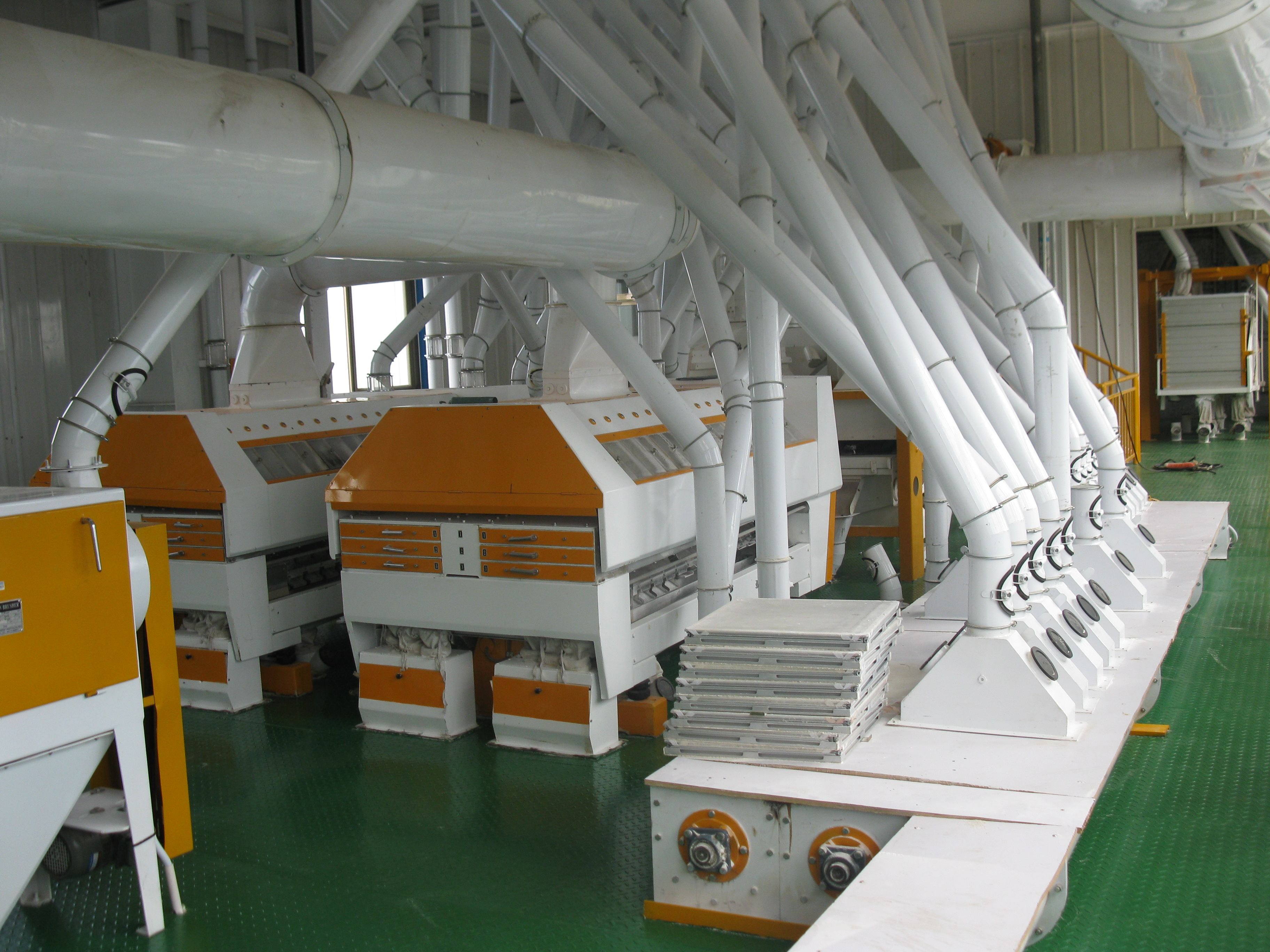
Setting up a maize grinding plant rarely goes well when the first focus is the machine itself. Floor area needs to accommodate not just the mill but also intake hoppers, elevators, sifters, and packing stations without forcing awkward operator movements. Foundation pads should be checked against dynamic loads from the grinding chamber and motor, since cracking or vibration transfer will show up later as premature bearing wear. Routing power, water, and dust extraction lines before equipment lands avoids expensive rework. Motor sizing also deserves more than a rough estimate; voltage stability and starting current must match the daily tonnage target, otherwise a mill that works on paper will trip or run hot during extended shifts. Practical details like dust suppression, guard placement around drives and belts, and a maintenance calendar that includes screen inspection and lubrication are part of the setup, not afterthoughts.
Once the plant is laid out correctly, the workflow should move from raw maize intake through pre-cleaning and moisture conditioning before grinding. Removing stones, fines, and oversized material early reduces wear on hammers, plates, and screens. Controlled moisture addition softens the kernel just enough to improve dehulling and degerming without creating sticky meal. Screen selection then determines whether the final texture stays consistent from one batch to the next, especially when degermed grits and flour are being separated. Sifting and grading stages need enough capacity to prevent bottlenecks, and packing lines should be arranged so that different grades do not cross-contaminate. Keeping the entire line balanced from intake to bagging matters more than having a single high-output machine, because uniformity in the final product depends on each stage doing its job without forcing the next one to wait or overwork.
Contact Us
Contact Person: Jiakuo Wu
Email: [email protected]
Tel/WhatsApp: +86-13011566087
Website: https://www.pinglemachine.com