

High Quality Food Grade Anti-caking Silica: What It Is and Why It Matters
2026-10-31
Anti-caking agents rarely get the spotlight, yet they quietly keep your favorite powdered foods flowing freely from box to spoon. Among them, high quality food grade anti-caking silica stands out for its purity and performance—but not all silica is created equal. So what exactly is it, and why does it matter for your products? From preventing clumps in spices to ensuring smooth pours in protein powders, the right silica makes a measurable difference. At Zhonglian, we’ve seen how premium-grade silica can transform production consistency and consumer satisfaction. Let’s dig into the science and the stakes, minus the jargon.
The Invisible Ingredient Behind Free-Flowing Powders
When you tip a bag of confectioners' sugar or shake out a spice blend, the last thing on your mind is probably what keeps those fine particles from clumping together. The answer often sits at the nanoscale—a dusting of silicon dioxide or a related silicate that acts like microscopic ball bearings between larger grains. These additives are physically tiny but functionally enormous, coating each particle to reduce friction and soak up stray moisture before it can bridge the powder into lumps.
What makes them genuinely invisible isn't just their size, but how little is needed. Typically less than one percent by weight, they alter the powder's flow behavior without changing its taste, color, or texture. Without such agents, cocoa powder would seize into hard blocks in humid pantries, instant coffee would refuse to dissolve evenly, and grated cheese would arrive as a solid clump. The choice of anti-caking agent—whether synthetic silica, natural rice hull powder, or cellulose—depends on the powder's chemistry, how it's stored, and what it's meant to become.
How Anti-caking Silica Prevents Lumpy Dry Blends
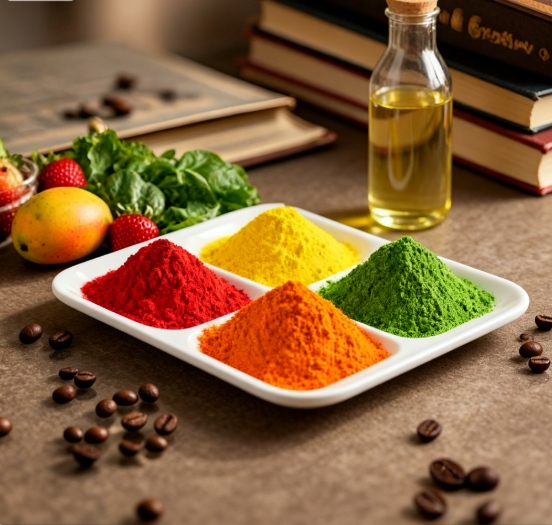
Dry blends turn lumpy when individual particles absorb enough ambient moisture to form liquid bridges, then harden into solid clumps. Anti-caking silica disrupts this process before it starts. Because the silica particles are extremely small—often in the micron or submicron range—they coat the surface of larger powder particles, creating a physical barrier that keeps them from touching. This spacing effect prevents the moisture-induced bridges from forming, so the blend stays free-flowing even in humid conditions.
Beyond just coating, silica also acts as a moisture scavenger. Its porous structure and large surface area let it adsorb water vapor from the surrounding air, lowering the local humidity inside the package. With less moisture available, the powder particles have far fewer chances to stick together. The result is a dry, uniform blend that pours and mixes without clumps, whether it's a seasoning mix, a protein powder, or a bulk chemical formulation.
Why Purity Levels Decide Food Safety and Performance
Purity in food ingredients isn’t a marketing term—it’s the difference between a clean production run and a recall. When raw materials carry trace metals, solvent residues, or microbial loads, they don’t just stay inert. They react with other components, accelerate oxidation, and create off-flavors or even toxic byproducts. For manufacturers, a 99% pure input might meet the spec sheet, but that leftover 1% can determine whether a batch passes shelf-life testing or gets pulled from the line.
In performance applications—think sports nutrition, infant formula, or clinical meal replacements—purity also controls how the body responds. Impurities can interfere with nutrient absorption, trigger allergens, or simply dilute the active compounds that give a product its functional edge. A protein isolate claiming 90% protein but carrying 10% ash and carbohydrate isn’t just less effective; it can shift osmolality, alter texture, and force reformulation downstream. The tighter the purity window, the more predictable the blend, the flavor, and the final product’s behavior under stress.
Finally, purity levels are a direct line to trust. Third-party testing that flags heavy metals below 0.1 ppm or absence of melamine isn’t a bureaucratic checkbox—it’s the only way to guarantee that what’s on the label matches what’s in the scoop. When a supplier cuts corners on purification, the cost doesn’t disappear; it moves to quality complaints, failed audits, and long-term brand damage.
Common Foods That Rely on Anti-caking Silica
You encounter anti-caking silica more often than you might think, especially in dry mixes and powdered products that need to pour smoothly. Spice blends, instant coffee creamer, powdered drink mixes, and protein shakes all depend on this fine powder to keep individual particles from clumping together when exposed to moisture. Without it, a jar of garlic powder or a packet of onion soup mix would turn into a solid brick after a few humid weeks in the pantry.
Grated hard cheeses and shredded cheese blends are another everyday example. The thin coating of silica on each shred prevents the pieces from fusing into a single mass inside the bag, which is why you can sprinkle a handful without chiseling it apart. Even baking powder and cake mixes rely on anti-caking silica to stay free-flowing, ensuring a consistent measurement every time you bake. The amounts used are tiny, typically less than 2 percent of the total product, but they make a noticeable difference in how these foods behave on your shelf and in your recipes.
Spotting High-Quality Silica on Ingredient Labels
Most people scanning a supplement label for silica just look for the word itself and stop there. That's a mistake. The source matters more than the presence. You want to see something specific like "bamboo stem extract" or "diatomaceous earth" listed alongside the silica percentage. If the label only says "silicon dioxide" without any plant-based origin, it's likely a synthetic or mined form that your body won't use efficiently.
Another tell is the way the ingredient appears in the supplement facts versus the "other ingredients" section. High-quality silica usually shows up as a listed mineral with a measurable amount (often 10-70 mg per serving) and a named plant source. Cheaper products bury "silica" or "silicon dioxide" in the inactive ingredients as a flow agent or filler. If you can't tell where it came from or how much you're getting, that's not a product worth paying for.
Also check for adjectives like "colloidal" or "vegetal" near silica. Those terms often indicate a finer particle size and a plant-derived base, both of which improve absorption. And don't be fooled by labels that just say "natural silica"—that word has no regulatory meaning. A truly transparent label will name the exact botanical or mineral source, not hide behind vague marketing language.
The Real Value of Silica for Texture and Shelf Life
Silica often gets overlooked in formulation discussions, but its impact on both texture and stability is difficult to overstate. As an inert, porous material, it creates a delicate network within a product that keeps powders from clumping and liquids from separating. This physical structuring means a loose powder flows more evenly from the jar, a cream spreads without dragging, and a pressed compact stays smooth instead of developing hard pan. The result is a tactile experience that feels refined rather than gritty or sticky, which is especially important for products applied to the face and body where comfort matters as much as performance.
Beyond the immediate feel, silica has a quieter but equally valuable role in preserving the intended character of a formulation over weeks and months. Its high surface area absorbs residual moisture and oils that would otherwise trigger caking, streaking, or premature breakdown of actives. In emulsions, a small percentage of silica can act as a rheology modifier, giving a formula just enough body to stay uniform without becoming heavy or waxy. This stabilizing effect extends the usable window of a product far beyond what the base ingredients alone could achieve, reducing the need for excessive preservatives or synthetic thickeners that can alter skin feel.
What makes silica genuinely versatile is that it works quietly in the background, without overshadowing the sensory profile the formulator intended. It rarely changes color, odor, or pH, and it can be selected in different particle sizes to fine-tune slip, oil absorption, or soft-focus blurring. In pressed powders, fumed silica helps prevent fallout during pressing and improves pick-up with a brush. In liquid foundations, spherical silica beads create a cushiony glide and diffuse light to minimize the appearance of fine lines. Across all these formats, the same core benefit emerges: silica lets a formula hold its shape, both physically and chemically, long enough to deliver the experience it was designed to provide from day one.
FAQ
It's a purified form of silicon dioxide processed to meet strict safety standards for use in food. It works by absorbing moisture and keeping powdered or granulated ingredients from clumping together.
You'll find it in dry mixes like instant soups, powdered coffee creamers, grated cheese, spices, and protein powders—anywhere a free-flowing texture matters.
Yes, when used within regulated limits. Food grade silica passes through the digestive system without being absorbed into the bloodstream, and regulatory bodies such as the FDA and EFSA consider it safe for its intended use.
Industrial silica may contain impurities or be processed for non-food applications. Food grade silica undergoes additional purification and testing to ensure it meets strict purity limits for heavy metals and other contaminants.
It keeps powders from hardening or forming lumps during storage and transport, which means consumers get a product that pours or scoops easily and looks appealing, rather than a solid block that's frustrating to use.
No, a high-quality product is inert and tasteless, so it won't alter the flavor or aroma of food. Lower quality options sometimes carry off-notes, which is why sourcing matters.
Look for consistent particle size, verified purity certificates, compliance with food safety standards, and a supplier that can provide batch-to-batch traceability. These details help ensure the silica performs reliably without affecting the final product.
Not at all. While both are silicon dioxide, food grade silica is highly processed, amorphous (not crystalline), and purified to remove harmful substances. Sand is untreated and can contain crystalline silica, which is not safe for consumption.
Conclusion
Anti-caking silica is one of those workhorse ingredients that never gets credit. It's amorphous silicon dioxide, added in tiny amounts to dry powders to stop them from clumping. The mechanism is physical: its particles coat the surface of each powder particle, creating microscopic spacers that block moisture bridges and keep everything loose. Without it, things like spices, instant coffee, protein powders, and cake mixes would turn into rock-hard lumps within weeks. But not all silica is equal. The food-grade version must meet strict purity standards—usually above 99% SiO2, with tightly controlled levels of heavy metals like lead and arsenic. Lower-grade material or industrial silica can carry contaminants that don't belong in food. That purity directly affects both safety and how reliably the silica prevents caking under different humidity and storage conditions.
Spotting a high-quality anti-caking agent on a label is less about brand names and more about the wording. Look for "silicon dioxide (anti-caking agent)" or "E551" in the EU; if it's listed without specifying food-grade or appears in a product that also uses industrial fillers, be cautious. The best food manufacturers source amorphous silica that has been tested for particle size consistency—too coarse and it won't coat evenly, too fine and it might affect mouthfeel. In practice, this ingredient does a lot of quiet work. It keeps grated cheese from matting, prevents seasoning blends from stratifying, and extends the shelf life of dry soup mixes by maintaining a consistent texture from first scoop to last. That real value—not just preventing lumps, but preserving the sensory experience and reducing food waste—is why high-quality food-grade silica matters far more than most people realize.
Contact Us
Contact Person: Levin Wang
Email: [email protected]
Tel/WhatsApp: 8618668999988
Website: https://www.silicaplant.com/