

HFV9400XLC Refrigerated Trailer Manufacturer: Durable Cold Chain Transport Solutions
2026-11-16
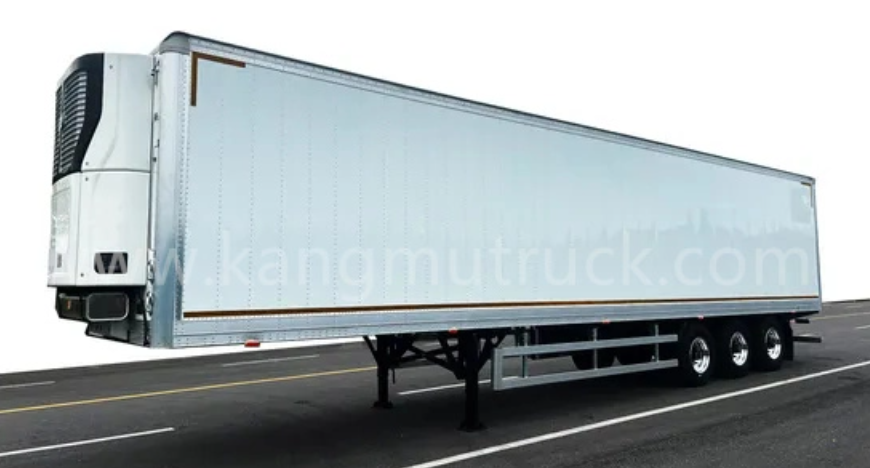
Cold chain hauling leaves no room for shortcuts. The HFV9400XLC refrigerated trailer is built for fleets that cannot afford temperature drift or unexpected downtime. As the manufacturer behind this workhorse, KANGMU TRUCK focuses on durable insulation, robust chassis design, and consistent airflow—so every load arrives exactly as it left. Here’s what sets it apart on the road and in the warehouse.
HFV9400XLC Chassis and Insulation Built for Durability
The chassis on the HFV9400XLC doesn't just carry weight—it distributes stress where it matters. High-tensile steel crossmembers are spaced tighter than on conventional reefer trailers, reducing flex points that lead to micro-cracks over years of rough roads. The main rails feature a reinforced web design, so even when fully loaded with temperature-sensitive cargo, the frame stays straight and true.
Insulation here is treated as a structural component, not an afterthought. The foam-injected walls and roof bond directly to the aluminum skin and internal lining, creating a monolithic barrier that keeps thermal bridging to a minimum. Unlike traditional panel assembly, there are no visible seams that invite moisture ingress or air leaks—just a continuous envelope that holds set temperatures with less compressor cycling.
Durability extends to the details that daily use punishes. Door hinges are forged rather than stamped, the rear frame is galvanized before painting, and the floor includes a wear-resistant top layer that shrugs off forklift traffic. Every rivet and seal is positioned to avoid standing water, ensuring the insulation value doesn't degrade from the inside out.
Precision Cooling That Keeps Perishables in Prime Condition
When you're dealing with fresh produce, dairy, or pharmaceuticals, even a two-degree swing can cut shelf life in half. That's why our cooling systems don't just blow cold air—they read the room. Sensors placed at multiple points track temperature and humidity in real time, adjusting airflow before any warm spot gets a chance to form. The result is a steady, even chill that keeps every carton, crate, and vial at its ideal state, from the first hour of storage to the last.
Most units overshoot and then coast, causing micro-thaws that damage cell structure in leafy greens or disrupt vaccine potency. Ours uses variable-speed compressors that ramp up or down in tiny increments, holding the target temperature within a fraction of a degree. This matters because precision isn't just a spec sheet claim—it shows up in crisper lettuce, firmer berries, and fewer rejected batches at the loading dock.
We've also engineered the airflow pattern to eliminate dead zones behind tall shelving or dense pallets. Instead of relying on a single vent, the system pushes cold air through perforated ducts that distribute it evenly across every level. That means no more shuffling boxes to find the one that got too warm. Your perishables stay in prime condition longer, and you spend less time worrying about spoilage.
Tailored Cold Chain Solutions for Regional and Long-Haul Routes
Moving temperature-sensitive freight across short regional hops or multi-day interstate lanes demands more than a standard refrigerated trailer. Our cold chain approach pairs route-specific temperature mapping with equipment matched to the distance: smaller, agile units for urban and regional drops, and long-range trailers with redundant cooling systems for cross-country hauls. Each shipment gets a pre-planned temperature profile and contingency routing if a reefer unit flags an anomaly.
For regional routes, we focus on tight scheduling and frequent stops without breaking the cold chain, using rapid-recovery doors and multi-zone compartments where mixed loads need different set points. On long-haul lanes, fuel-efficient engines, real-time telematics, and driver protocols for mid-route inspections keep products stable across changing climates. You also get a single point of contact who adjusts plans on the fly, whether that means swapping a trailer at a relay point or re-icing a seafood load during an unexpected delay.
Fleet Economics That Lower Fuel and Maintenance Demands
Fuel and upkeep rarely trend downward on their own, but fleet economics can be engineered to bend that curve. The simplest lever is route intelligence: idling in traffic or taking an extra loop through a congested corridor burns fuel without moving revenue. Dynamic routing tools that factor real-time congestion, delivery windows, and even weather patterns let dispatchers shave miles before a truck ever leaves the yard. Those saved miles translate directly into fewer gallons and less brake wear, compounding over thousands of trips.
On the maintenance side, the shift from reactive repairs to condition-based care changes the math. Instead of swapping parts on a fixed schedule, sensors monitor oil viscosity, tire pressure, and drivetrain temperature to flag issues when they are actually developing. A fleet that catches a failing alternator bearing early avoids a roadside breakdown that costs three times the part itself in towing, downtime, and missed deliveries. Pair that with driver coaching on acceleration and braking habits, and you get a quieter bottom line without adding a single vehicle.
The vehicle mix itself can do heavy lifting. Downsizing urban delivery vans to smaller, more maneuverable models cuts fuel consumption by double digits on stop-and-go routes, while right-sizing highway tractors to match actual load weights avoids hauling excess engine capacity. Some operators are experimenting with mild-hybrid systems that capture braking energy for auxiliary loads like liftgates and cab climate control, meaning the engine no longer idles just to keep the driver comfortable. These choices are not about flashy technology—they are about removing hidden costs that accumulate with every single mile.
Proven Cargo Versatility From Fresh Produce to Vaccines
Moving fresh mangoes from a farm in Kenya to a supermarket in Rotterdam demands one kind of cold chain. Shipping a batch of mRNA vaccines to a rural clinic requires another. The same network handles both without blinking—reefer containers set to the half-degree, active temperature logging, and handling teams trained to swap between leafy greens and glass vials without cross-contamination or delay.
That range isn't a marketing slide. It shows up in daily operations: a pallet of cut flowers shares a hold with chilled beef on Monday, and by Thursday the same space is lined with pharmaceutical-grade insulation and dry-ice bunkers. The equipment doesn't care whether the payload wilts, spoils, or loses potency; the people and protocols do. That's why the pre-trip inspection checklist for a strawberry shipment looks almost identical to the one for a flu vaccine—just with different set points and a lot more paperwork on the pharma side.
This flexibility comes from treating temperature as a managed resource rather than a setting. Instead of 'cold' or 'frozen,' the system works in gradients: 2°C for berries, -20°C for certain biologics, 15°C for avocados, and controlled atmosphere for bananas that need to wake up slowly. Every lane has its own rhythm, and the only common thread is that the cargo arrives as fresh, potent, or intact as when it left.
Backed by a Manufacturer That Prioritizes Uptime
We’ve seen too many projects stall because the hardware vendor treats support as an afterthought. That’s why we partner with a manufacturer that builds its entire operation around one metric: keeping your systems running. Their engineering team monitors production lines in real time, so a potential fault is often corrected before it ever reaches your site.
This focus on uptime isn’t just a slogan. The manufacturer maintains regional spare parts hubs and offers direct access to senior technicians who can troubleshoot complex issues without layers of escalation. When a replacement component is needed, it ships within hours—not weeks.
For our clients, this means fewer unplanned pauses and more confidence in long-term capacity planning. You’re not just buying equipment; you’re buying the guarantee that someone is always watching the line, ready to act the moment something drifts from spec.
FAQ
It's a refrigerated semi-trailer designed for temperature-sensitive freight. The model is built around a 40-foot platform with heavy insulation and a dedicated cooling unit, which makes it suitable for long-haul cold chain operations rather than short shuttle runs.
The unit comes from a manufacturer focused on cold chain equipment, not just general freight trailers. Their engineering tends to prioritize thermal efficiency, structural reinforcement, and compatibility with various refrigeration systems, all of which show up in how the HFV9400XLC is put together.
Thermal integrity is central to its design. The trailer uses high-density insulated panels, tight-sealing rear doors, and minimal thermal bridging around the frame. That combination helps maintain a consistent internal climate even when outside temperatures swing or the route includes multiple stops.
It's suited to perishable food, pharmaceuticals, fresh produce, frozen goods, and certain chemicals that need strict temperature control. The interior layout can be arranged for palletized loads or mixed cargo, depending on how the customer configures the unit.
The frame and outer skin are built for rough handling at docks and on uneven roads. Reinforced corner castings, corrosion-resistant undercoating, and a robust suspension setup all contribute to a longer service life under continuous use in demanding supply chains.
Yes, there is room for configuration changes. Buyers can choose different refrigeration units, add multi-temperature compartments, install remote monitoring sensors, or adjust the interior flooring and tie-down points to match specific cargo handling requirements.
The cooling system is mounted to reduce vibration damage, the door seals are designed for frequent open-close cycles, and the electrical harness is routed away from high-moisture areas. These details cut down on unplanned downtime and keep the unit running through tight delivery schedules.
It usually operates between distribution centers, processing plants, and retail hubs where temperature control cannot lapse. The trailer is common in regional and long-distance lanes that demand consistent cold storage on wheels, from farm to warehouse to store.
Conclusion
The HFV9400XLC is built around a simple truth: a refrigerated trailer loses value the moment its insulation or chassis gives way on rough regional roads or long interstate hauls. That’s why the design pairs a torsion-resistant frame with dense, multi-layer insulation that limits thermal bridging even when ambient temperatures swing hard. Its cooling system doesn’t just blast cold air; it responds to actual load conditions, holding tight tolerances for fresh berries, dairy, or temperature-sensitive vaccines without constant manual adjustment. Operators can fine-tune airflow patterns, door seals, and internal divider placements to match mixed-pallet routes, so one trailer can handle both multi-stop grocery deliveries and dedicated pharma runs without re-engineering.
This flexibility extends into fleet economics in ways that show up on monthly fuel statements. Because the trailer reaches and holds target temperatures faster, compressor cycles shorten, cutting fuel demand and reducing wear on refrigeration components. Reinforced door frames, heavy-duty floor edges, and rust-resistant undercoating lower the frequency of minor repairs that typically eat into margins. Whether carrying frozen seafood, fresh cut flowers, or clinical trial materials, the HFV9400XLC keeps cargo in its required state. Behind that performance stands a manufacturer that stocks critical parts regionally and dispatches service teams quickly, treating every hour off the road as a real cost. The result is a cold chain platform that prioritizes uptime and load integrity over empty claims.
Contact Us
Contact Person: Shen Zhikang
Email: [email protected]
Tel/WhatsApp: 8613908668969
Website: https://www.kangmutruck.com/