
HDPE Pipe Production Line Manufacturer Providing Turnkey Extrusion Solutions
2026-11-03
Setting up an HDPE pipe plant usually means juggling multiple suppliers, debugging mismatched components, and losing weeks to trial and error. It doesn't have to be that way. As a leading HDPE pipe production line manufacturer, COMRISE delivers complete turnkey extrusion solutions—so you can start producing quality pipe from day one, not month six.
From Raw Resin to Finished Pipe Under One Roof
The journey starts with raw polyethylene or PVC resin, which is fed directly into our mixing and compounding stations. Here, precise ratios of stabilizers, colorants, and UV inhibitors are blended under controlled heat and pressure, eliminating the inconsistencies that often arise when semi-finished compounds are sourced from external suppliers.
From there, the molten material moves through a series of extruders and calibrators without ever leaving the production floor. This uninterrupted flow allows our technicians to adjust wall thickness, diameter, and ovality in real time, catching deviations before they become rejects. The result is a pipe that emerges from the cooling trough already meeting dimensional tolerances, rather than requiring secondary correction.
Finally, inline laser micrometers and pressure test rigs verify each length before it reaches the cutting and bundling area. Because every step happens under one roof, traceability is straightforward: a single batch number covers the entire transformation from pellet to finished product, and any quality concern can be traced back to the exact hour of extrusion.
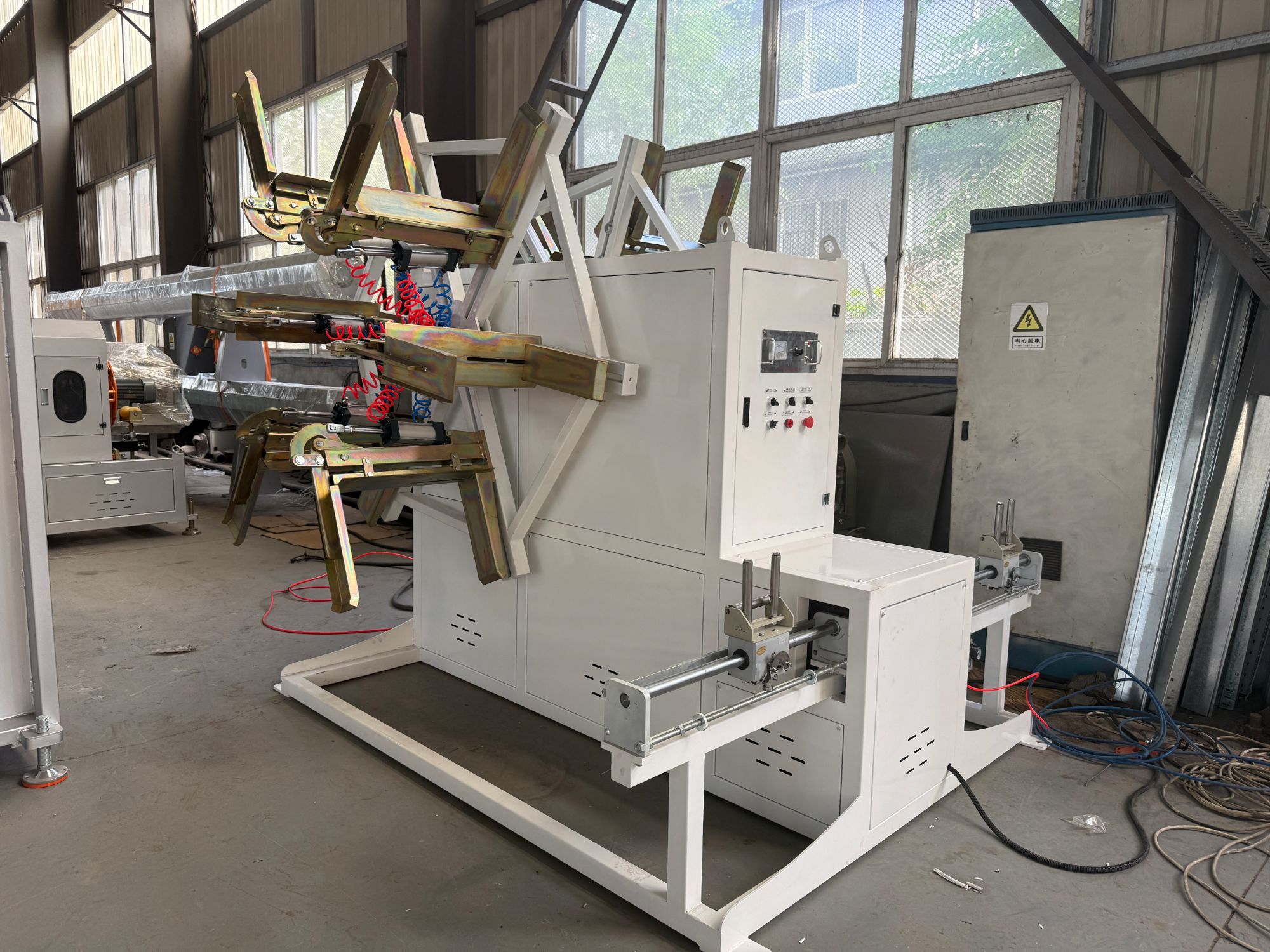
Configurations That Match Your Plant, Not the Other Way Around
A fixed shelf with a fixed light and a fixed timer tells you one thing before you even plant a seed: adapt or struggle. That works for a while if you grow the same crop every cycle. The moment you swap lettuce for a bushy pepper or a vining cucumber, the same configuration starts working against you. The lights are either too close or too far, the tray holds too much water, and the fan moves air past leaves that do not exist yet.
A configuration built around the plant inverts that. It starts with the crop’s actual habits—how deep the roots go, how fast the leaves transpire, how much vertical space the stems will claim. Then the light height, the irrigation interval, the spacing, and the airflow get set to serve those habits. There is no single ideal setting. There is only a range that changes as the plant moves from seedling to harvest, and the system should be loose enough to follow it.
That is the real test. If you find yourself pruning harder, watering less, or nudging the light every two days just to keep a plant from failing, the configuration is not matching the plant—you are matching the configuration. A setup that genuinely fits disappears into the background, giving the crop what it needs while you do something else.
Extrusion Lines That Keep Tolerances Tight Over Long Runs
Every extrusion line claims precision, but few hold it after the first thousand meters. The real test is in the wear patterns of screws, the thermal drift of barrels, and the slow loosening of die bolts. Our lines are built with nitrided steel and liquid-cooled feed throats, so the melt temperature stays within a two-degree band even as ambient conditions shift through a shift change. Operators stop chasing settings; the process stays put.
Long runs expose weak points in downstream handling too. Pullers that slip, saws that wander, and cooling tanks that stratify all push your tolerance window wider by the hour. We use servo-driven belt pullers with closed-loop tension feedback and vacuum sizing tanks with independent zone control. The result is ovality under 0.15 mm on a 50 mm OD tube after 10,000 meters, not just in the first sample off the line.
Maintenance often kills consistency. A line that needs recalibration every weekend isn't holding tolerance—it's being nursed along. Our die packs are keyed and shimless, so reassembly lands within microns without a feeler gauge. Barrel heaters are segmented and individually monitored, so a failing zone is flagged before it drifts the melt. That's how you get a SPC chart that stays flat from Monday to Friday, month after month.
Turnkey Means We Handle the Details Before They Become Delays
A turnkey approach only works if someone is already sweating the small stuff long before it reaches your desk. That might mean verifying utility connections while the site is still being surveyed, or locking down material lead times before the first permit is filed. We track the unglamorous dependencies—drainage plans, load ratings, local code quirks—so that a missing signature or a backordered component never turns into a stalled week.
Most delays don't start as emergencies. They start as overlooked details: a door schedule that doesn't match the fire rating, a delivery window that collides with a crane booking, a compliance check that needs one more document. Our job is to catch those mismatches early, while they're still cheap to fix and before they ripple through the rest of the schedule.
That's why our internal checkpoints run ahead of the build, not behind it. We pre-clear vendor drawings, confirm site access with property managers, and align installation sequences with the actual trade availability. By the time shovels hit the ground, the path is already unwound—no waiting on decisions that should have been made weeks ago.
Support That Continues After the First Meter Is Extruded
Commissioning a new extrusion line doesn't end when the first product rolls off. Our engineers remain on-site through the initial production cycles, checking pressure curves, melt temperatures, and haul-off tension while your team learns the quirks of the new system. We don't hand over a manual and disappear—we stay until the line runs consistently at target speed without alarms.
Support after startup includes remote diagnostics with logged process data, so if a fluctuation appears at 2 a.m., you're not alone trying to interpret error codes. Spare parts for critical wear items are staged locally, and our technical staff keep a direct line open for adjustments to screw speed, barrel zone setpoints, or downstream calibration. This kind of extended presence catches small drifts before they become scrap or downtime.
What matters is that your operators gain confidence without feeling watched. We schedule follow-ups around your production calendar, not ours, and review actual run reports together. That way, the support doesn't feel like a one-time training session—it becomes part of how your line settles into daily operation.
Scaling Output Without Rebuilding Your Entire Facility
Many operations assume that higher throughput demands more square footage. But before starting a costly expansion, it's worth taking a hard look at how the existing floor is actually being used. Shifting from batch-and-queue to a continuous flow layout, even in a single department, can free up 20–30% of capacity without moving a wall. Simple changes—relocating a staging area, resequencing changeovers, tightening material delivery windows—often matter more than adding new machines.
Equipment utilization is another lever that gets overlooked. A bottleneck machine may only be productive 40% of the time because it's starved, waiting on inspectors, or buried in setup. By tracking downtime reasons and challenging every non-cutting minute, you can raise throughput substantially on the same asset. In one case, a packaging line doubled output after crews began pre-staging tooling during the last production run instead of after it stopped.
People and scheduling play a bigger role than any building project. Cross-training operators so they can float between lines prevents small absences from idling entire workstations. Shifting to staggered breaks and adding a short overlap between shifts can keep machines running through what used to be dead periods. These changes need no permitting, no general contractor, and almost no capital—just a willingness to question habits.
FAQ
Our lines are set up for everything from small-diameter conduits to large-diameter pressure pipes for water and gas, covering PE80 and PE100 grades without hassle.
You get the full package—raw material handling, extruder setup, downstream cooling and sizing, haul-off, cutting, and coilers if needed. We also handle installation, commissioning, and operator training on site.
Yes, we start with your floor plan and expected kg/h output, then adjust layouts, screw designs, and downstream units to match. No forced one-size-fits-all configuration.
We use vacuum calibration tanks with precise pressure control and multi-axis laser or ultrasonic gauges that feed real-time adjustment signals back to the extruder and haul-off.
Beyond installation, we offer remote diagnostics, spare parts stocked in regional hubs, and scheduled maintenance visits. Most issues get resolved within 24 hours through video or on-site call.
Typically 90 to 120 days depending on line complexity and customization. We keep critical components pre-assembled to shorten lead times without cutting corners.
Yes, our process engineers help fine-tune stabilizer, carbon black, and regrind ratios for your target pipe standards, without locking you into specific material suppliers.
The barrels use ceramic band heaters and air-cooled zones with PID control, plus AC motors with regenerative drives. That can trim energy use by 15–20% compared with older DC systems.
Conclusion
Most extrusion projects stall because the resin handling, die head, vacuum calibration, haul-off, and cutting systems come from different vendors. As an HDPE pipe production line manufacturer, we build the entire line in one facility, so the transition from pellet to finished HDPE pipe is managed as a single process rather than a series of handoffs. That matters when your plant has an unusual ceiling height, a narrow bay, or specific voltage requirements; we configure barrel lengths, downstream spacing, and coilers to your floor plan instead of forcing you to adapt to a standard layout. Just as important, the line holds dimensional stability during multi-shift runs. The melt pressure control and multi-stage vacuum calibration work together to keep wall thickness and ovality within tight limits after hundreds of hours of continuous output.
Turnkey delivery is not just a sales term here. We handle foundation drawings, utility tie-ins, PLC integration, and operator training before startup, so the usual last-minute missing flange or mismatched signal does not push your schedule. After the first meter is extruded, our service team keeps replacement screws, barrels, and calibration sleeves in regional stock, and remote diagnostics let us read the line's parameters while your maintenance crew is still on the ladder. When demand grows, you can add a second extruder or a larger downstream without tearing out the existing line; the control architecture and mechanical interfaces are designed for phased expansion. That approach lets you double output in the same building, without rebuilding your facility or losing weeks to civil work.
Contact Us
Contact Person: LISA LEE
Email: [email protected]
Tel/WhatsApp: +86 13780696467
Website: https://www.qdpipemachine.com