Custom Gantry Barrel Zinc Plating Equipment Advantages You Should Know
2026-09-03
When standard plating lines can't keep up with your barrel volume or part geometry, the real bottleneck isn't your operators—it's the equipment. Custom gantry barrel zinc plating equipment from Junda flips that equation, giving you control over load capacity, cycle timing, and footprint. Here are the advantages that actually show up on the production floor.
Matching the Barrel to Your Part Geometry, Not Guesswork
A barrel that fights the contour of your part wastes cycle time and leaves surface finish to chance. Start by mapping the actual radius changes, undercuts, and straight sections instead of reaching for the default shape on the shelf. When the barrel profile mirrors the geometry, material removal happens where you need it and skips the zones that only cause chatter.
Look closely at the transition points—sudden changes in diameter or wall thickness demand a barrel that can follow without dwelling. A stepped barrel with a short taper often beats a long, gradual one on parts with tight shoulder blends. The goal is simple: let the geometry dictate the contact patch, not the other way around.
Before you finalize the barrel, test it against a few representative parts from the batch. Watch the spark pattern and listen for consistent loading. If the wear marks drift away from the critical surfaces, the barrel is guessing. Trim the radius or adjust the length until the contact zone sits exactly where your print demands.
How a Custom Gantry Barrel Reduces Zinc Plating Rework
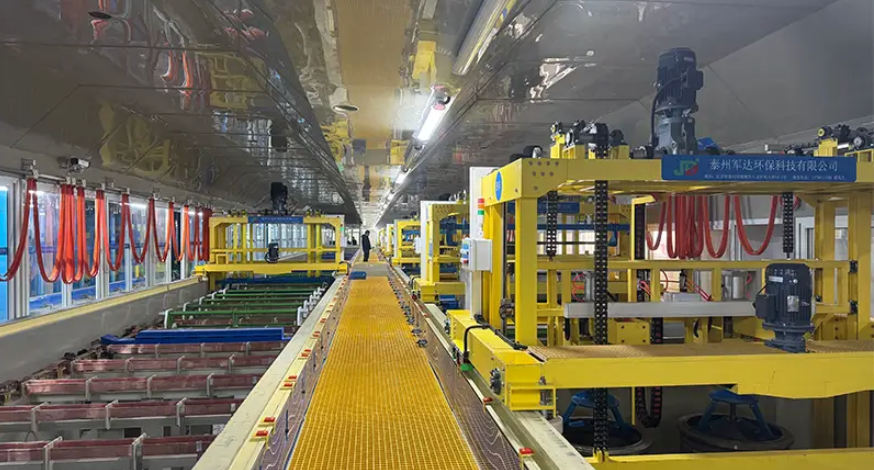
Standard plating barrels often create the very defects that force parts back through the line. Uneven current density near the danglers, shielded areas behind perforation ribs, and excessive part nesting lead to thin zinc deposits, roughness, or unplated shadows. A custom gantry barrel is built around the actual part geometry, load size, and desired deposit distribution, so the plating current reaches every surface more uniformly from the first cycle.
The difference usually comes down to details that off-the-shelf barrels ignore. Custom perforation patterns, tailored dangler placement, internal dams or flow diverters, and a rotation speed matched to the part's tumbling behavior all improve solution exchange inside the barrel. That means less gas entrapment, fewer contact marks, and a more even zinc thickness across high- and low-current areas. In practice, operators see fewer burnt edges and dull centers that would otherwise require stripping and replating.
Rework drops because the barrel removes the root causes rather than relying on extra inspection to catch them. When thickness variation stays within a tighter band and adhesion is consistent from load to load, parts pass salt spray testing and thickness checks the first time. The savings show up quickly in less acid consumption for stripping, lower labor for sorting and replating, and fewer late shipments waiting on a second pass through the zinc line.
Overhead Gantry Systems Free Up Floor Space for Other Steps
Floor space in a busy plant rarely sits idle for long, but overhead gantry systems keep lifting and transport duties off the ground entirely. Instead of dedicating wide aisles to forklift travel or bolting conveyors to the concrete, the overhead track uses airspace that would otherwise go unused. Below the gantry, walkways, staging carts, and temporary workbenches can remain in place without interrupting material flow.
This shift opens up corners and wall-adjacent zones that floor-based equipment often cannot reach without complex maneuvering. Tight layouts near columns or loading docks become usable for inspection, kitting, or short-term buffer storage. The floor no longer has to double as a traffic lane for every lift, so pedestrian paths and smaller utility carts move through with fewer bottlenecks.
Overhead handling also lets different steps of a process happen side by side without waiting for a single lift device to clear the area. One team can unload incoming pallets at the dock while another assembles a subcomponent a few meters away, both supported by the same gantry run. That decoupling of material movement from floor-level workflow gives layout planners more freedom to rearrange production steps as demand shifts, rather than locking the facility into a fixed conveyor or lift-truck route.
Adjustable Rotation and Tumble Speeds for Consistent Coating
Achieving a uniform coating layer often comes down to how well the rotation and tumble speeds can be fine-tuned for each batch. Instead of relying on a single fixed setting, the system lets operators adjust both parameters independently, matching the motion profile to the specific density, size, and surface characteristics of the parts being processed. This flexibility prevents the common problem of heavier components sinking to the bottom while lighter ones stay on top, which can lead to uneven film thickness and visible patches.
The ability to dial in separate rotation and tumble speeds also helps when coating delicate or irregularly shaped items. A slower rotation with a more aggressive tumble can gently lift and redistribute parts without causing impact damage, while a faster rotation with minimal tumble works well for small, uniformly shaped pieces that need a consistent exposure to the spray pattern. Since these settings can be saved as presets, operators can repeat the same recipe for identical results across different production runs.
From a process control standpoint, having independent speed adjustments reduces the guesswork typically involved in achieving consistent coverage. Rather than compensating for coating defects by changing spray distance or fluid viscosity, technicians can first optimize the part movement profile. This often resolves issues like shadowing in recessed areas or excessive build-up on outer edges, making the overall coating process more predictable and reducing material waste.
Cutting Maintenance Headaches with Fewer Custom Wear Parts
Every custom wear part on a machine is a promise of future downtime. You need special drawings, longer lead times, and a shelf full of one-off spares that nobody remembers how to install. The moment you standardize on fewer, well-chosen wear components, a whole category of maintenance headaches quietly disappears. Instead of chasing a bespoke liner or a proprietary bushing, your team reaches for a familiar part that fits multiple positions across the line.
The real cost of custom wear parts isn't just the machining bill. It's the phone call at 2 a.m. when a critical component cracks and the only replacement is 600 miles away in a vendor's warehouse. By consolidating around a smaller set of durable, off-the-shelf wear items, you cut inventory sprawl, simplify training for new technicians, and make preventive replacements a matter of routine rather than a scramble. Fewer unique parts mean fewer mistakes during reassembly, fewer obsolete drawings, and far less guesswork about torque specs or material grades.
This shift doesn't mean compromising performance. Modern standardized wear materials often outperform older custom alloys because they benefit from continuous production refinement and broader field data. When you design equipment around a core set of proven wear parts, you also make future upgrades easier: swap one standardized liner for the next revision without redesigning the housing. The result is a maintenance schedule that feels predictable instead of reactive, and a parts room that stops looking like a museum of past engineering regrets.
Why a Tailored Plating Barrel Pays Off in the First Production Run
A tailored plating barrel eliminates the usual first-run guesswork by matching hole patterns, flight shape, and rotational speed to the exact part geometry. Instead of forcing parts into a generic barrel where they may nest or shield each other, a custom design promotes consistent solution flow and current density from the very first cycle.
This precision pays off immediately in reduced scrap and rework. With drain holes and internal flights sized for the specific component, you avoid burning edges on sharp features or leaving recessed areas underplated. The first production run can hit thickness specifications without stopping to swap barrel panels or adjust dwell time.
For precision or high-volume parts, that upfront customization means quality targets are met on day one. You save the material, labor, and downtime that typically go into diagnosing a standard barrel’s failure points after the first batch comes out defective.
FAQ
Standard lines force you to adapt your parts to the machine. A custom gantry setup flips that—it’s built around your barrel dimensions, load weight, and cycle times. This means fewer manual transfers, less risk of damage, and PLC sequences that match your actual production rhythm instead of a generic recipe.
The gantry moves barrels between process tanks on a controlled path, so you’re not waiting for a shared hoist or manual chain. Custom systems often include multiple load/unload stations and buffer positions, letting barrels advance independently. That overlap cuts idle time and keeps the line moving even when one station needs attention.
Yes, if the barrel internals and rotation speed are matched to your part geometry. Custom builds let you specify barrel perforation, dangler placement, and variable speed drives. That control prevents nesting, improves solution exchange, and gives consistent zinc thickness across small fasteners and bulky stampings alike.
Lower reject rates matter more than the initial price tag. When the equipment fits your parts, you waste less zinc, less energy, and fewer labor hours on rework. Custom systems also tend to have longer service life because components aren’t overstressed by mismatched loads.
Precise dwell times, drain cycles, and transfer speeds prevent cross-contamination and drag-out. You can program separate recipes for different part families, so chemicals are only used when needed. Less drag-out means lower replenishment costs and a cleaner rinsing loop.
You can specify access platforms, quick-release barrel hangers, and sensor placement that suit your crew’s routine. Instead of squeezing into tight spaces around a standard frame, technicians get clear walkways and modular components. That translates to shorter downtime and fewer improvised fixes.
Barrel shape, hole pattern, and internal fins directly affect current distribution. Custom engineering lets you tune those variables for your parts’ surface area and plating bath characteristics. The result is tighter thickness tolerances, even in recessed areas, which is hard to achieve with off-the-shelf barrels.
Automotive fasteners, electrical hardware, and construction anchors often see the biggest gains because they demand high corrosion resistance with tight dimensional specs. But any operation running mixed part families or frequent changeovers can justify a custom line—it removes the compromises that slow down job shops.
Conclusion
A custom gantry barrel for zinc plating starts with one simple idea: the barrel should fit your parts, not the other way around. Off-the-shelf barrels often force awkward part shapes into generic tumbling patterns, which leads to uneven coverage, shadowing, and plating defects. When the barrel is engineered around your specific part geometry, the load moves more predictably, and every surface gets the current it needs. That alone cuts rework sharply. But the benefits don’t stop at geometry. Adjustable rotation and tumble speeds let operators fine-tune the cycle to match part weight and fragility, so delicate threads or thin edges aren’t damaged while heavier sections still plate evenly. The result is a consistent zinc layer from the first run, without the trial-and-error batches that eat up time and chemistry.
Beyond the barrel itself, a custom overhead gantry system frees up floor space by moving the plating line upward instead of outward. That leaves room for rinsing, passivation, and drying steps without expanding the building footprint. And because custom equipment is built with fewer one-off wear parts, maintenance becomes less of a scavenger hunt. You replace simple, standardized components rather than waiting on oddball fittings. In practice, a tailored barrel pays for itself quickly: less rework, fewer rejected loads, shorter changeovers, and a line layout that works with your facility instead of against it. For shops tired of forcing standard barrels onto non-standard parts, the move to custom gantry zinc plating is less an upgrade and more a correction of long-standing friction.
Contact Us
Contact Person: hayyr
Email: [email protected]
Tel/WhatsApp: 8613082110525
Website: https://www.jundaelectroplating.com