

Container Freezer Room Factory Standards That Drive Reliable Cold Storage Performance
2026-11-26
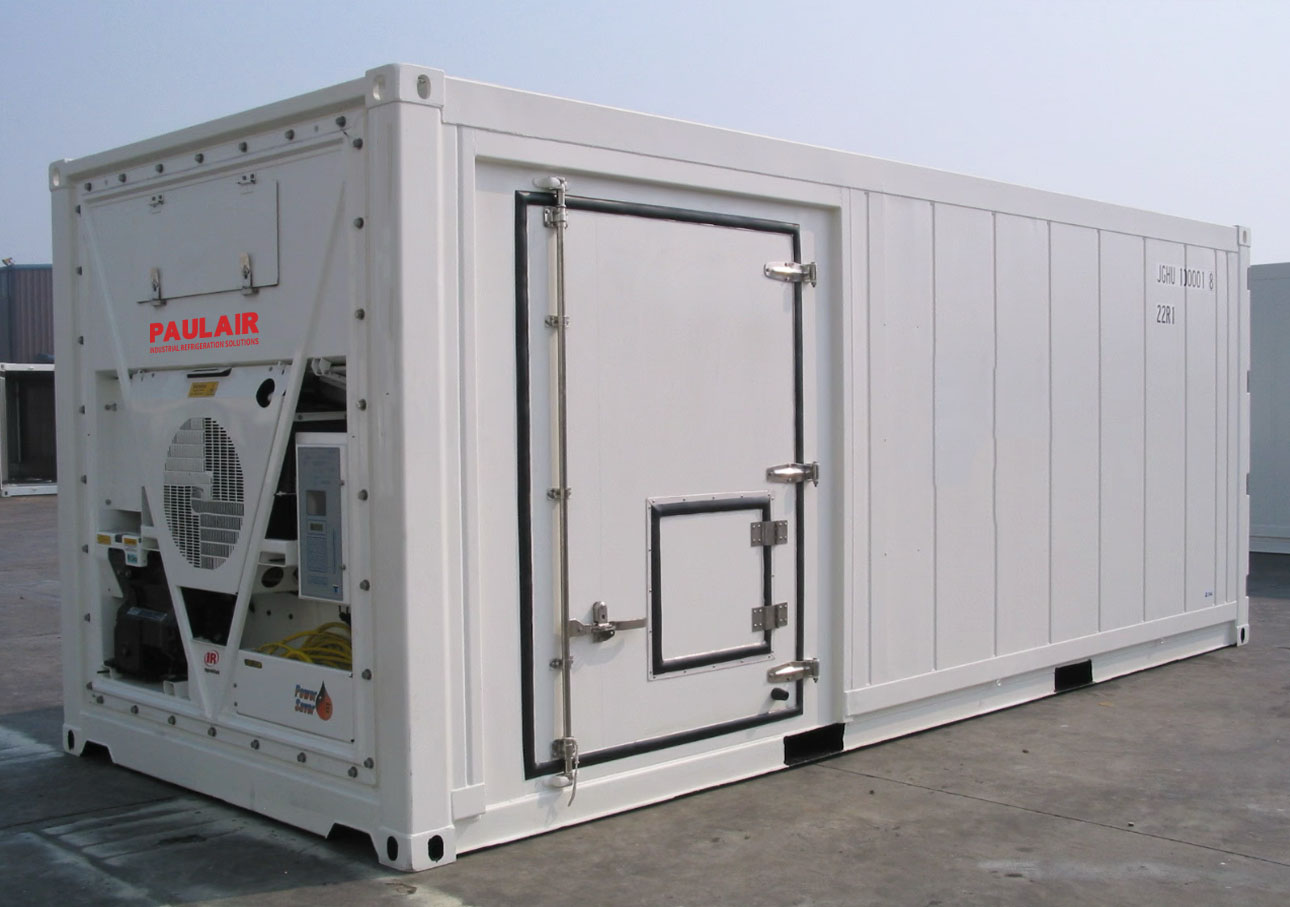
Most cold storage failures don't begin inside the freezer room. They begin on the factory floor, where panel tolerances, door sealing, and refrigeration line work are either controlled or quietly compromised. For anyone relying on container freezer rooms, those production details decide whether a unit holds temperature under load or drifts when it matters most. That is where factory standards stop being paperwork and start being performance. At PAULAIR, those standards shape every container freezer room that leaves the line. This guide breaks down the manufacturing benchmarks that separate dependable cold storage from costly downtime—and why they are worth checking before you buy.
What a Factory Floor Audit Reveals Before Production Starts
Walking the floor before any order gets scheduled often exposes things a spec sheet never will. You notice whether raw materials are stacked in a way that invites contamination, if workstations have the tooling they actually need within reach, and whether the layout forces people to backtrack constantly. These details rarely show up in a supplier's self-assessment, but they will shape every unit that comes off the line later.
Beyond equipment and layout, a floor audit reveals how work is really prioritized. You might see half-finished batches from three different clients sitting idle, or operators waiting on a supervisor's approval for routine adjustments. The rhythm of the floor tells you more about on-time delivery risk than any promised timeline. If the current work already looks chaotic, adding your production volume won't magically bring order.
The most useful findings are often the quiet ones: a maintenance log that hasn't been updated in weeks, a calibration sticker past its date, or a quality checkpoint that exists on paper but not in practice. Each of these is a small crack that can widen under the pressure of a new production run. Catching them before start-up gives you the chance to fix problems while they're still cheap to solve.
How Panel Core Density Testing Prevents Future Insulation Collapse
Panel core density is rarely visible once the sheets are bonded, but it controls how the insulation behaves under years of thermal movement and modest structural load. When foam or mineral wool is under-compacted, small voids and weak cell walls are left inside the core. These defects do not cause immediate failure; instead they allow the panel to settle unevenly, form shallow pockets under the metal skin, and gradually lose thermal continuity. A density check catches that irregularity before the panel is buried in a roof assembly or wall cavity.
Testing typically involves taking representative samples from the production run or scanning installed boards to compare actual mass per unit volume against the specified range. A lower-than-expected reading usually points to poor mixing, short shot volume, or inconsistent rise in the foaming line. Rejecting those boards or adjusting the line pressure at that stage keeps weak sections out of the building. It is much simpler to quarantine a pallet than to open a finished facade later because the insulation has slumped behind the cladding.
The real prevention value shows up years after handover. Panels with verified density hold their shape through freeze-thaw cycles, stay bonded to facings longer, and maintain a continuous thermal barrier. That reduces the chance of cold spots, internal condensation, and progressive core collapse at joints or fixing points. For the cost of a few core samples per batch, the risk of a systemic insulation failure becomes far easier to manage.
The Welding Sequence That Keeps Moisture Out of the Envelope
Start at the lowest seam and work upward, letting each new pass overlap the one below it like a metal shingle. This keeps the lap joints facing away from water flow, so condensation and driven rain never get a chance to crawl behind the weld. When the bottom is sealed first, any moisture that collects during the job can still escape through the open upper joints instead of being trapped inside the envelope.
Corners and window returns get welded before the long straight runs. Those transitions are where tiny gaps tend to hide, and once the flat sections close over them, the damage is already locked in. By tying the awkward angles together early, the sequence leaves fewer interrupted beads and fewer spots where thermal movement can crack a cold joint later.
The final cap weld runs last, not first. If the top is sealed too early, warm air rising from inside the cavity condenses against the cool metal and sits in the joint while the lower sections are still open. Leaving the upper edge until the end lets the assembly breathe just long enough to stay dry, then locks the envelope shut with a continuous, low-heat pass that avoids burn-through and keeps the zinc or aluminum coating intact.
Why Door Alignment on the Jig Matters More Than the Spec Sheet
A spec sheet gives you numbers measured in a controlled setting, but it says little about how a door behaves once it is clamped into a jig that has been knocked around a shop floor for a few seasons. The jig holds the door in the exact position where hinges, latches, and seam gaps get set, so any twist or sag in the fixture transfers straight into the finished panel. Chasing the factory tolerance while ignoring what the jig is doing is like tuning a guitar while the neck is slowly bending.
Small deviations at the jig often multiply by the time they reach the outer edges of a full door assembly. If one locating pin sits a fraction low, the door can still measure fine on paper but hang slightly out of plane once installed. That is why experienced builders check the jig first, then trust the spec sheet second. They tap, shim, and reset reference points until the fixture repeats the same result on an old door and a new door, because only then do the printed numbers start to mean something.
The real difference shows up after a few dozen cycles, when a door that met every listed dimension still binds at the striker or rubs the weatherstrip. In those cases the issue is rarely the door itself. More often, the jig allowed a tiny amount of movement that no one noticed at the start. Taking ten minutes to verify alignment on the fixture saves hours of field adjustments later, and it turns a good-looking measurement into a door that actually closes clean.
When Refrigeration Sizing Moves From Guesswork to Calculation
For years, sizing a refrigeration unit often came down to someone staring at a cooler door and adding a cushion "just to be safe." That habit has consequences: oversized compressors short-cycle, pull moisture out of the air, and run inefficiently, while undersized units fail during the first real heat wave or after a heavy stocking day. Moving to calculation means asking how much heat actually enters the box, not how much might enter in a worst-case imagined scenario.
A calculated load breaks the problem into visible parts. Door openings, wall conduction, defrost cycles, respiration from produce, fan motors, lights, and the temperature of incoming stock all contribute differently depending on the operation. For example, a kitchen cooler that sees fifty door openings during dinner service needs a different allowance for infiltration than a storage room loaded once a week. The calculation also forces a conversation about realistic pull-down times and whether the compressor will run long enough to control humidity without freezing the coil.
The shift is less about finding a smaller unit and more about matching runtime, airflow, and coil temperature to how the space is used. When sizing is calculated, the equipment works within a stable band instead of lurching between extremes. That shows up in longer compressor life, fewer moisture problems, and lower energy bills. It also gives service technicians a reference point when a system underperforms, because the design intent was documented rather than assumed.
The Pressure Decay Test Every Reliable Container Room Must Pass
A container room can look well built and still leak enough air to compromise what happens inside it. The pressure decay test is a direct way to find those problems before a unit leaves the floor. After the room is sealed, it gets pressurized to a fixed point and the pressure is then monitored over a short hold period. If the reading stays put, the door seals, panel joints, and corners are doing what they should. If the pressure falls steadily, there is a leak somewhere, even when it is too small to spot by eye.
The real value of the test shows up when it is used for comparison, not just as a one-time approval. The same unit can be checked after transport or assembly to see whether anything shifted. The procedure is quick and does not rely on tracer gases or complicated equipment, so it can fit into normal production and installation routines without much disruption. Repeatable conditions matter more than the exact number: same start pressure, same hold time, and stable temperature give a result that can be trusted.
A room that cannot hold pressure will keep fighting its own air handling system and may let dust or moisture move through hidden gaps. That is why pressure decay is treated as a basic check of workmanship rather than an optional extra by builders who take container room performance seriously. A pass gives useful evidence that the envelope is tight. A fail tells the team exactly which unit needs correction before it becomes someone else's problem.
FAQ
The main difference comes down to how the panels, door frames, and refrigeration lines are assembled under controlled factory conditions. A dependable unit keeps tolerances tight around joints and seams, so air leakage stays minimal and the cooling system does not have to work against outside humidity.
The most revealing checks focus on panel flatness, corner joint continuity, and the pull-down test. If the room can reach its target temperature within the expected time and hold it without frost building around the door edges, the assembly has likely been done correctly.
Insulation quality controls how evenly the interior holds temperature between cooling cycles. High-density foam with consistent cell structure prevents thin spots that turn into condensation points, while properly bonded panel facings stop moisture from migrating into the core over time.
Because those two areas fail first when standards slip. A door that closes flush with even compression around the gasket prevents warm air from entering, and a floor system with proper thermal breaks avoids frost heave and water pooling that can compromise the structure.
The refrigeration system needs to recover quickly after each door opening. That means the evaporator placement, airflow pattern, and defrost logic should be matched to the room dimensions rather than treated as a generic bolt-on component.
Ask for records of in-process inspections, not just final certificates. Photos of panel locking positions, torque settings on door hardware, and test reports from random batch pull-downs give a clearer picture of whether the standard is applied consistently.
Early warning signs include condensation trails near panel joints, ice forming around the door perimeter, a rising compressor runtime with no change in usage, and flooring that feels uneven after a few freeze-thaw cycles. These usually trace back to small assembly shortcuts rather than normal wear.
Conclusion
A factory floor audit before production starts reveals what a drawing cannot: whether welding fixtures are set correctly, how panel edges are handled, and whether raw materials are stored in conditions that prevent pre-installation moisture uptake. That early inspection shapes the rest of the build. Panel core density testing follows as a practical safeguard rather than a box-ticking exercise. If foam density drops below the specified range, compressive strength weakens and insulation can settle or collapse over time, leading to sweating and thermal loss. The welding sequence matters just as much because every joint is a potential moisture entry point. Running the welds in a controlled order lets overlapping seams shed water and keep vapor away from the insulated core.
Door alignment is checked on the jig, not just against the spec sheet, because a door that meets the drawing can still bind, leak air, or lose its thermal break once the frame is under load. Mounting the door in the actual opening exposes misalignment before it reaches the site. Refrigeration sizing moves away from guesswork once thermal load, infiltration, product type and daily door openings are calculated against compressor and evaporator performance. The final pressure decay test confirms the whole envelope. A sealed container room is pressurized and the loss is monitored over a set period; any drop beyond the accepted limit signals an air path that would carry heat and moisture inside. Those checks make cold storage performance repeatable, not incidental.
Contact Us
Contact Person: Jack
Email: [email protected]
Tel/WhatsApp: +86-13335127698
Website: https://www.paulair-refrigeration.com