
Collapsible Water Bottles: Why Choosing the Original Manufacturer Matters
2026-10-23
When your collapsible water bottle springs a leak at the worst possible moment, you start wondering what corners were cut. The market is flooded with lookalikes that mimic the silhouette but not the substance. That’s where choosing the original manufacturer becomes non-negotiable. Qunhao has been engineering silicone bottles from the ground up—testing folds, seals, and food-grade materials through tens of thousands of cycles. In this post, we’ll unpack why the source of your bottle matters more than the price tag, and how a genuine Qunhao design can save you from soggy bags and wasted money.
The Knockoff Problem Nobody Puts on the Label
A counterfeit handbag rarely announces itself. The stitching might be slightly off, the hardware a shade too shiny, but the label stitched inside still bears a famous name. What the tag never says is that the bag came from an unlicensed workshop, that the leather was finished with chemicals banned in many countries, or that the pattern was copied from a designer's studio without payment.
That silence is the heart of the problem. Most knockoffs are not sold as obvious fakes; they are sold as "inspired by" or simply as the real thing at a too-good price. The missing information—origin, materials, labor conditions—means buyers cannot weigh risks they don't know exist. A child in one country, a dye runoff in another, a small brand losing its livelihood: none of that appears on the care label.
Even when regulators seize shipments, the labels stay mute. No factory name, no audit trail, just a logo and a size tag. So the knockoff circulates with a clean-looking tag and a dirty backstory, and the person holding it at the checkout has no way to tell the difference. That is the knockoff problem nobody puts on the label.
Food-Grade Silicone Is Only Half the Story
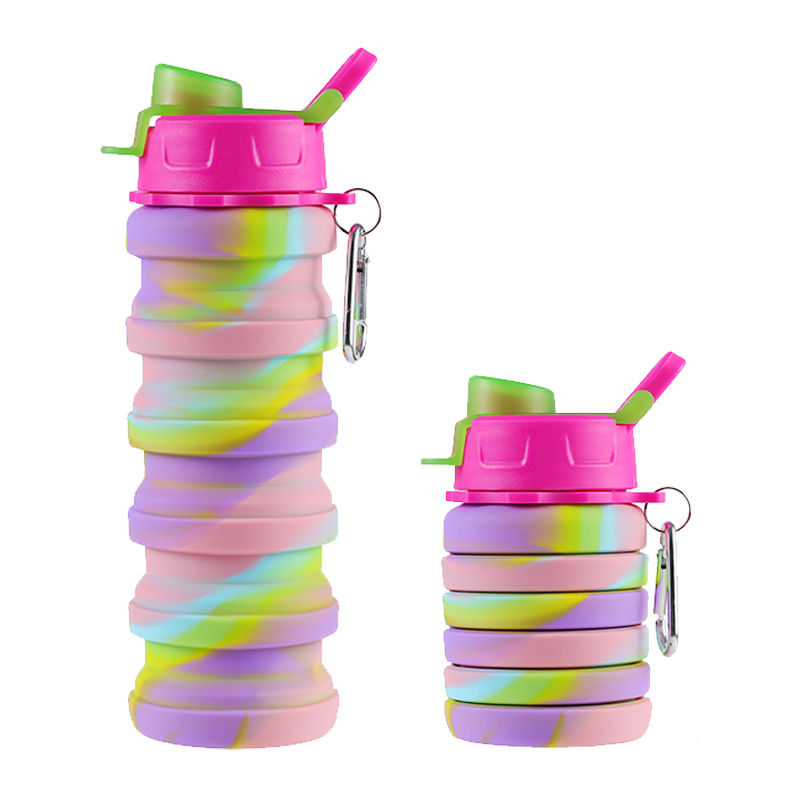
When a product claims to be made from food-grade silicone, it's easy to assume that safety and quality are automatically guaranteed. But that label only addresses the raw material's compliance with certain standards for food contact. It says nothing about how the silicone was processed, cured, or mixed with additives during manufacturing. Two items can start with identical food-grade silicone and end up vastly different in terms of durability, odor, and even long-term safety.
The real story lies in what happens after the base material leaves the supplier. Fillers, pigments, and plasticizers can all be introduced, and cheap production methods often rely on these to cut costs. These additions may leach out over time, especially when exposed to heat or acidic foods. A truly trustworthy product goes beyond the raw certification by testing the final item for migration, stability, and repeated use.
So next time you see that familiar food-grade badge, pause and dig deeper. Ask about the manufacturer's curing process, whether third-party lab tests cover the finished product, and how the silicone behaves after months of real-world use. Only then can you be confident that what touches your food is as safe as the label suggests.
Stress Points: Where Cheap Bottles Fail First
When a bottle fails, it rarely shatters uniformly. Cheap glass tends to concentrate stress at the neck and heel, where the wall thickness transitions abruptly. You'll often see cracks starting just below the finish, a consequence of uneven annealing and microscopic surface flaws left from high-speed molding.
The base is another trouble zone. Press-and-blow production, when rushed, creates thin spots near the punt or an off-center gate scar. Under carbonation pressure or a sudden knock, these areas act like perforated tear lines. A bottle that feels solid in the hand can still pop from a barely visible notch on the bottom edge.
Seams also tell the story. Inexpensive bottles often have prominent parting lines that aren't polished down. Micro-cracks like to propagate along those ridges. If you run a fingernail down the side and feel a sharp step, that's a built-in stress riser; it's only a matter of time before vibration or thermal shock finds it.
Why the Original Mold Still Wins Every Drop Test
It might seem counterintuitive at first. After years of use, after countless cycles, after being subjected to the exact same drop tests that newer molds must pass, the original mold still comes out on top. There's no secret formula or mystical advantage—just the simple reality that the first mold was built when every dimension, every angle, every tiny clearance was still fresh in the minds of the people who designed it. No rushed revisions, no hand-me-down measurements, no accumulated drift. It was made to be exactly right, and that precision has never left it.
Drop tests don't lie. They measure how well a product survives impact in the real world, and the original mold's parts consistently absorb shock better than those from later iterations. Why? Because every replacement mold, even when carefully reverse-engineered, introduces micro-variations—an invisible asymmetry here, a marginally tighter corner there—that subtly change how force travels through the material. The original hasn't undergone those tiny compromises. It still produces parts whose walls are uniform, whose stress points are predictable, whose failure modes are already understood. That's not a flaw; it's a proven baseline.
There's also something to be said for trust. When a mold has survived hundreds of drop tests without cracking, without deforming, without losing its edge, people stop wondering if it can handle the next one. They just know it will. New molds have to earn that trust all over again. They might eventually match the original's performance, but until they do, the original remains the benchmark—not because it's newer or fancier, but because it has already proven itself every single time.
Warranty and Support: The Unseen Difference
Most buyers obsess over specs, but the real differentiator often hides in warranty fine print. A two-year warranty can mean overnight replacements or a six-week repair loop depending on the brand. Some policies cover accidental damage and even shipping both ways, while others quietly exclude the parts most likely to fail. That gap only becomes visible when something actually breaks.
Support quality is just as telling. Waiting on hold for forty minutes, being bounced between agents who haven't read the ticket, or getting a technician who actually listens and walks you through a fix—these moments define the ownership experience. The best support teams don't just solve problems; they spare you from having to explain yourself twice.
Savvy shoppers read the warranty terms before checkout and test support with a simple pre-sale question. That unseen layer of service can be worth more than a slightly faster processor or a marginally better camera. When things go wrong, you'll feel the difference immediately.
Paying Twice: The Arithmetic of Counterfeit Bottles
When a counterfeit bottle lands in your supply chain, the first cost is obvious: money gone for a product that doesn't perform. But the real arithmetic begins later, when you replace a ruined batch, pay for lab tests to confirm what went wrong, or spend hours chasing refunds that never arrive. That initial low price turns into a second charge you never planned for.
Consider a small cosmetics maker who buys "branded" glass bottles at half the usual rate. The caps crack during filling, the glass clouds after sterilization, and a full production run gets dumped. Now the company pays again—for new bottles, extra labor, and delayed shipments. The saving was not a saving; it was a deferred loss with interest.
This double payment also shows up in regulated industries. A clinic might stock counterfeit vials that pass a quick visual check, only to find incompatible stoppers that contaminate samples. The second payment isn't just financial; it's reputation repair, regulatory paperwork, and sometimes a recall. In every case, the arithmetic is simple: counterfeit bottles don't cut your costs, they just split them into two payments, and the second one always arrives on time.
FAQ
The original manufacturer controls the material sourcing, production tolerances, and safety testing. Copies often skip food-grade certifications or use thinner silicone that degrades faster, which can affect both taste and your health.
Originals typically use platinum-cured silicone or medical-grade TPU with no plastic fillers. Knockoffs may mix in cheaper elastomers that leach odors, stain easily, or crack at fold lines after a few weeks of use.
The original factory usually stress-tests the fold points and cap threads for thousands of cycles. Copies often skimp on these tests, so you might see splits at the creases or a leaking lid within a couple of months.
Yes. Non-original versions may not meet FDA or LFGB standards for repeated food contact, especially with hot liquids. Without proper certifications, there’s a real chance of chemical migration into your drink.
Usually, because they stand behind the product with warranties and replacement parts. A copy seller often disappears after the sale, leaving you with no recourse for a defective valve or seal.
In most cases, yes. You’re paying for verified materials, quality control, and design refinement. A copy might save you a few dollars upfront, but replacing it twice a year ends up costing more and creating more waste.
Sometimes. Poorly aligned seams, a strong chemical smell out of the box, or a rough, sticky surface are red flags. Originals tend to have clean edges, low odor, and consistent color.
They’re often the ones refining the fold pattern, improving the leak-proof cap, and sourcing better materials based on user feedback. Copies just imitate the old design, so you miss out on those functional upgrades.
Conclusion
Most cheap collapsible bottles look close enough in a photo, but the differences start before you even fill them. The 'food-grade silicone' stamp on a copycat product tells you nothing about cure time, catalyst residues, or whether the material was processed in a clean environment. Original manufacturers often use platinum-cured silicone with tighter controls, while counterfeits may use peroxide curing that leaves byproducts behind. That gap shows up first at the fold lines and neck joint, where thin or poorly bonded material develops micro tears after a few dozen squeezes. Original molds are machined to account for how the bottle collapses, not just how it looks expanded. In drop tests, the original typically lands without splitting at the bottom corner or cracking around the loop, because those stress points were reinforced during tooling rather than copied from a 3D scan.
Then there is the support you rarely think about until something leaks on a trail or in a gym bag. A legitimate maker stands behind the welding, the cap threading, and the warranty replacement when a seal fails; a counterfeit seller vanishes after the transaction clears. The math gets uglier when you replace a cheap knockoff three times in one season. You end up paying more than the original would have cost, while dealing with slow leaks, odd tastes, and a bottle that never fully flattens. That is the real cost of choosing by photo alone.
Contact Us
Contact Person: Cecilia
Email: [email protected]
Tel/WhatsApp: 8619057488653
Website: https://silwatbottle.com