

China Semiconductor Air Compressor: Navigating Precision and Purity in Chip Manufacturing
2026-07-16
In semiconductor fabrication, even a single airborne particle can compromise an entire wafer. China's rapidly expanding chip industry depends on absolute precision, and at the heart of cleanroom environments lies a critical component: the air compressor. From lithography to etching, every stage demands compressed air that is exceptionally pure, stable, and reliable. Seize Air has been quietly powering this revolution with compressor solutions that meet the strictest purity standards, enabling fabs to push device geometries to new limits. As domestic chip production scales, the question isn't just about having compressors—it's about having the right technology to safeguard yield and performance. This blog explores how advanced compression systems are shaping the future of semiconductor manufacturing in China, and why air quality is no longer a utility detail but a strategic asset.
Why Air Purity is the Make-or-Break Factor in Chip Fabrication
Modern semiconductor manufacturing pushes the boundaries of physics, with features now measured in single-digit nanometers. At this scale, even a speck of dust a thousand times smaller than a human hair can render an entire chip worthless. The air inside fabrication facilities must be hundreds of times cleaner than a hospital operating room, because any stray particle can bridge critical circuits or disrupt the delicate lithography processes that print transistor patterns onto silicon wafers.
It’s not just particulate matter that poses a threat. Airborne molecular contaminants, like volatile organic compounds or trace acids, can settle on wafer surfaces and create latent defects that only appear after weeks of use. Maintaining stable temperature and humidity is equally essential, since fluctuations can alter photoresist properties or cause tiny misalignments between layers. A one-degree drift or a few percentage points of humidity shift can silently degrade yields, turning million-dollar batches into scrap without obvious warning.
Achieving this level of purity requires a multi-layered defense. Ultra-low penetration air filters, constant positive pressure to repel unfiltered air, and strict protocols on personnel garments and movements all work together. Every cubic meter of air is recirculated through chemical filters and HEPA stages hundreds of times per hour, while real-time particle counters monitor cleanroom zones down to 0.1 microns. In this industry, air isn't just an afterthought—it’s a precision tool, and without its flawless control, the chips that power our devices simply couldn’t exist.
Inside China’s Air Compressor Revival for Semiconductor Front-End Processes
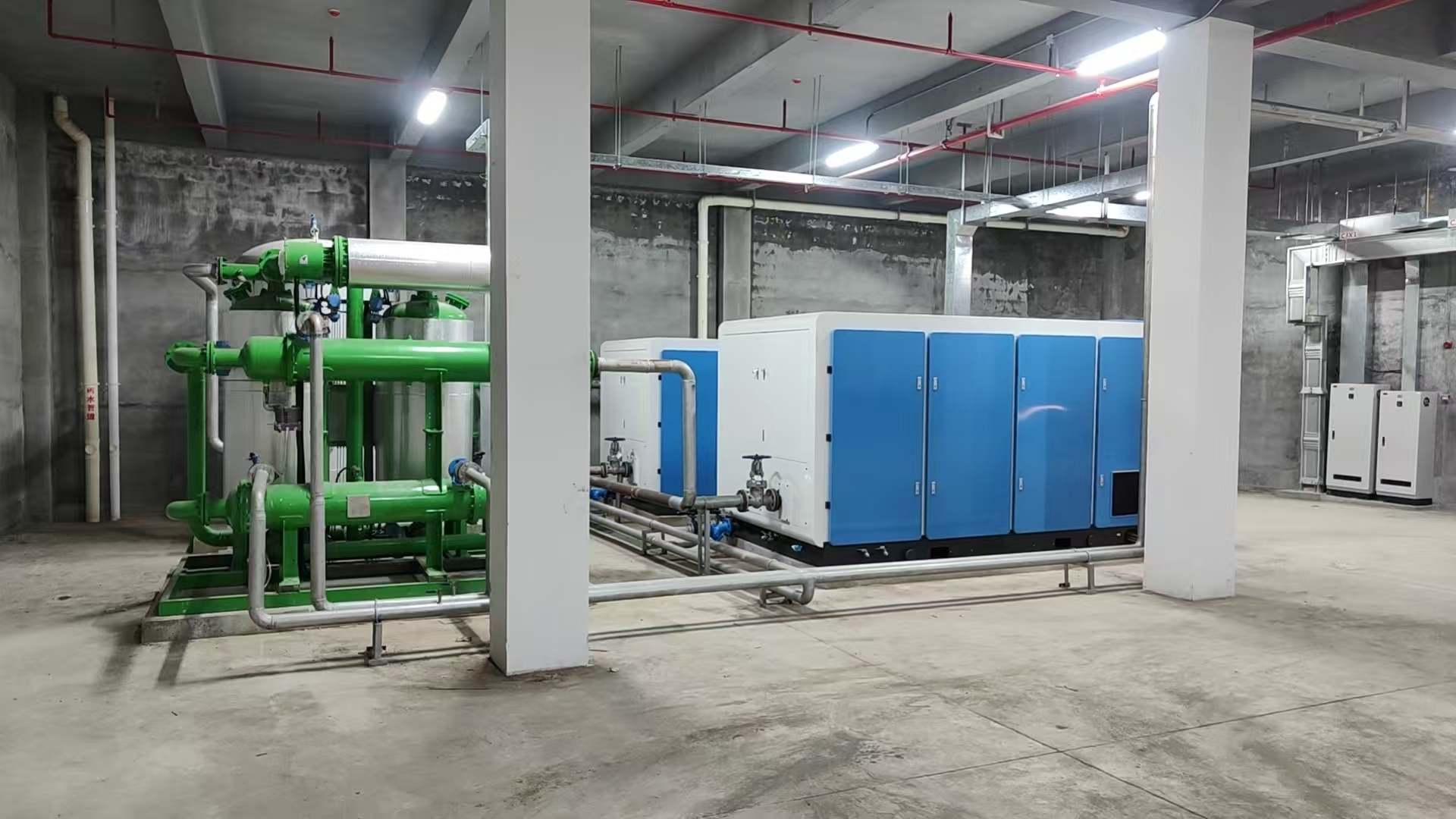
The hum of air compressors rarely makes headlines, but in semiconductor fabs, these machines are the silent backbone of front-end processes. From wafer cleaning to photolithography, ultrapure compressed air keeps contamination at bay and ensures precision. For years, China’s chipmakers leaned heavily on imported compressor systems, often tied to the same foreign suppliers dominating the lithography and deposition tools. That reliance has started to shift, as domestic manufacturers pour resources into closing the gap.
A handful of Chinese firms have lately unveiled oil-free centrifugal and scroll compressors that meet the Class 0 purity standards required for 28nm and below nodes. Innovations in rotor dynamics and air-seal technologies are allowing them to hold tighter pressure dew points and particle counts, rivaling long-established names. Field tests inside several 200mm and 300mm fabs show these compressors maintaining stable output even under the fluctuating loads typical of sub-fab environments. The progress isn’t just about specs on paper—local service teams can now react in hours rather than days, a practical advantage that’s winning over skeptical facility managers.
Still, climbing the final rung of reliability remains a stubborn challenge. Semiconductor lines demand years of uninterrupted operation, and the track record of new entrants is understandably short. Raw material consistency, especially for high-grade air-end bearings, occasionally trips up production yields. Yet the broader push is undeniable: by nurturing a homegrown compressor ecosystem, China aims to buffer its front-end process tooling from geopolitical supply chain shocks. Whether these machines will eventually power the bulk of advanced nodes is an open question, but the revival is already reshaping who gets invited to bid on new fab projects.
Squeezing Out Contaminants: The Sub-Micron Fight in Cleanroom Compression
Maintaining ultrapure compressed air in a cleanroom environment hinges on the ability to capture particles far smaller than the eye can see. The real challenge lies not with the visible specks, but with sub-micron contaminants—those below 0.1 microns—that slip through standard filtration. These tiny intruders, often comprising oil aerosols, moisture droplets, or microbial fragments, can irreversibly damage sensitive processes like wafer fabrication or pharmaceutical filling. Modern point-of-use filtration has thus shifted toward multi-stage systems that combine coalescing, adsorption, and membrane technologies, each tailored to trap a specific subset of these invisible threats.
One critical advancement is the use of borosilicate glass microfiber media in depth filters, where the tortuous path forces sub-micron particles to collide and adhere through inertial impaction and Brownian motion. Unlike surface filters that act as a simple sieve, these depth matrices load contaminants throughout their cross-section, dramatically increasing dirt-holding capacity without a sharp rise in pressure drop. To tackle the ever-present oil vapor—often measuring well below 0.01 microns—activated carbon adsorbers are inserted downstream, stripping out hydrocarbons that would otherwise condense on product surfaces. The marriage of these stages creates a compression system that constantly refines the air, squeezing out contaminants at every opportunity.
Validation of such systems requires meticulous contamination monitoring, typically using laser particle counters that can discriminate down to 0.1 µm, paired with oil mist detectors and dew point analyzers. A critical yet often overlooked factor is the design of the piping network itself: dead legs, crevices, and electropolished surface finishes influence whether captured particles stay captured. In high-stakes cleanroom compression, the fight is never static—it demands ongoing maintenance, regular integrity testing of filter elements, and a deep understanding that the smallest pollutants are often the most destructive.
How Precision Pressure Control Shapes Wafer Yield and Reliability
In semiconductor fabrication, even the slightest deviation in pressure can quietly erode wafer yield. When gases flow through deposition or etch chambers, their behavior is governed by tight pressure windows—stray too far, and film thicknesses drift, doping profiles shift, or plasma density loses uniformity. A controller that reacts sluggishly to upstream fluctuations lets these errors compound across a batch, turning a 0.5% drift into a 3% yield loss that no amount of endpoint detection can salvage. What separates robust lines isn't the chamber design alone, but a pressure regulation loop that anticipates disturbances before they cascade into measurable defects.
Reliability defects often trace back to pressure spikes that go unnoticed in real-time monitoring. A sudden burst of particle generation during valve actuation or an overshoot during gas transitions can embed latent weaknesses in gate oxides or interconnect layers. These defects don't always kill a die immediately; they pass wafer-sort tests and slip into the field, where thermal cycling and voltage stress turn a sub-micron void into a field failure. Precision pressure control mitigates this by smoothing out the transient edges—using fast, adaptive tuning that clamps overshoot to millisecond-scale durations, keeping the process firmly within the safe band where film stress and contamination remain negligible.
Beyond the chamber, pressure consistency ties directly into chamber-to-chamber matching and process portability. When a recipe calls for 20 mTorr, it must mean the same thing on tool #3 as it does on tool #7, across facilities in different geographic locations. Minute differences in gauge calibration or pumping speed translate into batch-level disparities that force engineers to widen guard bands, sacrificing throughput and material. Modern precision control systems compensate for these variations dynamically, learning each chamber's pressure signature and adjusting valve commands to deliver a repeatable molecular environment. This level of control not only stabilizes yield but also extends the lifecycle of consumable chamber parts by reducing wear from erratic pressure swings, quietly boosting overall equipment effectiveness without a redesign.
Efficiency Without Compromise: Cutting Energy Use in High-Purity Air Systems
High-purity air systems are notorious energy hogs, often consuming a disproportionate share of a facility's power simply to maintain stringent cleanliness standards. The conventional approach of over-filtering and over-ventilating has long been accepted as the price of contamination control, but it doesn't have to be that way. By rethinking how we move and treat air in cleanrooms, laboratories, and pharmaceutical production suites, it's possible to slash energy consumption significantly—without ever jeopardizing air quality. The key lies in recognizing that not all spaces demand the same air change rates or filtration levels at all times, and that smart, adaptive strategies can reconcile purity with efficiency.
One of the most impactful shifts is moving from fixed-speed, always-on fan operation to demand-controlled ventilation. Sensors that detect real-time particle counts, occupancy, or pressure differentials allow the system to scale back airflow when conditions are stable and ramp it up only when needed. This alone can cut fan energy by half or more in many applications. Pair that with high-efficiency motors, properly sized ductwork, and advanced filtration media that offers lower pressure drop at the same efficiency, and the savings compound. Chilled water and heating coils also benefit, since less air movement means less thermal conditioning work. The whole system breathes easier, and the energy curve flattens dramatically.
Equally important is the human element: maintenance and monitoring. Even the best design will drift into waste if filters are allowed to clog unnecessarily or if dampers are set haphazardly. Continuous commissioning, where system performance is tracked and tuned against actual conditions rather than theoretical maximums, ensures that efficiency gains are permanent. Facilities that adopt a layered approach—first optimizing the existing infrastructure, then introducing automation, and finally integrating renewable energy sources where possible—find that the mythical trade-off between purity and energy use simply dissolves. The result is a cleaner operation, a leaner utility bill, and a smaller environmental footprint, all achieved without compromising the sterile environments industries depend on.
The Next Wave: Smart Compressors and Predictive Maintenance in Fabs
Semiconductor fabs run on compressed air, and any hiccup in the supply can idle million-dollar tools. The shift toward smart compressors isn’t about adding sensors for the sake of data—it’s about weaving machine health directly into production rhythms. These systems self-monitor vibration, temperature, and pressure differentials, flagging subtle drifts that human operators would miss. By learning normal operating signatures, they turn maintenance from a calendar ritual into a just‑in‑time event, cutting unplanned downtime and slashing energy waste along the way.
Predictive maintenance moves the conversation from fixing what’s broken to anticipating what’s wearing. In a fab, where air purity and pressure stability aren’t negotiable, smart compressors feed continuous streams of telemetry into models that forecast component fatigue weeks ahead. This means bearings get replaced before micro-vibrations translate into yield-killing particles, and desiccant towers recharge before moisture spikes corrupt a wafer lot. The real value isn’t in the algorithms—it’s in preserving the near-perfect environment that chipmaking demands.
What often goes unsaid is how these systems reshape the role of facility teams. Instead of chasing alarms, engineers interpret trends and fine-tune performance parameters. The data doesn’t just prevent failure—it uncovers wasteful control strategies and gradual efficiency leaks. Across a campus of multiple fabs, smart compressors create a living network where insights cross-pollinate, steadily lifting the baseline of reliability. It’s a quiet revolution, but for operations where air is as critical as silicon, it changes everything.
FAQ
They supply the ultra-clean, precisely pressurized air that prevents microscopic contamination during wafer processing. Even a single particle can ruin a chip, so these compressors must deliver air that meets the strictest purity standards.
Standard compressors aren't built for the extreme cleanliness required. Semiconductor models use oil-free mechanisms and advanced filtration to eliminate particulates, moisture, and hydrocarbons that could compromise chip yields.
They often integrate multi-stage dryers and desiccant systems that strip moisture down to parts-per-billion levels, ensuring the compressed air remains bone-dry even in southern China's monsoon seasons.
Fluctuations can disturb delicate processes like photolithography and etching. These compressors use sophisticated sensors and variable-speed drives to maintain pressure within a razor-thin margin, often ±0.1 bar.
Yes, there's a growing shift toward centrifugal compressors with magnetic bearings, which offer oil-free operation and higher efficiency. Additionally, IoT-enabled predictive maintenance is becoming common to reduce unscheduled downtime.
Beyond purity and pressure, long-term reliability and energy consumption are huge factors. A compressor that guzzles power can spike operating costs, so looking at lifecycle efficiency and local service support is just as crucial as upfront specs.
Modern units recover waste heat to preheat water for other processes, and efficient designs can cut energy use by 30% or more. This helps fabs lower their carbon footprint while meeting production demands.
Conclusion
As semiconductor manufacturing pushes toward ever-smaller nodes, the role of compressed air has shifted from a basic utility to a critical process variable. In China's rapidly advancing chip fabrication landscape, air purity has become a make-or-break factor—microscopic contaminants like oil aerosols or moisture particles can render entire wafer batches useless. The domestic air compressor industry has responded with a quiet revival, tailoring high-purity systems for front-end processes such as photolithography and etching, where even sub-micron impurities spell disaster. Through multi-stage filtration, advanced drying, and oil-free designs, these compressors now squeeze out contaminants to meet ISO Class 1 standards, ensuring cleanroom air remains virtually sterile. Precision pressure control further shapes wafer yield and reliability, with ripple-free delivery directly influencing etch uniformity and defect rates.
But purity and precision alone are no longer enough; China's fabs demand efficiency without compromise. Cutting energy use in high-purity air systems has become paramount, driving the adoption of variable-speed drives, heat recovery, and intelligent air management networks. The next wave centers on smart compressors augmented with predictive maintenance—IIoT-enabled machines that analyze vibration, temperature, and dew point in real time, flagging anomalies before they cascade into downtime. This convergence of purity, precision, and intelligence is navigating China's semiconductor sector toward a future where air compressors are not just support equipment but strategic assets in the pursuit of sovereign chip manufacturing capability.
Contact Us
Contact Person: Mia
Email: [email protected]
Tel/WhatsApp: +86 19821985894
Website: https://www.seize-air.com