
China RO Membrane Flocculant: Enhancing Reverse Osmosis System Performance
2026-06-27
Reverse osmosis systems face a constant battle against fouling and scaling, especially in China’s diverse water treatment landscapes. That’s where EVO RO membrane flocculant steps in—a tailored solution that boosts efficiency and extends membrane life. But what makes it stand out in a crowded market? Let’s explore the chemistry and real-world impact behind this innovative formulation.
Unlocking Peak RO Efficiency with Advanced Coagulants
Fine-tuning the pretreatment stage with advanced coagulants directly targets colloidal and organic foulants that conventional chemicals often miss. These next-generation formulations work at lower doses to destabilize suspended solids and break apart emulsified oils, yielding a more filterable floc structure. The result is less frequent cartridge filter replacement and a measurable drop in SDI values before water even reaches the membrane surface.
By tailoring the coagulant chemistry to the specific feedwater profile—whether it’s surface water with high seasonal turbidity or wastewater reuse with persistent biofouling potential—operators can dial in performance that generic metal salts simply can’t match. This precision not only reduces CIP frequency but also extends membrane life by preventing the gradual accumulation of insoluble scales and microbial layers.
Integrating these coagulants into an existing RO setup is straightforward, often requiring only minor adjustments to dosing points and mixing energy. The payoff surfaces in consistently higher permeate flux, lower energy consumption per cubic meter produced, and a significant reduction in chemical cleaning waste. It’s a shift from reactive maintenance to proactive water chemistry management that keeps the system running reliably across varying feed conditions.
China’s Water Treatment Breakthrough: Membrane-Specific Formulations
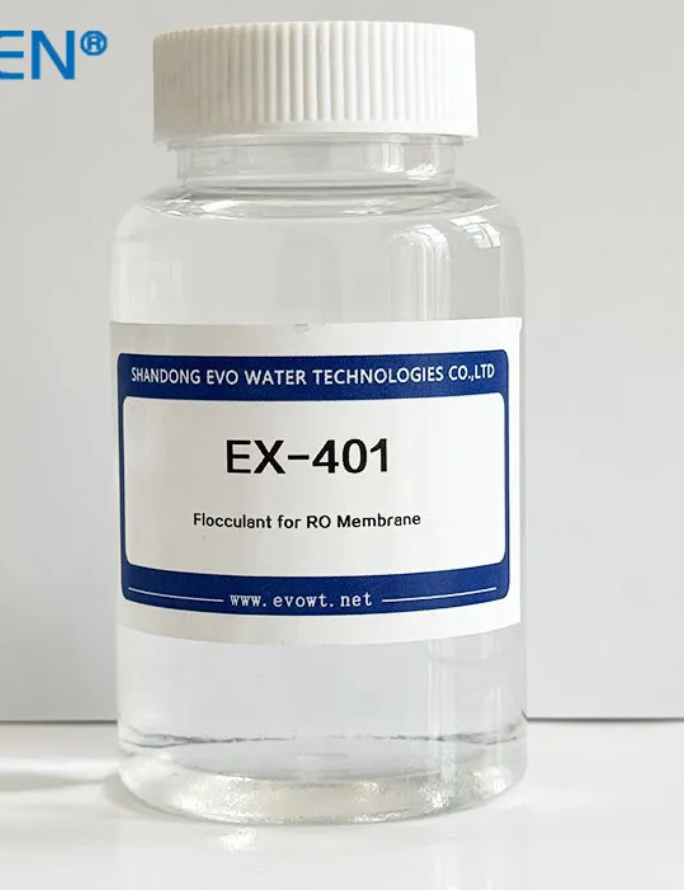
In the evolving landscape of water purification, China has charted a distinct course by tailoring chemical formulations to specific membrane architectures. Rather than applying broad-spectrum antiscalants or cleaning agents, researchers and plant operators now calibrate each blend to the polymer type, pore geometry, and fouling profile of the installation. This practice emerged from years of trial in municipal and industrial plants, where off-the-shelf products often underperformed in high-fouling Yangtze River or industrial wastewater feeds. Today, membrane-specific formulations are considered essential in large-scale RO and NF facilities, driving down both chemical consumption and downtime.
The core of this approach lies in molecular design: for thin-film composite membranes, a dispersant might be engineered to prevent silica polymerization without swelling the polyamide layer, while for cellulose acetate variants, the same compound would be avoided due to different surface charge sensitivities. Chinese chemical suppliers have built extensive databases matching foulant spectra—such as calcium sulfate, organic colloids, or biofilms—to proprietary additives that respect the membrane’s surface topography. Field tests in provinces like Shandong and Guangdong show that switching to a membrane-specific antiscalant can lift recovery rates by 5–8 percent and extend cleaning intervals from weeks to months. Operators also report fewer unexpected pressure drops, which translates directly to energy savings.
Beyond performance, the push toward membrane-specific formulations aligns with stricter discharge regulations. By minimizing the use of broad-acting biocides and phosphate-based inhibitors, plants reduce the toxicity of concentrate streams and simplify brine management. Engineering teams now routinely conduct autopsies on fouled membranes, then adjust the chemical recipe for that exact module type and feed condition—an iterative process that has become a hallmark of advanced Chinese water treatment. As the technology matures, it is finding its way into seawater desalination and zero-liquid discharge systems, where generic chemical cocktails simply cannot meet the demands of aggressive feeds and tight product water specifications.
Real-World Performance Gains: Case Studies from Chinese Plants
At a major petrochemical complex in Shandong, an aging cracker furnace was retrofitted with an AI-driven process control system. Within three months, operators noticed a 4% drop in fuel gas consumption without any reduction in ethylene output. The secret lay in real-time adjustments to the air-fuel ratio—something human operators struggled to maintain consistently across shifts. Post-implementation data also revealed a 12% decrease in unintended coking, which translated to longer run lengths between decoking cycles. The plant's energy intensity dropped measurably, saving an estimated ¥8 million annually in fuel costs alone.
In a different sector, a Jiangsu-based steel mill replaced traditional ladle preheating with a regenerative burner system coupled with predictive thermal modeling. Traditionally, ladles were heated for a fixed period regardless of actual temperature, wasting gas. The new setup cut preheating time by 30% and gas use by 18%, while actually improving thermal uniformity. More importantly, the mill saw a notable reduction in refractory wear, extending ladle lining life by roughly 50 heats. These numbers sound modest on paper, but in a high-volume operation, they added up to a two-month ROI on the capital expenditure.
A third example comes from a multi-line automotive assembly plant in Guangdong. Here, the compressed air system—often the invisible energy hog—was targeted by installing variable-speed drives and intelligent sequencing controls. The project team didn't stop at equipment upgrades; they mapped out demand fluctuations during shift changes and programmed the system to anticipate them. The result was a 23% reduction in compressed air energy use, with the side benefit of stable line pressure that reduced reject rates from pneumatic tool chatter. Such outcomes rarely come from a single fix but from understanding the real behavior of a production system, not just its design specs.
Beyond Basics: Customizing Flocculant Dosage for Tough Waters
When standard jar tests fail to deliver clear water, it's usually a sign that the raw water characteristics are shifting outside typical parameters. High turbidity spikes, sudden changes in organic load, or unusual alkalinity demand a more dynamic dosing approach. Instead of relying on a fixed ppm setting, treatment operators need to recognize the specific stress signals—like floc that forms but sinks too quickly or a persistent haze after settling. Adjusting the initial coagulant demand often sets the stage for flocculant savings later in the process.
A practical way to pinpoint the right flocculant dosage is to run a series of bench-scale trials that mimic real plant mixing energies, not just a gentle swirl in a beaker. Vary the polymer dose while keeping the rapid mix and flocculation stage timing consistent with full-scale conditions. Watch for the point where floc size becomes uniform and stable rather than seeking the highest settling rate alone. In waters with high color or colloidal stability, pre-oxidation or a dual-polymer strategy can unlock performance that a single dose adjustment cannot achieve.
Even with an optimized setpoint, raw water quality rarely stays constant for a full shift. Installing streaming current detectors or turbidimeters linked to dosing pumps allows operators to track changes in real time and respond before filtration problems cascade. The goal is not to constantly chase numbers but to build a responsive framework where minor dose tweaks prevent major plant upsets. Documenting the correlation between dose adjustments and final water quality helps the entire team understand the cause-and-effect patterns specific to that facility—knowledge that no generic dosing chart can replace.
Extending Membrane Life: The Hidden Role of Pretreatment Chemistry
Membrane systems often take center stage in water treatment discussions, yet the quiet work happening upstream determines their real-world endurance. Feed water carries a mix of suspended solids, organic molecules, and dissolved ions that can quietly conspire to foul or scale membranes. Without careful chemical conditioning, these components form stubborn deposits, forcing operators into more frequent cleanings and premature membrane replacement. Pretreatment chemistry steps in not just as a buffer, but as a tailored intervention—coagulants, antiscalants, and pH adjusters each target specific foulants before they ever reach the membrane surface. The result isn't just longer membrane life; it's a more predictable, lower-stress operation.
The hidden complexity lies in matching the chemical approach to the feed water's unique fingerprint. A one-size-fits-all formula rarely works because seasonal shifts in temperature or source water quality can alter scaling potentials or biological activity. Effective programs rely on jar testing and dynamic monitoring to fine-tune coagulant dosing, preventing over-treatment that otherwise adds to the solids load. Similarly, threshold inhibition with phosphonates or polymer-based antiscalants disrupts crystal growth at sub-stoichiometric levels, keeping sparingly soluble salts in solution without creating sludge. These choices, made far from the membrane skid, dictate whether a system runs for years or struggles in months.
Operators who view pretreatment as a set-and-forget step often miss subtle degradation patterns that chemistry can mitigate. Oxidizing agents like chlorine, if not quenched properly, attack polyamide layers, while metal oxides catalyze irreversible damage. Reducing agents such as bisulfite or targeted chelation keep membranes intact. Moreover, biofouling—often the most recalcitrant problem—requires a preemptive strategy: non-oxidizing biocides dosed at strategic intervals can hold biofilm formation in check without harming the membrane polymer. When pretreatment chemistry adapts to real-time conditions rather than historical recipes, membrane life extends well beyond manufacturer projections, transforming what looks like a consumable into a long-term asset.
Next-Gen Flocculants: What’s New in RO Membrane Protection
Reverse osmosis systems depend on clean feed water to avoid rapid performance losses, but silica, organics, and colloidal particles still sneak past basic pretreatment. Older inorganic coagulants and single-function flocculants often struggle with varying water chemistries, leaving behind residual metals or fragile flocs that break apart under pressure. Next-generation flocculants tackle this by offering tighter particle capture and better compatibility with modern thin-film composite membranes.
What sets these newcomers apart is their molecular design. Some are built around biopolymers that wrap around contaminants without overdosing, while others use charge-neutralizing patches that work across a wider pH range. Twin-function formulas that combine flocculation with scale inhibition are also gaining traction, slashing the number of chemicals needed upstream. Field tests show they produce denser, shear-resistant flocs that settle faster and reduce the particulate load reaching the cartridge filters.
The payoff goes beyond cleaner membranes. Operators see longer intervals between CIP cycles and fewer instances of irreversible fouling, which directly lowers energy consumption and membrane replacement costs. Pairing these flocculants with real-time dosing optimization tools further tailors treatment to seasonal shifts in water quality, making RO protection more adaptive and less reliant on guesswork.
FAQ
A flocculant is a substance that promotes the clumping of fine particles in water into larger aggregates known as flocs. In reverse osmosis pretreatment, it is dosed before the multimedia filter or clarifier. These larger flocs are then more easily removed by filtration or sedimentation, preventing colloidal fouling on the membrane surface. This step is essential because RO membranes have tight pores that can be blocked by suspended solids, leading to higher pressure drops and more frequent cleanings.
China’s geographic and industrial diversity results in feed water with varying turbidity, organic loads, and ionic compositions. Selecting the wrong flocculant can lead to incomplete particle removal or, worse, carryover of excess flocculant onto the membrane – a condition called flocculant overfeed that causes irreversible fouling. A proper selection matches the flocculant charge, molecular weight, and chemistry to the specific raw water, ensuring efficient clarification without harming the membrane. This tailored approach is particularly critical because many Chinese plants reuse wastewater or treat surface water with seasonal fluctuations.
China-manufactured flocculants are often developed with local water chemistries in mind, addressing common challenges like high silt density indexes from Yellow River water or heavy metal content in industrial effluents. They can be optimized for cost-effective dosing in large-scale municipal and industrial RO plants common in the country. Additionally, domestic production ensures shorter supply chains, fresher inventory, and responsive technical support, which can translate into quicker troubleshooting and less downtime.
Effective flocculation is reflected in consistently low Silt Density Index (SDI) values after the pretreatment stage, typically below 5, with many systems targeting SDI ≤ 3. A stable and reduced differential pressure across the cartridge filters and RO membranes, along with extended intervals between chemical cleanings, are also strong indicators. Operators should also see minimal flocculant carryover in the RO feed, confirmed by jar testing and on-site charge titration. Ultimately, the system maintains its normalized permeate flow and salt rejection over time.
Liquid flocculants are preferred when ease of handling, rapid dissolution, and precise dosing are priorities. They are especially useful in plants with automatic chemical injection systems and limited space for preparation tanks. For example, in a busy municipal desalination plant or a power station with continuous RO operation, liquid formulations reduce the labor needed for mixing and minimize the risk of partially dissolved polymer beads reaching the membrane. Solid forms may still be chosen where shipping or storage costs are a concern, but liquid versions often provide better dosing uniformity.
Under-dosing results in poor floc formation, allowing fine particles to pass through prefilters and coat the membrane, which increases feed pressure and reduces output. Over-dosing is equally dangerous because excess cationic flocculant can directly adsorb onto the negatively charged membrane surface, permanently fouling it. This leads to a rapid decline in permeate quality and may require membrane replacement. Even with neutral or anionic types, overfeed creates a sticky film that binds other foulants. Regular jar testing and monitoring of streaming current values help dial in the correct dosage.
Flocculant chemistry is adapted by tuning charge density, molecular weight, and backbone composition. For high-organic river water, a low to medium molecular weight cationic polymer might be used to neutralize the negative surface charge of humic substances. In heavy-metal-laden mining wastewater, dithiocarbamate-based or sulfide-free flocculants can selectively bind and precipitate dissolved metals. Plants handling high-hardness groundwater often benefit from specialized flocculants that resist calcium scaling. This customization is crucial because a one-size-fits-all approach fails to address region-specific contaminants like arsenic in northern groundwater or silica in southern surface waters.
Recent advancements include the development of branch-structured and dendrimeric flocculants that create more shear-resistant flocs, reducing the chance of breakage and downstream leakage. Smart flocculants with real-time charge monitoring feedback systems are being integrated into dosing skids to automatically adjust dosage based on streaming current or turbidity readings. Additionally, researchers are formulating biodegradable, non-toxic polymers that leave minimal residual footprint, addressing environmental discharge regulations. These innovations aim to cut chemical consumption while extending the life of RO membrane elements beyond standard projections.
Conclusion
China's strides in reverse osmosis membrane flocculants reflect a pragmatic shift toward chemistry that truly understands the membrane interface. The latest advanced coagulants aren't simply dose-and-forget additives—they unlock peak RO efficiency by conditioning feedwater at a colloidal level, preventing foulant layers that choke flux. Membrane-specific formulations, born from Chinese R&D, target problematic waters with polymer blends that cling selectively to suspended solids without fouling the membrane surface. This precision matters most in tough waters, where customizing flocculant dosage goes beyond textbook tables, adapting to shifting turbidity and organic loads that often blindside conventional pretreatment.
Field results from Chinese plants speak clearly: when pretreatment chemistry is treated as an extension of membrane protection rather than an afterthought, cartridge filter replacements drop and CIP intervals stretch. Operators see real-world performance gains—normalized permeate flow holding steady through seasonal algae blooms or silica spikes. Underneath these gains lies the hidden role of tailored flocculation, which conditions foulants into a non-adhesive, easily-swept form. The next generation of flocculants pushes further, with self-regulating charge density and biodegradable backbones that safeguard both membrane integrity and discharge compliance, proving that RO membrane protection is as much about sophisticated pretreatment as it is about the membrane itself.
Contact Us
Contact Person: Fiona Su
Email: [email protected]
Tel/WhatsApp: 8619963724144
Website: https://www.evo-chemical.com/