

China Power Conversion System PCS Innovations Driving Global Energy Storage Growth
2026-11-16
As China's power conversion system (PCS) sector pushes past incremental improvements into a wave of high-voltage, silicon carbide-based designs, the ripple effects are reshaping how energy storage projects are financed and deployed worldwide. The shift isn't just about efficiency gains—it's about redefining grid reliability in markets that until recently viewed storage as a costly afterthought. From 1500V architectures to smarter thermal management, Chinese PCS innovations are quietly lowering the levelized cost of storage, making multi-hour duration assets viable without subsidies. This surge in engineering ambition raises a pressing question: can global supply chains adapt fast enough to absorb the coming wave of hardware and software integration? At UNC, we see this as more than a technology story—it's a signal that energy storage is entering its industrial phase, and the rules of competition are being rewritten. Here's what to watch.
The Silicon Carbide Wave Reshaping China’s PCS Exports
Silicon carbide is no longer a niche material confined to labs. Chinese PCS makers have moved fast, swapping out traditional silicon IGBTs for SiC MOSFETs in high-power converters. The result is a jump in switching frequency and a drop in conduction losses that directly translates into smaller, lighter, and more efficient systems. This isn't a gradual upgrade; it's a step change that lets Chinese suppliers undercut rivals on both size and thermal management while still hitting grid-code requirements across Europe and Southeast Asia.
Export numbers tell the story. In the first half of 2024, China's PCS shipments to Germany and the Netherlands alone grew by over 40% year-on-year, with a growing share of those units built on SiC platforms. Buyers in markets like Australia and Japan are increasingly specifying SiC-based inverters for solar-plus-storage projects, recognizing that the higher upfront cost is offset by lower cooling loads and longer service intervals. Chinese firms aren't just following this trend—they're driving it by securing long-term wafer supply agreements with domestic SiC foundries.
The real differentiator is vertical integration. While some Western competitors still rely on third-party SiC modules, a handful of Chinese PCS manufacturers now control the entire chain from epitaxial growth to packaged device testing. That cuts lead times from months to weeks and gives them room to customize gate-drive tuning for specific grid environments. Yet the wave isn't without friction: yield rates on 200mm SiC wafers remain uneven, and export controls on advanced semiconductor equipment could slow capacity expansion. Still, the trajectory is clear—China's PCS exporters are using silicon carbide as a wedge to reshape global power electronics supply chains.
How Grid-Forming PCS Is Quietly Stabilizing Fragile Grids
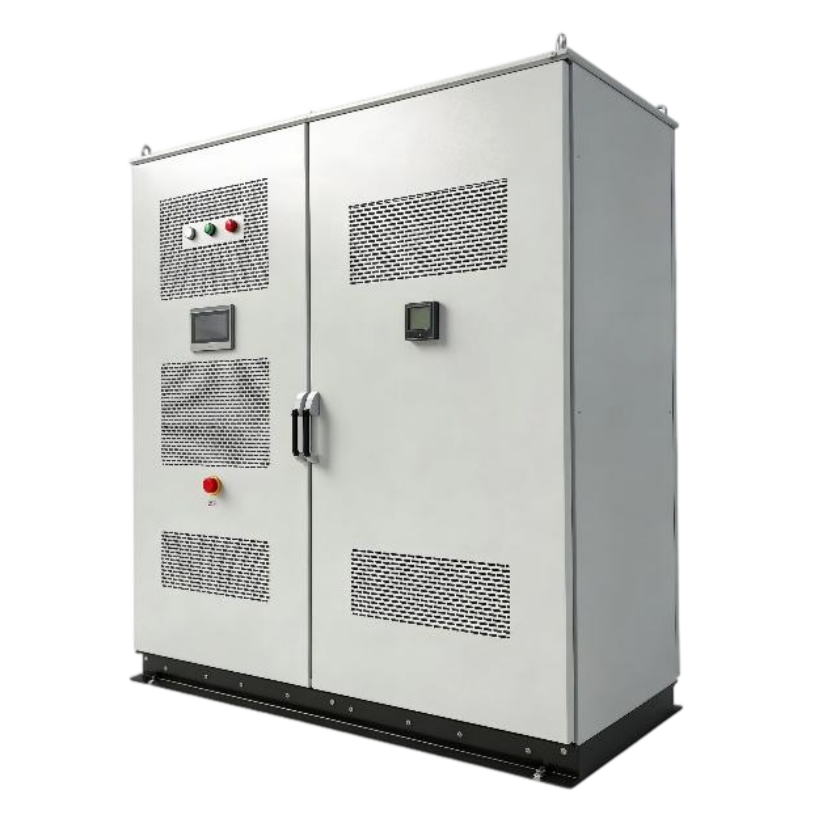
Grid-forming power conversion systems are doing something traditional inverters never could: they set voltage and frequency instead of chasing them. On weak island grids or regions where solar and wind have displaced rotating generators, a grid-forming PCS acts as a controllable voltage source. It responds to a load step or a sudden loss of generation within a few milliseconds, adjusting its output to hold frequency and voltage inside tight bands. No external phase-locked loop, no waiting for a stable reference from the rest of the network.
That makes a measurable difference in places like Puerto Rico, parts of Hawaii, and remote mining microgrids where a single fault can cascade into blackout. Battery storage plants equipped with grid-forming controls now provide synthetic inertia and black start capability that diesel gensets or synchronous condensers used to deliver. In one island project, replacing a retiring thermal unit with a grid-forming battery not only cut fuel consumption but reduced frequency excursions during cloud transients by roughly half.
The shift is quiet because it happens inside control firmware, not in visible hardware. Yet the operational hurdles are real: current limits during fault ride-through, coordination among multiple grid-forming units, and legacy protection settings still trip when short-circuit current looks different. Even so, early field results suggest these systems can hold weak grids together well enough that grid operators are beginning to specify grid-forming capability rather than treating it as a research curiosity.
Modular PCS Design Is Breaking Down Barriers to Storage Adoption
Modular PCS design is dismantling one of the most stubborn cost and integration barriers in energy storage. Instead of forcing a single, oversized inverter to handle every duty, modular systems split power conversion into smaller, swappable blocks. This means a failure in one module no longer takes down the entire string, and maintenance becomes a matter of replacing a compact unit rather than servicing a monolithic cabinet. The result is a step change in uptime and a quieter, more predictable operating profile.
The flexibility runs deeper than serviceability. Project developers can now match power conversion capacity to the actual battery enclosure size, adding or removing modules as site conditions evolve. A 2-hour system and a 4-hour system no longer require completely different inverter architectures, because modular blocks scale horizontally. This cuts engineering time, reduces stranded capacity, and lets integrators standardize on a single building block across multiple projects.
Field experience is already showing how this breaks adoption inertia. Sites that once hesitated over long lead times for custom power electronics are deploying storage with off-the-shelf modules in weeks. The lower entry complexity also invites new participants who previously found the inverter selection process too risky. As modular PCS becomes the default rather than the exception, the storage market's growth is limited less by hardware constraints and more by how quickly customers can sign contracts.
Inside the Cost Engineering Behind China’s PCS Dominance
China's edge in power conversion systems doesn't come from a single breakthrough but from stacking dozens of small cost advantages across the entire build process. Local access to insulated-gate bipolar transistors (IGBTs), magnetics, and aluminum heat sinks removes import duties and weeks of lead time that rivals in Europe or North America still absorb. The real lever, though, is how Chinese manufacturers treat PCS as a standardized, high-volume product rather than a project-specific engineered box. Reduced component counts, shared firmware platforms, and aggressive derating allowances let them produce units at scale while keeping failure rates acceptable.
Labor costs explain part of the gap, but not the full story. What often gets overlooked is the engineering density in Shenzhen, Hefei, and Suzhou where converter design, PCB layout, and thermal simulation teams sit within a few kilometers of each other. That spatial clustering collapses iteration cycles from months to weeks. A design change can be prototyped, tested on a local grid simulator, and pushed into a production batch without ever crossing a time zone. This speed lets Chinese firms run thinner margins on each unit and still stay profitable because their development overhead is a fraction of what Western competitors carry for the same power rating.
On the materials side, vertical integration has quietly reshaped the cost curve. Major PCS suppliers now own or control shares in capacitor winding, busbar stamping, and even the fabs that produce their driver ICs. Instead of paying supplier markups at every layer, they internalize those margins and negotiate raw material purchases directly. That structural ownership means a 5% drop in copper or a shift to silicon carbide hybrid modules gets captured as product margin rather than lost to middlemen. It is this blend of manufacturing scale, clustered engineering, and upstream ownership that keeps China's PCS pricing consistently below the rest of the world.
The PCS Flexibility Race Unlocking New Battery Chemistries
The rapid diversification of battery storage away from standard LFP/NMC toward sodium-ion, solid-state, and other emerging chemistries has turned power conversion systems into a critical battleground. Older, fixed-voltage inverters assume a narrow operating window; they struggle with the wider voltage swings and different charge/discharge profiles of new cells. The flexibility race is about designing PCS hardware and firmware that adapt on the fly—adjusting DC bus ranges, reactive power curves, and thermal limits without needing a site visit.
This shift is already visible in field deployments. Projects pairing a single PCS platform with multiple battery types are moving from pilot to commercial scale, driven by supply chain pressure and the quest for lower lifetime cost. A flexible PCS can accept a 1,500 V sodium-ion rack today and a 2,000 V solid-state container tomorrow, often through software-defined controls rather than hardware swaps. That kind of interoperability shortens commissioning and lets developers hedge their technology bets.
Ultimately, the winners of this race will be systems treated less as fixed appliances and more as adaptive interfaces. By decoupling power electronics from a single chemistry's assumptions, manufacturers create headroom for chemistries still in the lab. The result is a storage market where battery innovation no longer waits for inverter redesigns—and where the PCS becomes an enabler, not a bottleneck.
From Utility Scale to Microgrids: China’s PCS Makers Are Scaling Fast
China’s power conversion system (PCS) suppliers have long been associated with massive utility-scale solar and storage projects, but the landscape is shifting noticeably. In the past two years, a wave of domestic manufacturers has redirected engineering resources toward smaller, more flexible units designed for commercial, industrial, and microgrid applications. This move is not just about shrinking cabinet size; it involves rethinking thermal management, control response times, and grid-forming capabilities to suit distributed assets that often operate in islanded or weak-grid conditions.
The result is a rapidly expanding product range that spans everything from multi-megawatt central inverters to 50 kW modular systems that can be stacked on a wall or mounted beside a containerized battery. Several leading Chinese brands have begun exporting these compact PCS platforms to Southeast Asia, Africa, and Latin America, where microgrids are often the only reliable source of power. Their speed of iteration—measured in months, not years—has put pressure on established European and American competitors, who now face a broader Chinese product portfolio across voltage classes and use cases.
FAQ
Several Chinese suppliers now integrate silicon carbide semiconductors into their power modules, pushing conversion efficiency above 99% and reducing thermal stress. They also use modular string architectures that isolate faults better than older central inverter designs.
Higher efficiency cuts direct energy losses during charge-discharge cycles, while improved thermal management extends component lifetime. Combined with domestic scale in manufacturing, this brings down both upfront capital and long-term maintenance costs.
Players like Sungrow, Huawei, and CRRC Times Electric have moved from 1000V to 1500V DC architectures, which reduces cabling losses and supports larger battery containers, making utility-scale projects more economical.
They often include wide voltage and frequency tolerance, reactive power support, and black-start capability. Many units are pre-tested for weak grids, allowing smoother integration in regions with unstable power infrastructure.
Liquid-cooled power conversion systems keep IGBT or SiC junctions at lower, more stable temperatures, which reduces failure rates and allows higher power density without adding excessive fan noise or dust intake.
Several manufacturers have set up assembly or service hubs in Europe, Southeast Asia, and Latin America, shortening delivery times and adapting products to local certifications, which makes their equipment easier to adopt overseas.
Not anymore. The same innovations are scaling down to commercial and industrial units, with integrated battery interfaces and cloud-based monitoring that appeal to smaller energy storage installers.
Trade barriers, local content requirements, and cybersecurity reviews in some markets can add friction. Suppliers are responding with regional partnerships, transparent firmware documentation, and international certification stacks.
Conclusion
The latest wave of Chinese power conversion systems is doing more than cutting costs—it is reshaping how grids absorb intermittent renewables. Silicon carbide power stages have moved from niche prototypes into high-volume PCS exports, trimming switching losses enough to matter in round-trip efficiency at multi-megawatt scale. At the same time, grid-forming controls are being embedded as a default feature rather than an expensive add-on, letting storage plants in Southeast Asia, Africa, and parts of Latin America prop up weak networks without waiting for massive transmission upgrades. This quietly shifts project economics: developers no longer treat PCS as a generic bridge between batteries and transformers, but as the piece that makes a plant bankable.
The same thinking is pushing modular architectures and chemistry-agnostic interfaces into the mainstream. Instead of forcing operators to design around a single battery voltage or cooling layout, Chinese PCS suppliers are shipping stackable blocks that scale from 50-kilowatt microgrids to gigawatt-hour utility sites. That flexibility is opening doors for sodium-ion, LMFP, and other emerging chemistries whose voltage curves differ enough to break older inverter assumptions. Behind it all sits a cost engineering culture that strips out nonessential copper, consolidates thermal management, and automates assembly—yet still passes grid-code tests in markets from Germany to Chile. The result is a less visible but wider moat: China’s PCS makers are no longer just supplying hardware; they are defining how storage projects get financed, commissioned, and expanded across very different grids.
Contact Us
Contact Person: Manager Leng
Email: [email protected]
Tel/WhatsApp: 8613764878967
Website: https://www.unc-energy.com