
Best Laser Safety Window Options for Maximum Protection
2026-05-26
When it comes to laser safety, the window you choose can make all the difference between a secure workspace and a hidden hazard. But with so many options on the market, how do you know which one truly delivers maximum protection without compromising on clarity or durability? Whether you're outfitting a medical facility, an industrial lab, or a research environment, the right laser safety window isn't just a barrier—it's a silent guardian. That's where LASERPAIR steps in, combining cutting-edge materials with rigorous testing to offer solutions that don't just meet standards but exceed them. In this guide, we'll walk you through the best options available, highlighting what to look for and why settling for anything less could be a risk you don't want to take.
What Makes a Laser Safety Window Truly Protective?
Real protection from laser hazards goes far beyond just tinting a piece of glass or acrylic. A truly protective laser safety window is engineered to absorb or reflect specific wavelengths at precise optical densities, ensuring that dangerous energy never reaches your eyes or skin. The material itself—whether it's polycarbonate, glass, or a composite—must be rigorously tested to withstand not only the continuous beam but also potential pulse peaks that could shatter inferior barriers. Without this wavelength-matched attenuation, a window might look shaded but offer zero meaningful defense, creating a false sense of security.
Durability under real-world conditions is another non-negotiable factor. In laboratories and industrial settings, windows face constant exposure to UV light, chemicals, and physical abrasion, all of which can degrade protective properties over time. High-quality laser windows incorporate scratch-resistant coatings and are homogeneously dyed throughout the substrate—rather than just surface-treated—so that even if the outer layer gets worn, the shielding capability remains intact. The frame and mounting system matter just as much, because a poorly sealed or misaligned window allows stray reflections to bypass the barrier entirely.
Finally, compliance with international standards like EN 207 or ANSI Z136 isn't just paperwork—it's the only way to verify that a window has been tested for both direct hit and scattered radiation scenarios. These certifications also assign a damage threshold, indicating how long the window can resist a direct beam before failing. Without this rating, you're essentially guessing whether the barrier will hold during an accidental exposure. A trustworthy window also provides clear, distortion-free viewing, because if operators can't see their work clearly and safely, they'll find ways around the protection, defeating its entire purpose.
Material Showdown: Polycarbonate vs. Glass
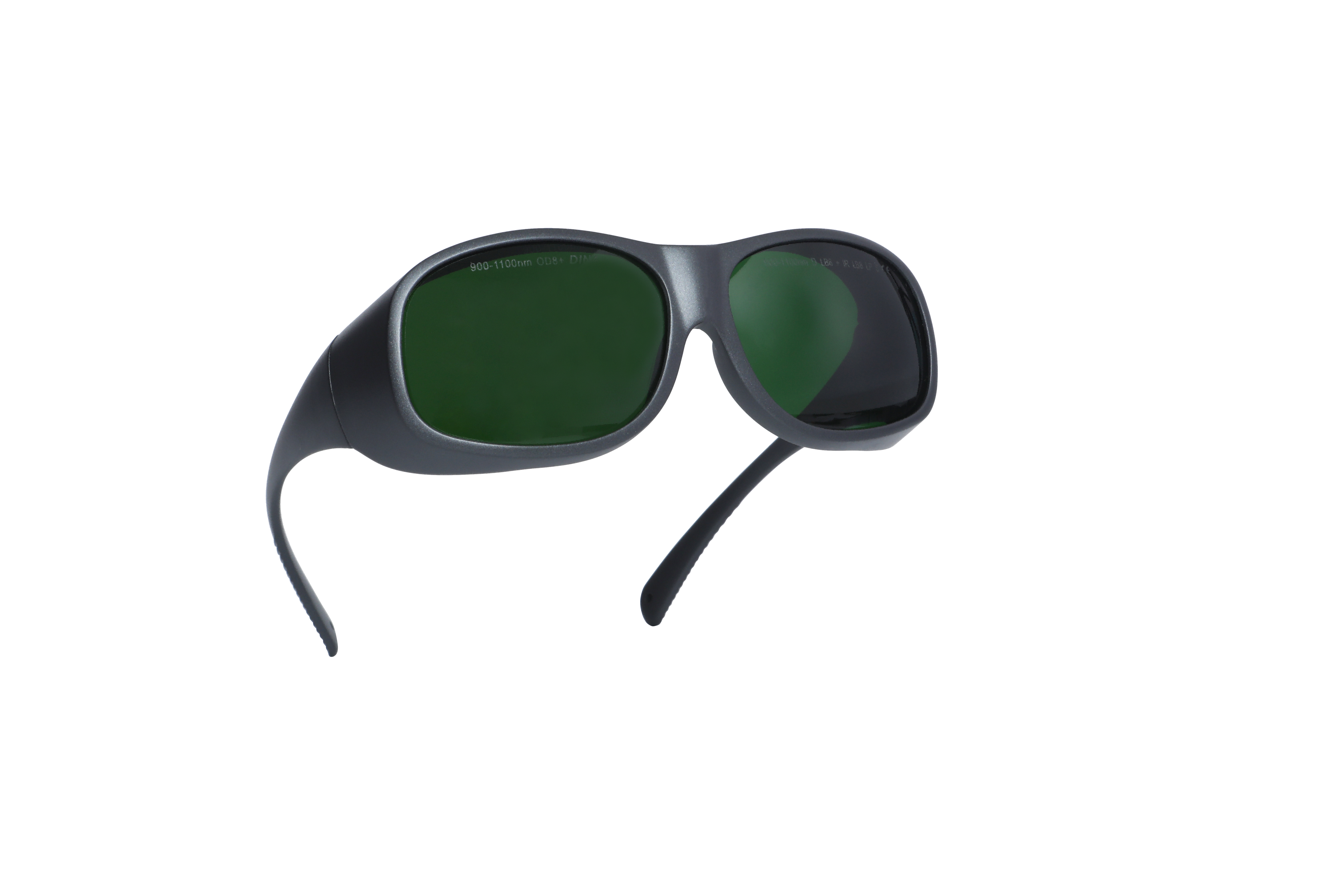
When it comes to choosing between polycarbonate and glass, it’s not just about clarity. Polycarbonate is practically unbreakable—it absorbs impact without shattering, making it the go-to for safety goggles and riot shields. Glass, on the other hand, offers unmatched scratch resistance and a premium feel, but one sharp knock can send cracks spidering across its surface. This fundamental trade-off between toughness and hardness dictates where each material thrives.
Weight is another field where these two differ dramatically. Polycarbonate is featherlight, which is why it’s favored in aircraft windows and lightweight lenses. Glass is dense and substantial, giving it a sense of durability that polycarbonate can’t mimic, even if that density can be a drawback in portable applications. Beyond that, polycarbonate tends to yellow over time under UV exposure unless treated, whereas glass stands up to sunlight without aging a day.
Cost and fabrication also widen the gap. Polycarbonate can be molded into complex shapes at relatively low temperatures, allowing for mass-produced, curved visors and machine guards. Glass demands high heat and precision grinding, driving up both price and time. Yet for applications where optical purity and thermal stability are non-negotiable—think telescope mirrors or laboratory equipment—glass still holds the crown. In the end, it’s less about which is better and more about matching the material to the demands of the job.
A Quick Look at Wavelength-Specific Shielding
Electromagnetic radiation isn’t a single uniform threat—different wavelengths interact with materials in distinctly different ways. From low-frequency radio waves to high-energy gamma rays, each part of the spectrum demands its own shielding strategy. Think of it like clothing: a thin cotton shirt might block a light breeze, but it won’t stop a driving rain or biting wind. Similarly, aluminum foil might reflect radio waves, but it does little against ionizing radiation. The key is understanding the physical principles at play—absorption, reflection, and scattering—and how they vary with frequency.
For lower frequencies, such as power lines and electrical equipment, materials with high magnetic permeability, like mu-metal, are often required to redirect magnetic fields. Shifting up to radio and microwave ranges, conductive enclosures made of copper or aluminum work well by creating a Faraday cage effect, but seams and openings become critical: a gap smaller than the wavelength can still act as a leaky antenna. At optical frequencies, transparent conductive coatings like indium tin oxide provide shielding without blocking light, while specialized window films can reflect infrared heat. The design challenge lies not just in blocking a single wavelength, but in handling broadband threats without adding excessive weight or cost, a balancing act that pushes modern materials science to innovate with composites, metamaterials, and nanostructured layers.
When dealing with high-energy radiation like X-rays and gamma rays, the rules change dramatically. Density becomes the dominant factor—lead has long been the go-to because of its atomic heft, but alternatives like tungsten or bismuth-loaded polymers are emerging for wearable applications. At these photon energies, shielding often involves a compromise between protection and practicality: a rigid lead apron may be effective, but it can’t wrap around complex geometries without gaps. Researchers are exploring layered architectures that combine heavy elements for absorption with lighter backscatter-absorbing layers, tailoring each segment to a specific part of the electromagnetic spectrum. The ultimate goal isn’t a one-size-fits-all solution, but a thoughtfully engineered system that responds to the unique demands of each wavelength band.
Don’t Overlook Frame and Mount Integrity
A frame does more than border a piece—it actively protects and preserves what’s inside. Weak or poorly constructed frames can warp over time, letting in dust, moisture, and handling damage. The mounting materials matter just as much: acid-free mats and archival backings prevent discoloration and chemical decay. Cutting corners here might save a few dollars now, but the long-term cost to the artwork can be irreversible.
Installation integrity is equally critical. Even the best frame fails if it’s hung with undersized hooks or on unsuitable wall surfaces. Take the time to choose hardware that matches the weight of the framed item, and verify the wall structure can support it. In areas prone to vibration or sunlight, extra precautions like security brackets or UV-filtering glazing become indispensable. A solid mount isn’t just about alignment—it’s the difference between a piece that stays put and one that invites accidents.
Regularly checking your framed pieces can catch hidden issues before they escalate. Seasonal humidity shifts can loosen joints or cause buckling; a quick visual scan every few months helps maintain everything from gallery walls to family heirlooms. If you notice sagging, rust on hanging wires, or fading inside the glass, address it promptly. Frame and mount integrity isn’t static—it’s an ongoing partnership between the craft of presentation and the realities of your environment.
Simple Testing Methods to Verify Protection Levels
Before relying on any protective gear, it's smart to run a few quick, no-fuss checks that anyone can do at home. For starters, the water-resistance test is a classic: simply splash or spray water onto the material and see if it beads up and rolls off, or if it soaks in. This instantly tells you whether the surface treatment is still intact. Another handy trick is the light-bleed check—hold the fabric up to a bright lamp or the sun. If you can see pinpricks of light shining through, those are potential leak points where rain or wind could eventually sneak past.
Durability under stress is just as important as initial waterproofness. You can gently stretch the fabric while repeating the water test to see if the protective layer cracks or loses its repellency under tension. This mimics real-world wear, like bending your elbows or knees during active use. Pay attention to how the material recovers afterward—if it stays shiny or feels stiff, that could signal coating breakdown. For a more hands-on feel, try the scratch test with a fingernail or a dull key on a hidden area; a quality finish shouldn’t peel or scratch away easily.
Don’t forget the seams and closures, which are often the weakest links. Gently tug on stitched seams to check for any separation or fraying, and zip and unzip closures repeatedly to ensure they move smoothly and lock tight. If you can, turn the item inside out and look for any thin spots or uneven taping. These simple, at-home methods won’t replace lab certifications, but they give you a real sense of whether your gear is still up to the job before you head out into sketchy weather.
Common Scenarios Where Cheap Windows Fail
In older homes where retrofitting was done on a tight budget, cheap windows often struggle to maintain a proper seal. You’ll notice drafts sneaking in around the edges, especially during windy days or when the temperature drops. The weatherstripping tends to wear out quickly, leaving gaps that let in cold air and dust. This not only makes the room uncomfortable but also forces your heating system to work harder, driving up energy bills without you realizing it right away.
Another common headache appears in humid climates, where inexpensive window frames—particularly those made of low-grade vinyl or untreated wood—absorb moisture and begin to warp. Before long, the sashes become difficult to open or close, and in some cases, they stick completely. Condensation between the panes is a telltale sign that the seal has failed, leading to foggy glass that obstructs your view and indicates a loss of insulating performance. It’s a frustrating problem that cheap models simply aren’t built to resist.
In busy urban areas, noise pollution becomes a real test for budget windows. Thin, single-pane glass or poorly constructed double-pane units do little to block out traffic sounds, sirens, or neighborhood chatter. Homeowners often find themselves raising their voices or turning up the TV just to compensate. Over time, the constant exposure to outdoor noise can affect your daily comfort and even disrupt sleep, yet it's a compromise many don't anticipate when choosing based on price alone.
FAQ
An effective window combines the right optical density rating with durable materials like coated polycarbonate or specialized glass. It should block specific laser wavelengths without compromising visibility, and be thick enough to withstand prolonged exposure without degrading or warping under thermal stress.
Standard acrylic can stop low-power beams momentarily, but it lacks the certified attenuation needed for Class 3B or 4 lasers. It might melt, crack, or even transmit invisible infrared wavelengths, putting you at serious risk. Always opt for materials tested to meet ANSI Z136 or EN 207 standards.
You'll need to match the window's optical density (OD) to your laser's wavelength and maximum output power. For instance, a 100-watt CO2 laser at 10.6 µm typically demands an OD of 5 or higher. Check the laser's specifications and consult the manufacturer’s OD chart to ensure the window reduces exposure below the maximum permissible level.
Yes, many multi-wavelength windows incorporate UV-blocking layers. For example, a window designed for Nd:YAG lasers often attenuates 1064 nm, 532 nm, and also cuts UV below 400 nm. This is handy if your setup involves laser-induced plasma or fluorescence that emits stray ultraviolet light.
Clean the surface regularly with a soft, lint-free cloth and an approved solvent like isopropyl alcohol to remove dust or residue that can cause hot spots. Avoid abrasive cleaners. Inspect for scratches or pitting every few months—even minor damage can scatter laser light and reduce protection.
Yes, it's a cost-effective solution for many labs. High-quality laser safety films can be applied directly to glass or acrylic panes, instantly upgrading them to block specific wavelengths. However, ensure the film is certified for your laser class and that the underlying window is structurally sound, as the film alone may not provide impact resistance.
Conclusion
Achieving true protection from laser hazards involves more than just picking any transparent barrier. A genuinely protective laser safety window starts with the right material—polycarbonate excels in impact resistance and lighter weight, while specialized glass often provides superior optical clarity and thermal stability for continuous high-power beams. But the material alone isn't enough. The shield must be precisely matched to the laser's wavelength; a window rated for a CO₂ laser won't stop a near-infrared fiber laser, and that mismatch is exactly where budget options fall short. Wavelength-specific shielding relies on absorptive dyes or reflective coatings engineered to block particular bands, and without this targeted attenuation, even a thick pane can transmit dangerous energy levels. Real-world failures typically surface when cheap, unmarked windows are used near stray reflections or in multi-wavelength setups, where assumptions about protection crumble within seconds.
Beyond the pane itself, the frame and mounting system demand equal scrutiny. Even the best-rated window loses its protective value if it's poorly seated, has gaps around the edges, or cracks under thermal stress. Integrity of the entire enclosure—seals, interlocks, and the durability of the mounting hardware—keeps scattered radiation from finding a path around the barrier. Simple testing methods, such as using a calibrated laser power meter to measure transmission directly or checking optical density with a known source, can quickly verify whether a window still meets its specifications. In environments where routine alignment pulses or occasional beam dumps occur, having a quick-check protocol prevents a false sense of security. Investing in certified, wavelength-matched windows with robust frames and making verification a habit isn't just a compliance step—it's the practical layer that keeps operators safe when the unexpected happens.
Contact Us
Contact Person: Jenny
Email: [email protected]
Tel/WhatsApp: +86 13537713281
Website: https://www.laserpair-safety.com/