

Activated Carbon Sourcing: A Practical Guide to Finding Reliable Suppliers
2026-08-17
Sourcing activated carbon can feel like navigating a minefield of inconsistent specs, vague origin claims, and suppliers who promise more than they deliver. Whether you're buying for water treatment, air purification, or gold recovery, one bad batch can stall operations and erode trust. This guide cuts through the noise, showing you exactly what to check—from iodine numbers to moisture content—and how to verify that a supplier's documentation matches reality. Along the way, we'll highlight how platforms like Tundrr are changing the way buyers connect with vetted producers, so you can source with confidence instead of crossing your fingers.
Vetting Activated Carbon Suppliers Beyond the Spec Sheet
An activated carbon specification sheet tells you what the material claims to be, but it rarely reveals how it will perform in your specific process. Laboratory iodine numbers and molasses values are useful reference points, yet real-world conditions often diverge sharply from bench tests. A supplier worth partnering with will welcome your process data, ask about flow rates, contaminant profiles, and regeneration cycles, and then propose a carbon that matches the messy reality of your operation rather than a pristine lab ideal.
Dig deeper into how the supplier sources raw materials and controls the activation process. Ask for batch-to-batch consistency records over at least twelve months, not just a single certificate of analysis. See if they test for the impurities that matter in your application, such as ash content, heavy metals, or leachable chlorides. A vendor who hesitates to share historical quality data or only offers vague assurances is likely hiding variability that will surface later in your filtration performance.
Finally, evaluate the supplier's technical support and after-sale accountability. Can they simulate your operating environment before you commit to a truckload? Do they offer pilot-scale testing or on-site troubleshooting when breakthrough occurs earlier than expected? The right partner treats the relationship as an ongoing optimization rather than a one-time transaction, and that difference becomes painfully clear when your discharge permit is on the line.
Why Iodine Number Alone Won't Save Your Filtration Process
A high iodine number tells you how much iodine a carbon can grab under a specific lab test, but that metric mostly reflects microporosity. Many real-world contaminants—larger organics, color bodies, or emulsified oils—are too big to enter those tiny pores. If you select carbon based on iodine alone, you might end up with a material that shines in the test tube yet misses the molecules actually causing trouble in your stream.
Operating conditions also distort the picture. The iodine test uses a fixed concentration, temperature, and contact time that rarely match your process. In a real filter bed, flow rate, bed depth, pH shifts, and competing species change how quickly adsorption happens. A carbon with a moderate iodine number but better mesopore transport or surface chemistry can outperform a high-iodine product under your specific hydraulic load and water chemistry.
That’s why relying on a single number leads to expensive missteps—either overpaying for a carbon that doesn't address the pollutant or under-sizing a system that fails too soon. A more reliable approach pairs iodine value with other tests (like molasses number, particle size distribution, or hardness) and a quick pilot trial using your actual fluid. Filtration success comes from matching the carbon’s entire pore structure and operating behavior to the challenge, not from chasing one lab figure.
The True Cost of Cheap Carbon Goes Beyond the Invoice
When companies chase bargain-priced carbon credits, the savings on paper rarely account for the hidden liabilities that surface later—reputational damage, regulatory scrutiny, and stranded offsets that fail to deliver real emissions reductions. A cheap credit often comes from projects with weak verification, vague baselines, or questionable permanence, meaning the buyer may end up paying twice: once for the credit, and again to repair their sustainability claims after a third-party audit exposes the gap.
Beyond the invoice, the true cost unravels through supply chain friction and stakeholder distrust. Investors now ask harder questions about offset quality, employees push back on greenwashing risks, and customers compare carbon claims against publicly available project data. A low upfront price can quietly erode brand equity, forcing companies into expensive retrofits of their climate strategy—switching to higher-integrity credits, commissioning independent verification, or even writing off unusable inventory.
The smarter procurement approach treats carbon pricing as a risk-adjusted investment rather than a commodity race to the bottom. Paying more for credits with robust co-benefits, transparent monitoring, and durable storage may not look competitive in a spreadsheet, but it insulates the buyer from future write-downs and legal exposure. In a market where trust is the scarcest currency, the cheapest ton of carbon often ends up being the most expensive lesson.
A Practical Approach to Sampling and Testing for Busy Buyers
When your calendar is already stacked with supplier meetings and factory visits, the idea of adding another layer of sampling and testing can feel like a burden. Yet skipping these steps often leads to expensive surprises later—color mismatches, weak seams, or materials that fail after a few washes. The practical approach isn't to do more, but to be selective: focus your sampling budget on the few items that carry the highest risk, whether that's a new fabric, a complex construction, or a supplier you haven't worked with before.
Instead of waiting for perfect lab reports on every SKU, use a tiered system. For low-risk repeat orders, a simple pre-shipment visual check against a sealed reference sample may be enough. For new developments, request a fit sample in the actual production fabric, not a substitute, and test only the properties that matter to your end use—abrasion resistance for outdoor gear, colorfastness for garments, or lead content for children's products. This way, you keep the process fast without gambling on quality.
One trick that busy buyers often overlook is combining inspection with a quick on-site test. If you're already visiting a factory, ask them to run a seam-slippage check or a wash test while you're there. You see the result in real time, save days of shipping samples back and forth, and get a clearer sense of the factory's own quality awareness. Practical sampling isn't about more documentation—it's about making each test count.
Negotiating Supply Contracts That Don't Crumble Under Pressure
Most procurement teams walk into contract talks with a list of demands, but the strongest agreements start long before the first meeting. You need to map out the pressure points on both sides: which raw materials are vulnerable to price swings, which shipping lanes get congested, which clauses your legal team will actually enforce. When you know exactly where the relationship bends, you can reinforce those areas with fallback triggers, flexible volume bands, or shared risk buffers. A contract that survives a crisis isn't built on optimism—it's built on honest scenario planning that accounts for broken equipment, supplier bankruptcy, and sudden demand spikes.
Too many supply contracts crumble because they rely on fixed terms that ignore how quickly markets shift. Instead of locking in a single price for twelve months, negotiate a formula that adjusts against a published index, or agree on quarterly renegotiation windows tied to specific cost drivers. Pair that with clear substitution rights: if a critical component becomes unavailable, you should have pre-approved alternate specs or secondary suppliers without triggering a penalty. And don't let force majeure clauses stay vague. Define what counts as an excusable delay, how long it lasts, and who pays for expedited freight when things go wrong. Those details separate a resilient contract from one that looks good in a binder but fails on day three of a port strike.
Finally, test the contract before you sign it. Run a tabletop exercise with your operations team and the supplier's account manager—simulate a two-week raw material shortage, a cyberattack on logistics software, or a sudden 40% jump in energy costs. See where the language forces both parties into corners, then rewrite those sections to preserve communication channels and shared problem-solving. The best supply agreements aren't weapons to beat the other side with; they're operating manuals for staying functional when everything else is breaking down. If your contract only works when everyone behaves perfectly, you're already one disruption away from a failed shipment.
Sustainable Sourcing Without the Greenwashing Guesswork
Too many brands toss around words like "eco-friendly" or "responsibly sourced" without showing the receipts. Real sustainable sourcing means pulling back the curtain on every layer of the supply chain — from raw material origins to processing methods — and letting independent audits do the talking. It is not about a perfectly curated Instagram post of a leafy farm; it is about traceable batch codes, on-the-ground supplier visits, and a willingness to publish both the wins and the misses.
The tricky part is that sustainability is rarely a neat checkbox. A material might be biodegradable but require excessive water to grow, or a factory might run on renewables yet ship products across three continents for packaging. Genuine sourcing strategies weigh these trade-offs openly instead of hiding behind a single green claim. Look for companies that break down their footprint by stage — fibre, dyeing, assembly, transport — and set public reduction targets with clear deadlines. That level of specificity leaves little room for vague storytelling.
What separates the trustworthy from the pretenders is how they handle imperfection. A brand that admits a certain supplier fell short on wastewater treatment, then outlines corrective steps and re-audit dates, is far more credible than one that claims perfection with zero evidence. Demand that level of honesty. Sustainable sourcing without the guesswork means you should never have to wonder what "sustainable" actually stands for — the proof should be in the documentation, not the marketing copy.
FAQ
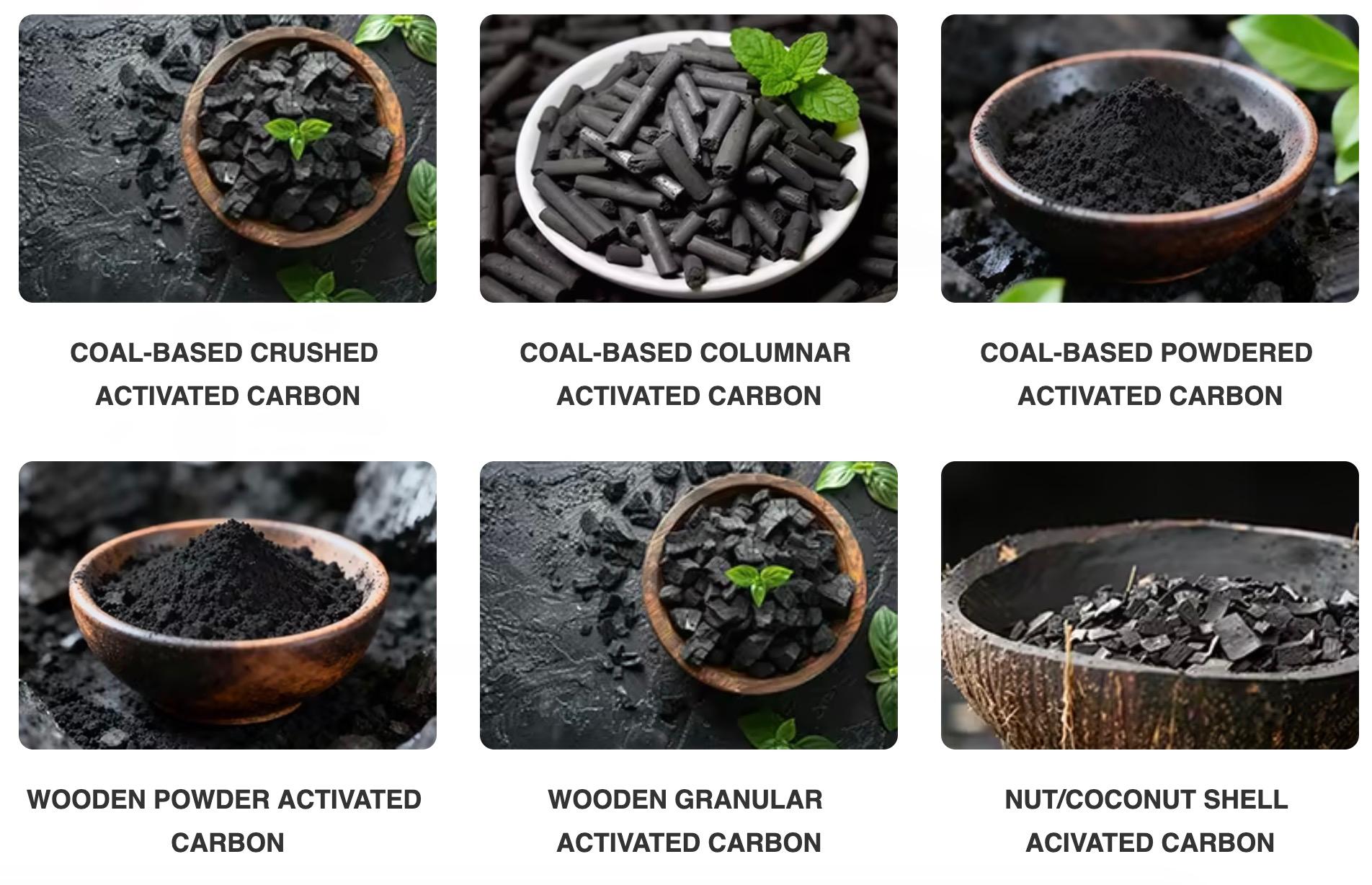
Start with the application, not the supplier list. A carbon that works beautifully for municipal water treatment can fail badly in solvent recovery or decolorization. Ask for performance data tied to your specific contaminants, not just generic specs. Investigate their raw material sourcing—coconut shell, coal, wood, and even olive pits each change pore structure and hardness.
Never accept a certificate of analysis at face value. Pull your own samples from the shipment—not from a pre-approved batch—and send them to an independent lab for iodine number, molasses number, hardness, and particle size. Run a small-scale pilot with your actual process stream. If the supplier resists third-party testing, that's a dealbreaker.
Because raw material dictates the carbon's internal architecture. Coconut shell carbons have high microporosity and hardness, good for gas-phase and some water treatment. Coal-based carbons offer a broader pore range and lower cost per pound. Wood-based products are softer and often used for decolorization. A supplier who can't name the raw material source or changes it without notice will create performance drift.
Watch for vague answers about production capacity, lead times that shift after payment, and no documented quality management system. Ask for references from buyers with similar order volumes, and call them. Check how they handle a failed batch—do they replace it quickly or argue about specs? A reliable supplier will have a clear corrective action process and won't act surprised when you ask about it.
It depends on volume and service needs. Manufacturers give you more control over customization and pricing at scale, but many have high minimum order quantities. Distributors can consolidate smaller orders, offer faster local delivery, and sometimes provide blending or reactivation services. For mission-critical applications, direct relationships reduce communication layers and make problem-solving faster.
Lock down a detailed specification sheet that includes not just iodine number but also moisture content, ash content, pH, particle size distribution, and the test method used. Require batch-level certificates and retain the right to audit the supplier's lab. Build a small reference library of approved samples and compare every incoming batch against it. Consistency comes from the supplier's process control, so visit the factory if the volume justifies it.
Activated carbon doesn't last forever. Ask if the supplier offers spent carbon reactivation or take-back programs. Clarify who pays for return shipping, what the reactivation yield is, and whether reactivated carbon meets your original specs. Some applications require virgin carbon by regulation. Getting this in writing upfront prevents a hidden operating cost later.
Conclusion
Activated carbon sourcing rarely comes down to matching a datasheet. A supplier can quote an impressive iodine number and still deliver material that falls apart under your actual flow conditions or pH range, so verification needs to go beyond the certificate. Ask for batch-level traceability, check how the vendor handles reactivation or raw feedstock changes, and pay attention to what they won't promise. Cheap carbon often looks attractive on a purchase order until pressure drop climbs, fines clog downstream equipment, or regeneration cycles shrink. The true cost shows up as maintenance hours, unplanned changeouts, and scrapped production runs, not as a line item on the invoice.
Busy buyers don't need a full lab to catch early failures. Keep retained samples from every incoming lot, run a simple iodine or molasses test in-house if possible, and send split samples to an independent lab when readings drift. Use contracts that lock down moisture content, particle size distribution, and abrasion resistance instead of relying on headline adsorption numbers. Include clear terms for lot rejection, delivery windows, and notification if the raw material source changes. For sustainability, ask for chain-of-custody documentation or third-party certification for coconut shell and reactivated carbon, and steer clear of vague 'eco-friendly' wording. A dependable supplier should be able to show exactly where the carbon came from, how it was processed, and what happens to it after exhaustion.
Contact Us
Contact Person: Ellen Zhang
Email: [email protected]
Tel/WhatsApp: +86(21) 2287 6756
Website: https://www.tundrr.com/en/